

Air-conditioning systems. General information
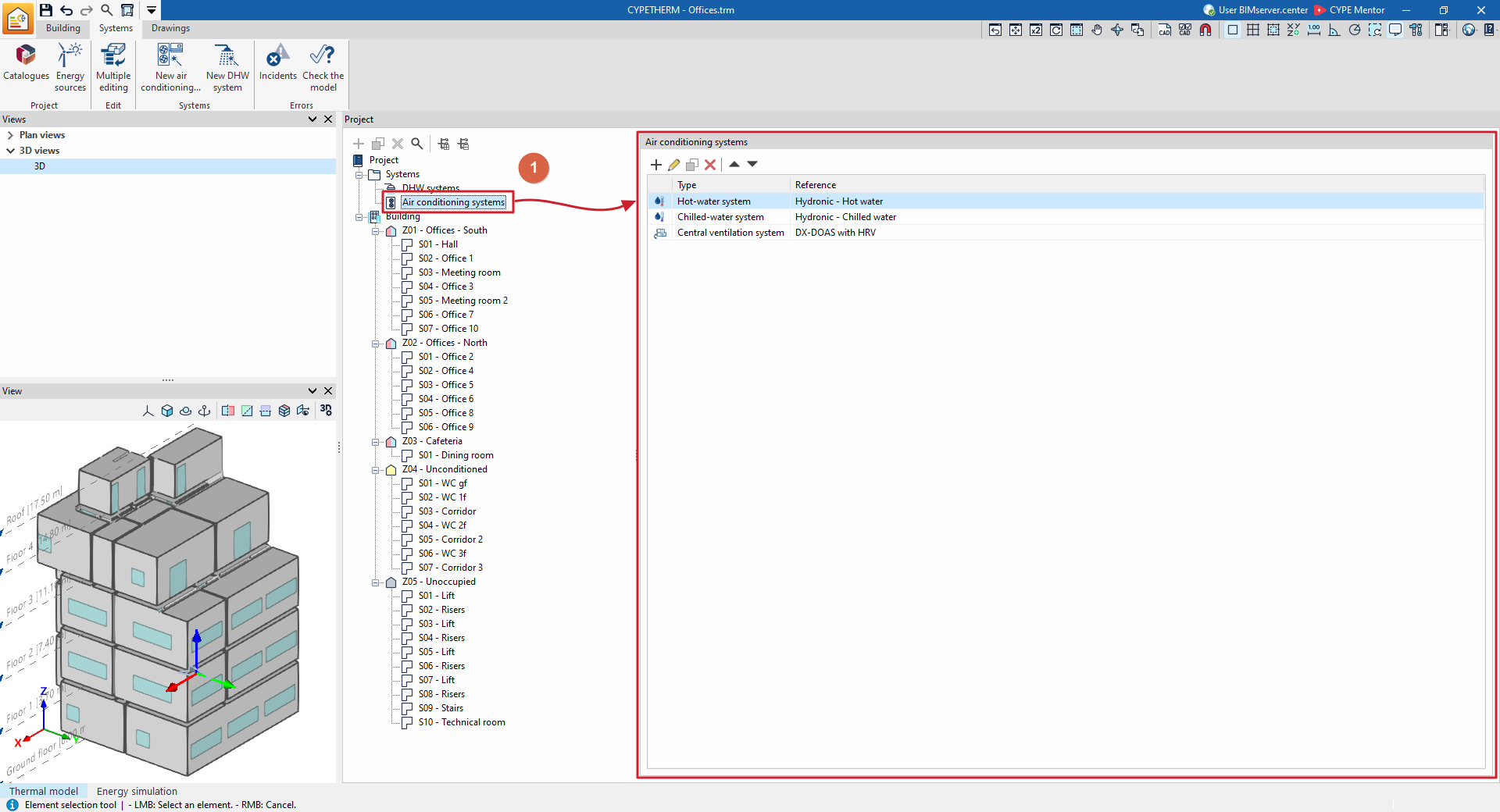
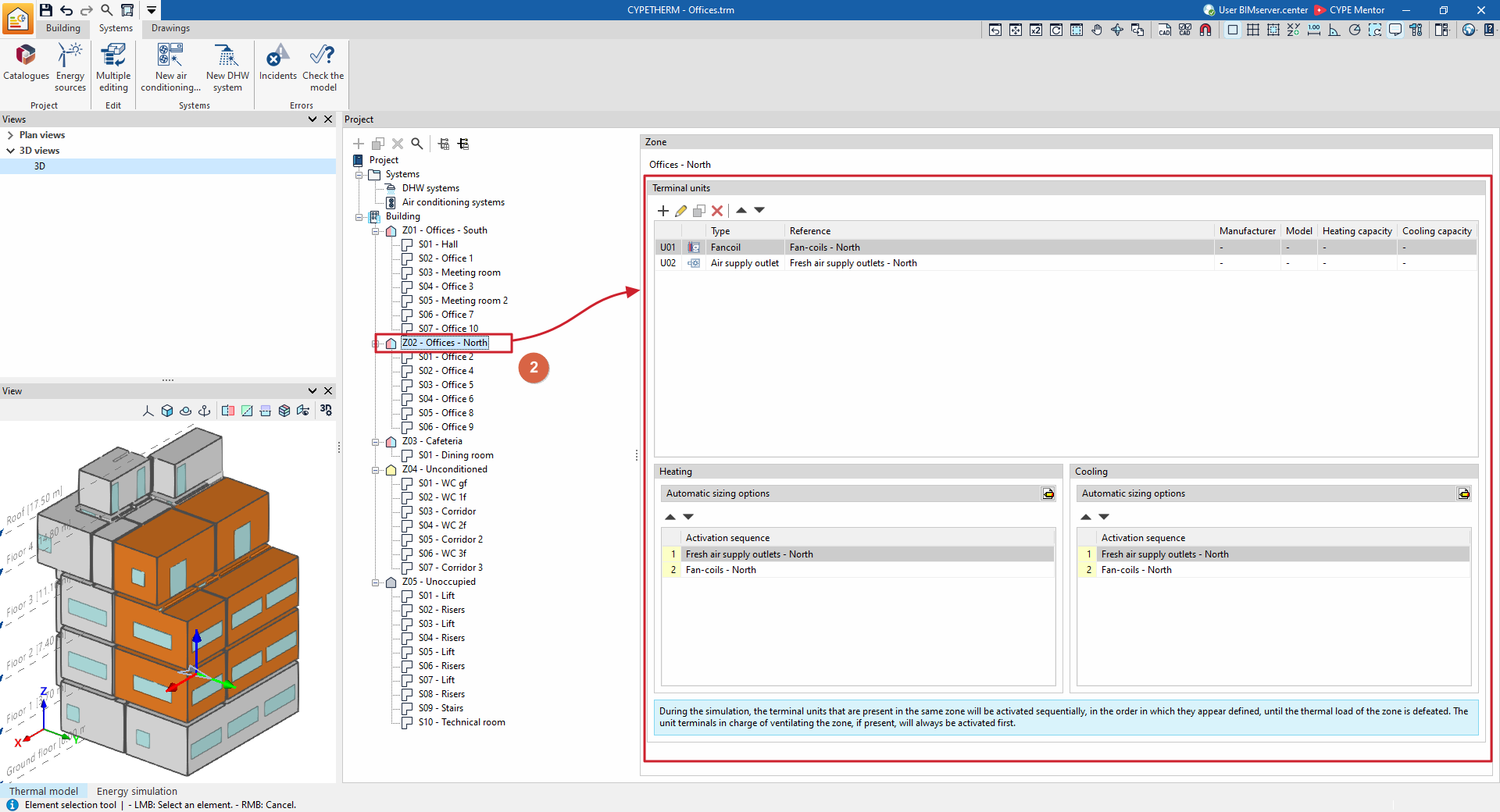
The building’s air-conditioning systems are defined in two sections of the tree structure on the "Systems" tab:
- (1) Air-conditioning systems (in the specific section "Air-conditioning systems", under "Systems", in the "Project" panel tree).
These comprise centralised production units and centralised air-handling units that serve terminal units or other air-conditioning systems. Alongside the centralised units, the relevant characteristics of the working fluid distribution network are also defined.
- (2) Terminal units (within the level of each "Zone", under the "Building" section in the "Project" panel tree).
These are the units located within the spaces of each zone and which come into contact with the air within those spaces.
Generally, a complete air-conditioning system consists of one or more terminal units connected to a centralised system, which in turn may require other production systems. For example, in an all-air system, the air supply terminals are the terminal units and the air handling unit (AHU) or air conditioning unit is the centralised system. If the AHU contains a chilled water coil, it will be necessary to specify an additional production system to generate the chilled water.
There may also be air-conditioning systems consisting solely of terminal units: this is the case with electric radiators or 1x1 split-type units.
In the program, air-conditioning systems and their terminal units have been classified according to the type of fluid used to control the space’s thermal load. A distinction is thus made between water-based, direct-expansion (refrigerant) and air-based air-conditioning systems and terminal units. Furthermore, the program includes definitions of other stand-alone terminal units and water-cooled condensing systems for chillers and reversible heat pumps.
It is possible to define any type of air-conditioning system, provided the system’s average seasonal cooling and/or heating capacity and the type of energy it consumes are known, using the "Constant performance unit" terminal unit.
From the "New air conditioning system" section, the program includes a wizard to guide you through the definition of the building’s air conditioning systems. Depending on the type of system selected, the wizard will display, in turn, the definition panels corresponding to the various components of the HVAC system.