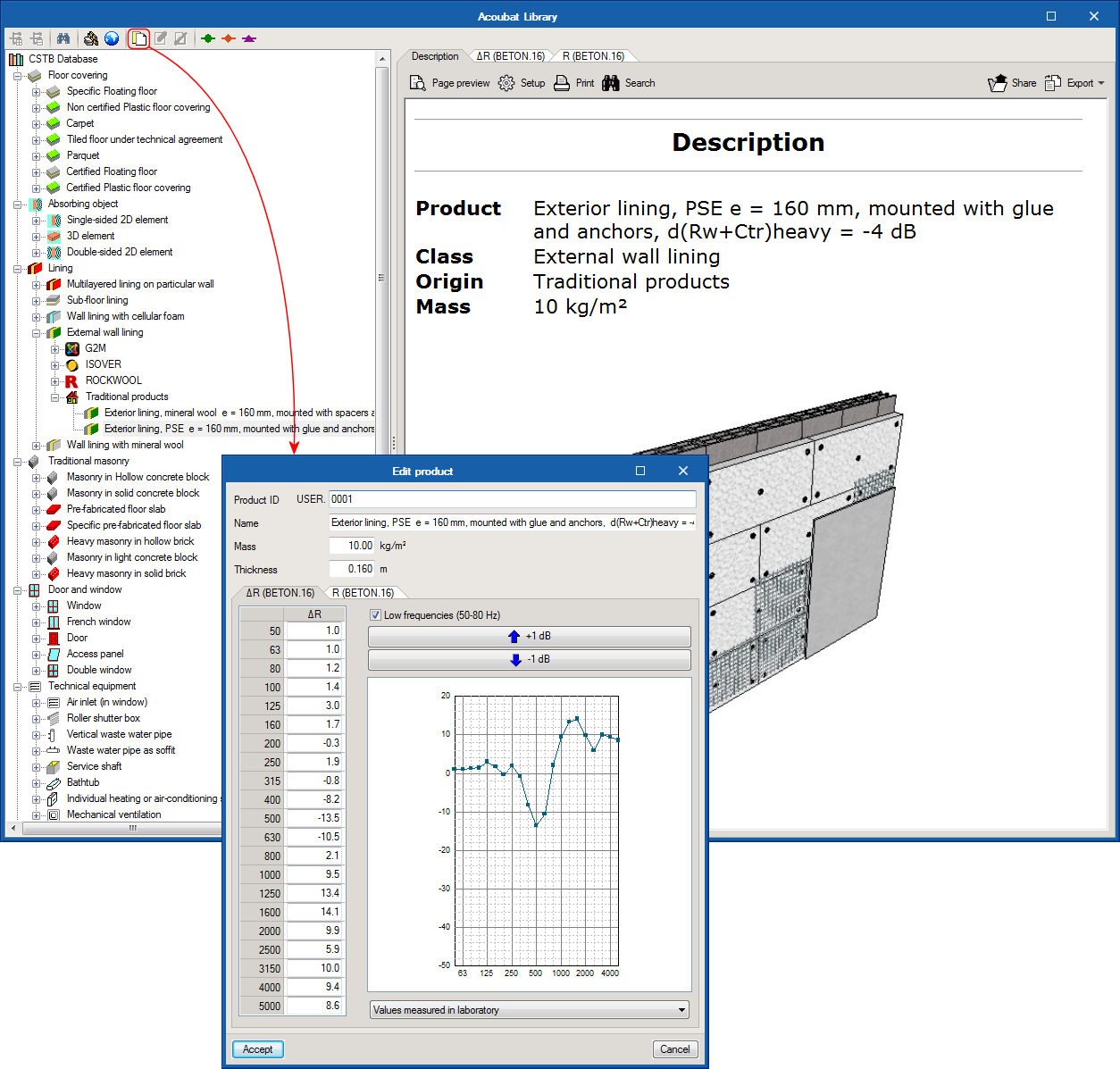
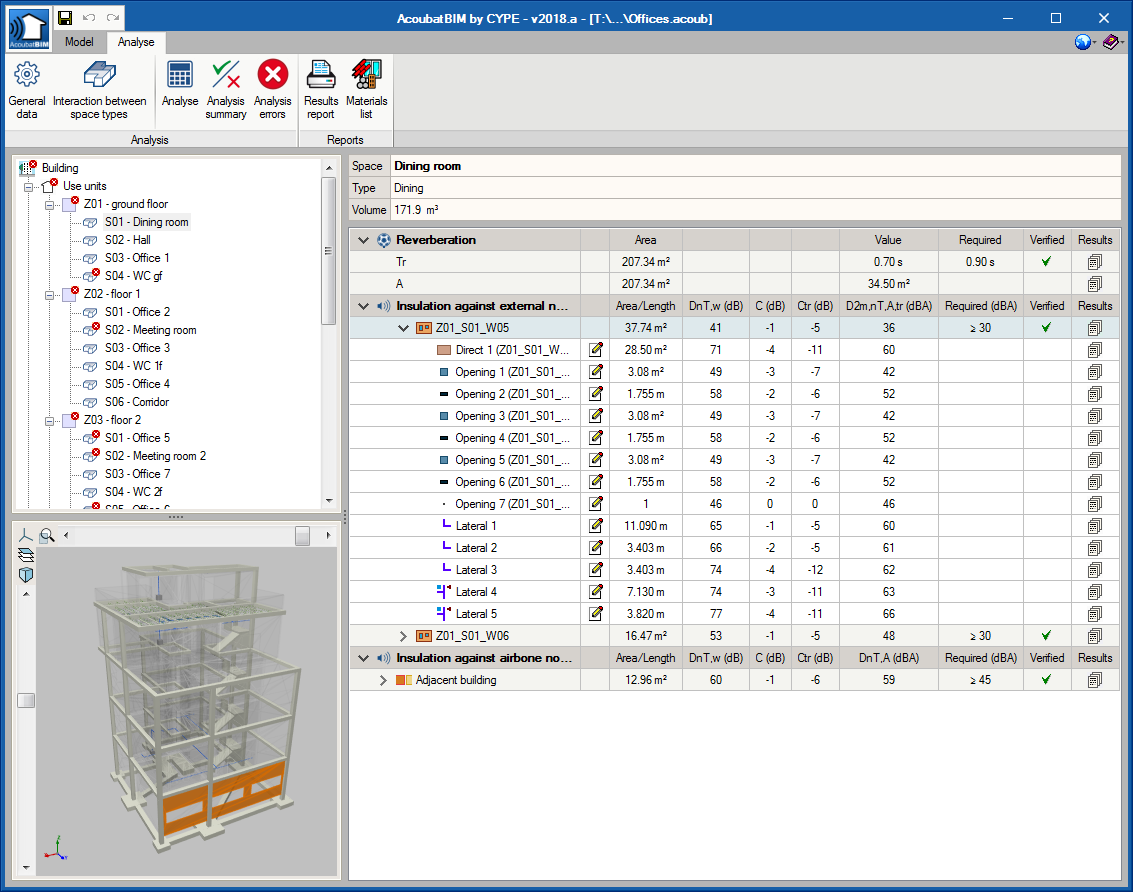
The views of the documents generated by the program have changed so the sound tests of the products of the database and analysis results can be seen. Now a report view that can be configured is generated and can be adjusted to the program window.
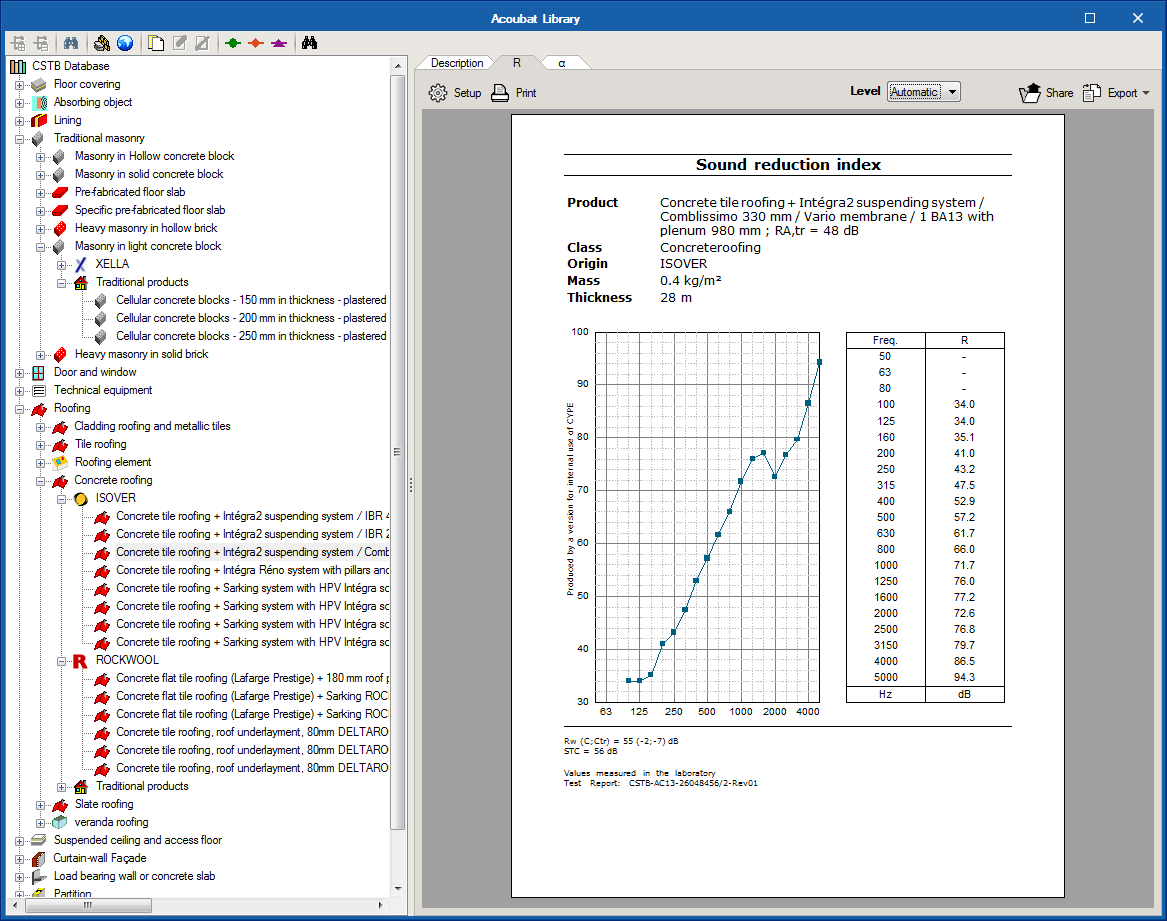
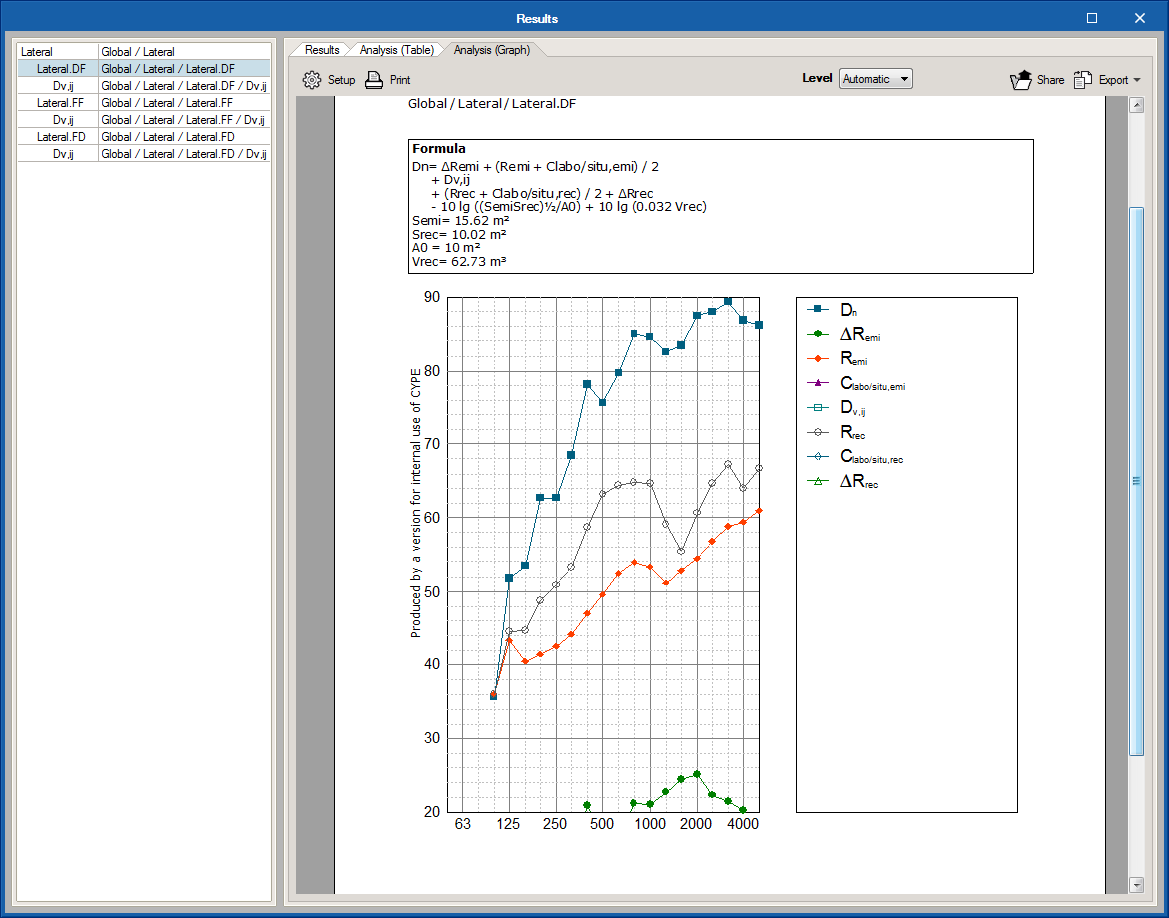


The views of the documents generated by the program have changed so the sound tests of the products of the database and analysis results can be seen. Now a report view that can be configured is generated and can be adjusted to the program window.
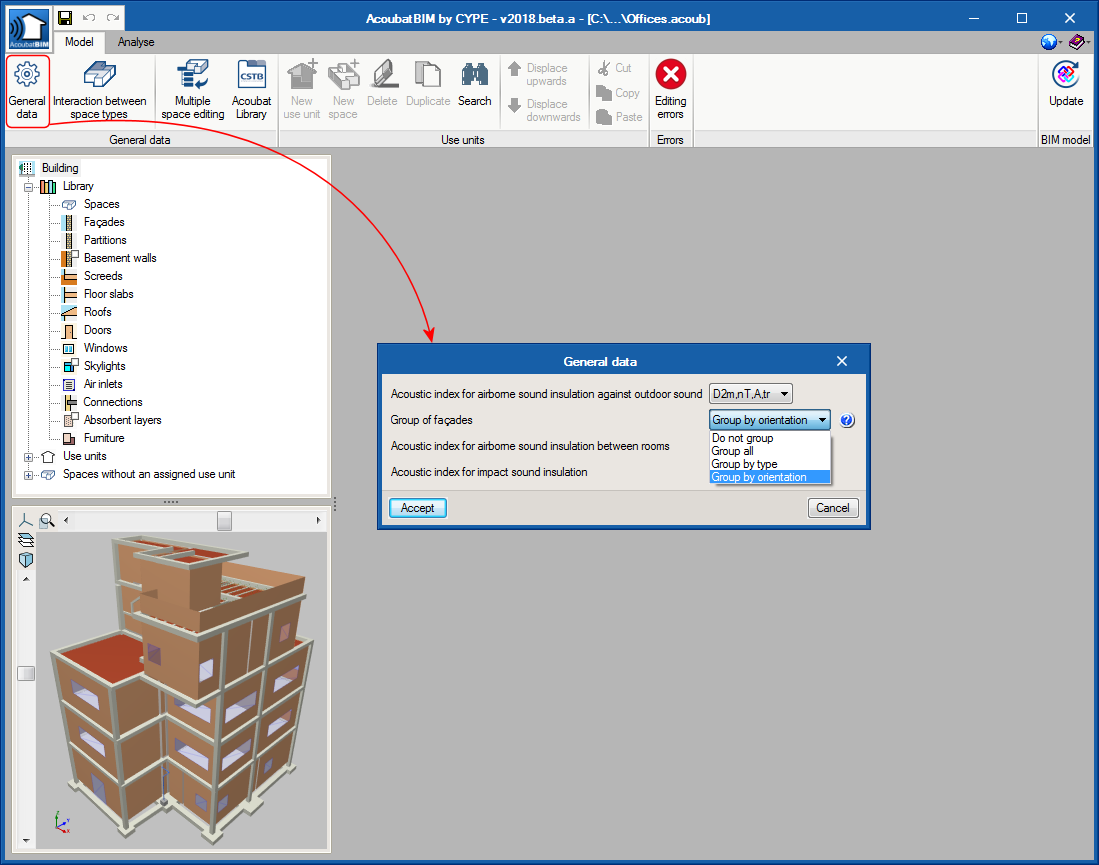
A new option has been added in the general parameters of AcoubatBIM by CYPE where users can configure the way insulation against outdoor airborne noise is to be verified. As well as the individual analysis of each façade that has been carried out up to now, it is now possible to combine all the external façades and check the insulation of the complete envelope of each space. The program also allows users to group adjacent walls that share the same orientation and determine the insulation of these combined elements. Lastly, the enclosures can be grouped depending on their type (façade, roof or overhang) and calculate each separator group.
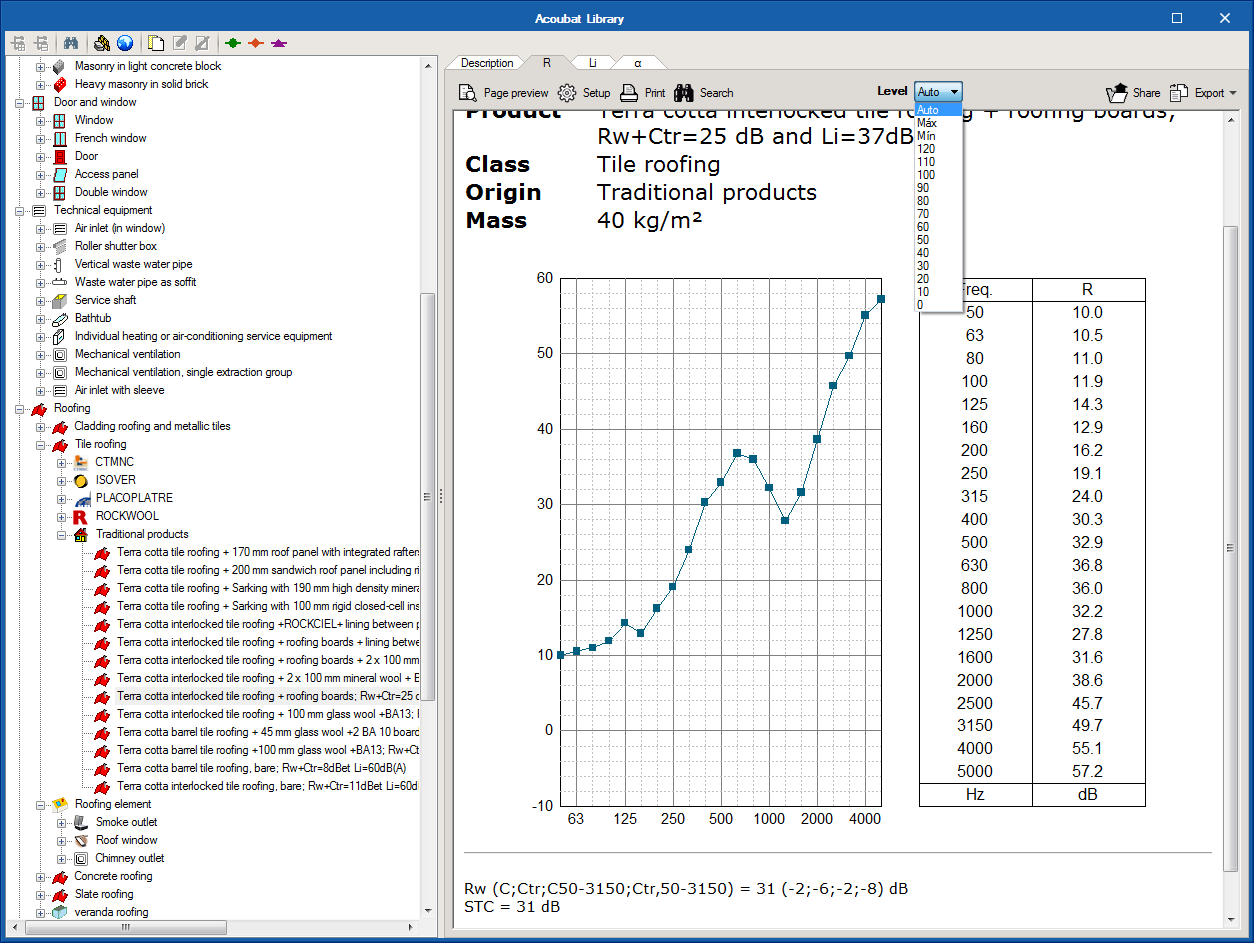
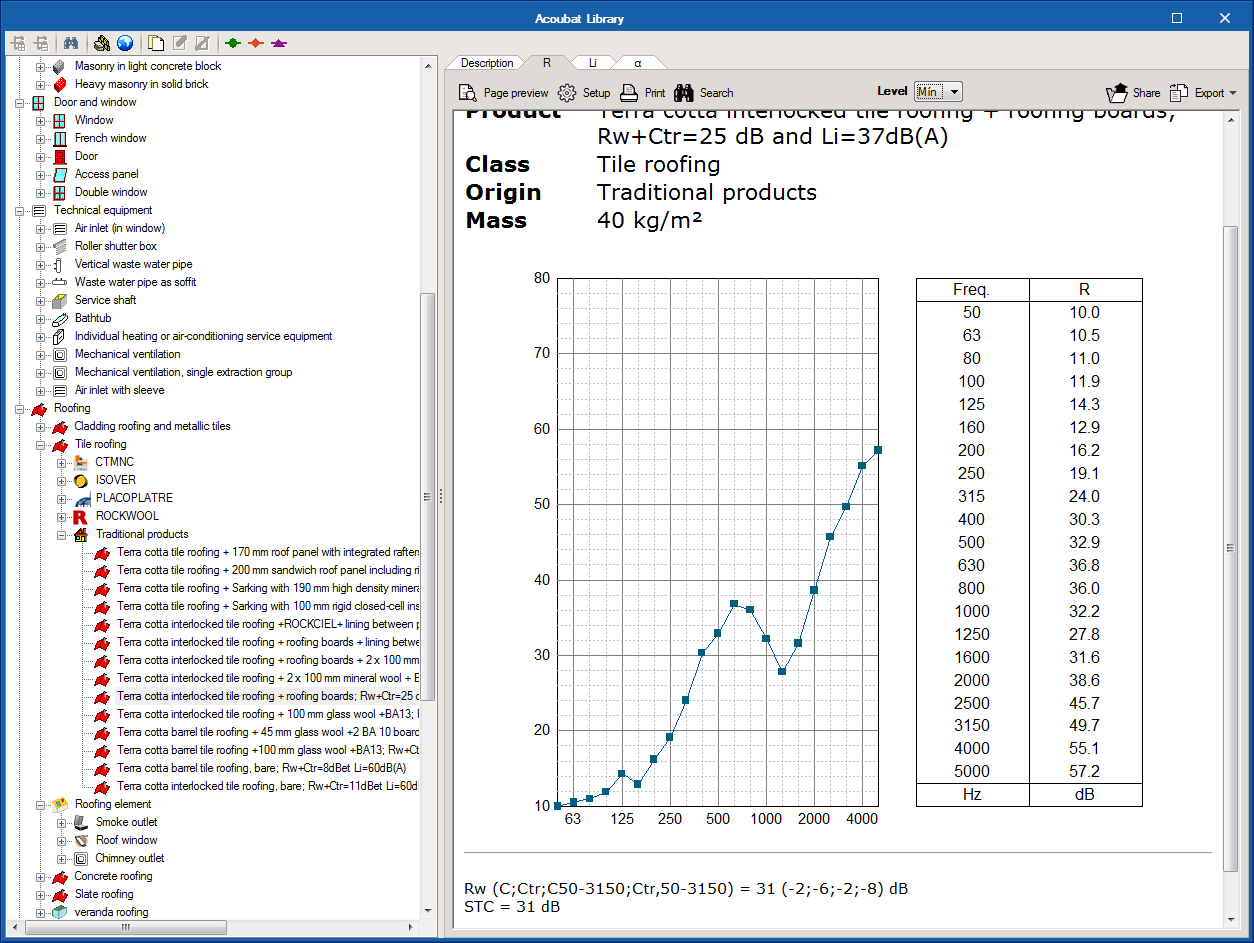
Now, AcoubatBIM by CYPE allows users to modify the scale of the acoustic indices of the graphs of the program. Users can choose if the values are to be displayed depending on the maximum or minimum level of the curve. It is also possible to establish a specific maximum value or allow the program to establish it automatically.
More information has been introduced in the global results list of each space. Now, it is possible to differentiate vertical, horizontal and diagonal orientations for each emitter-receptor couple for indoor airborne noise and impact noise calculations. New icons have also been included for each type of opening, this way, in the version, it is possible to distinguish between windows, skylights, doors, air inlets and roller shutter boxes. Finally, the references of each element have been modified so they correspond with those used in the results list.

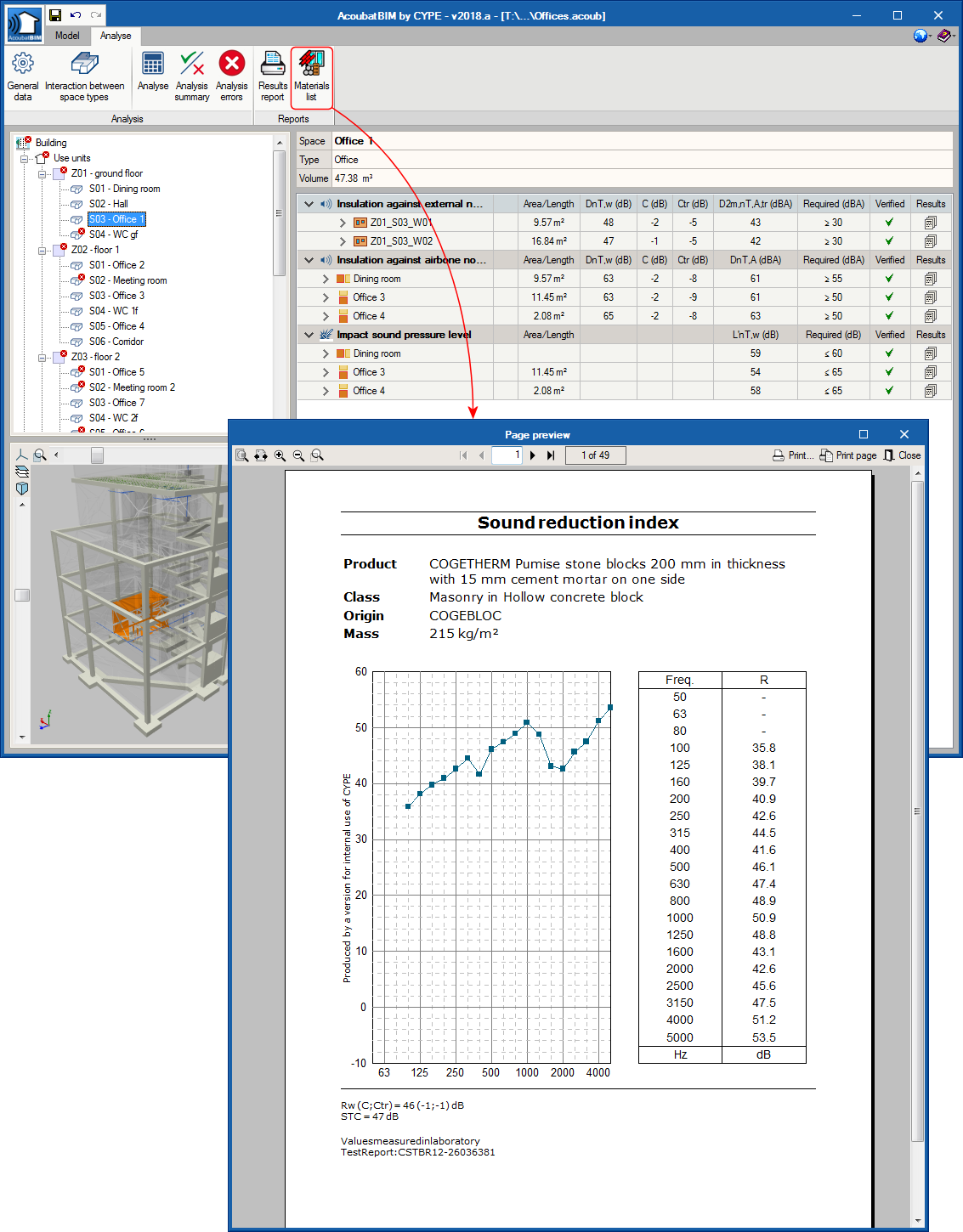
As of the 2018.a version, AcoubatBIM by CYPE automatically generates a document indicating the products used in the project and their acoustic properties based on the information contained in Acoubat’s library.
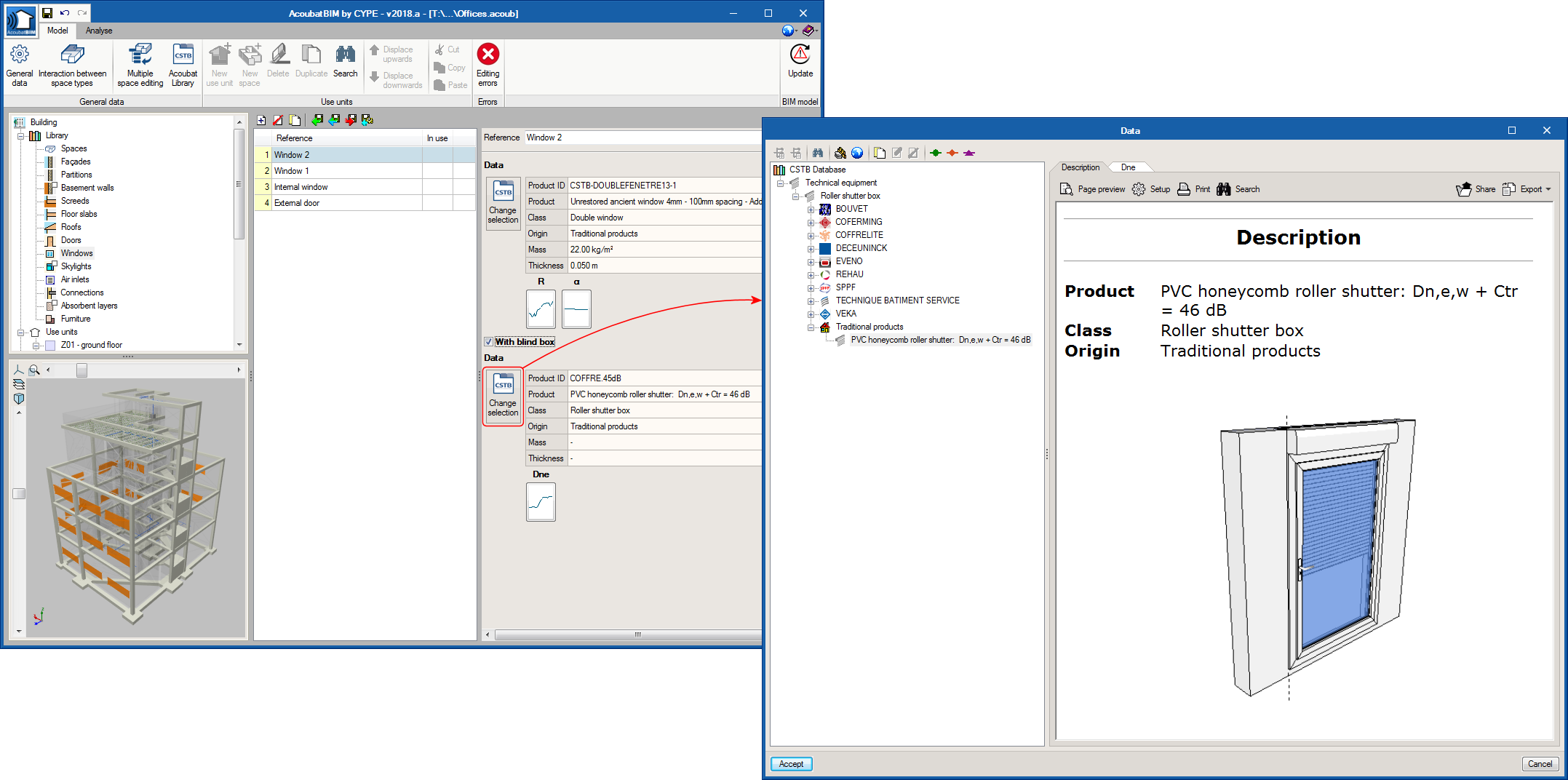
A new option has been introduced in the window types of the library, which allows users to indicate if there is a roller shutter box and its acoustic properties based on the products that are available in the Acoubat database. Users must specify the length of the shutter box for each window in the project. This value will be filled in automatically if a geometric BIM model has been imported that contains this information.
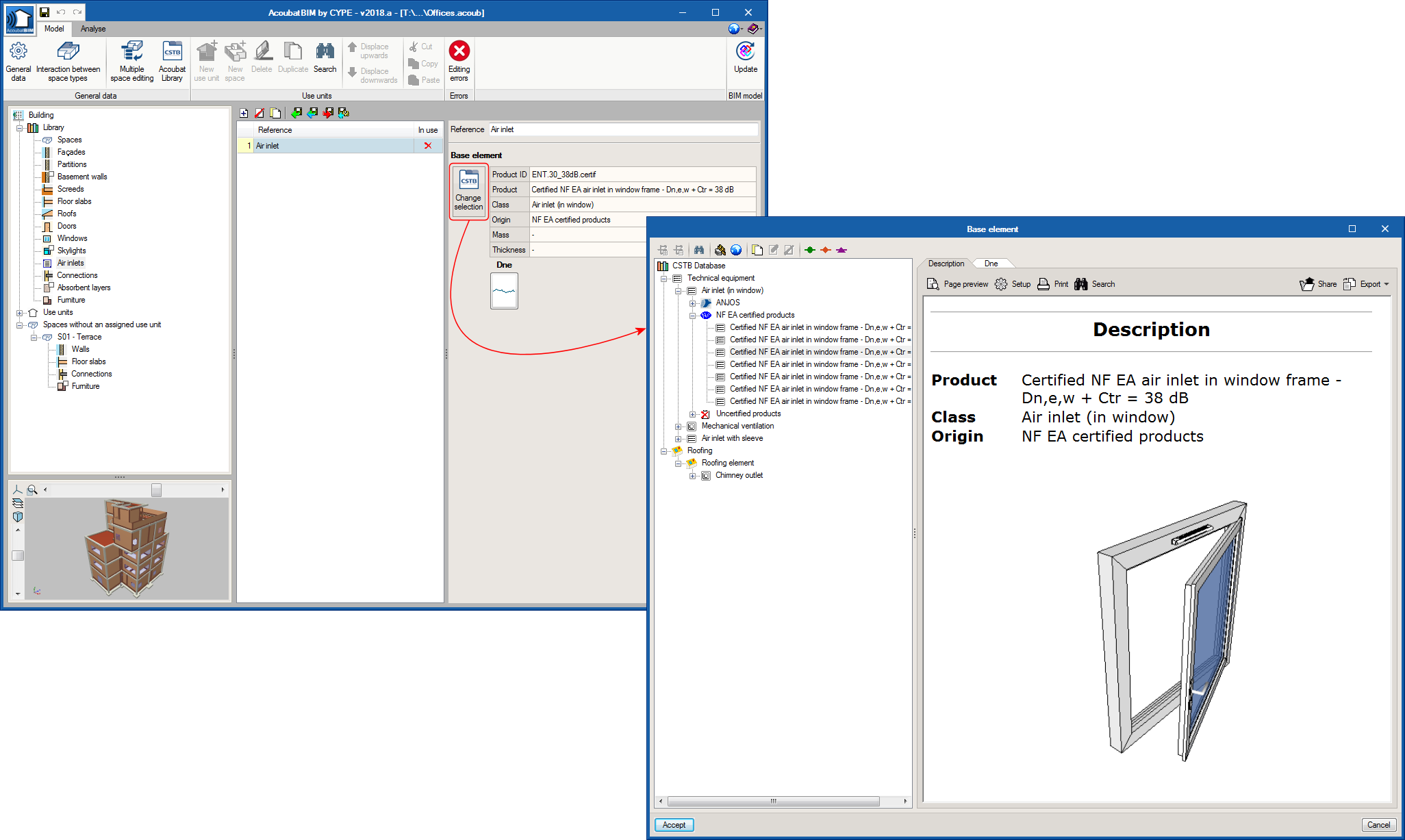
A new air inlet library has been introduced in the program where the acoustic properties of these elements can be defined. Once the different types have been defined, they can be included in walls and floor slabs of the model as is done with doors and windows.
A new option has been introduced in the access panel of the Acoubat database that directs users to the website of the manufacturer of the selected element. This way, a direct connection is established between the products offered by manufacturers and the acoustic analysis software.

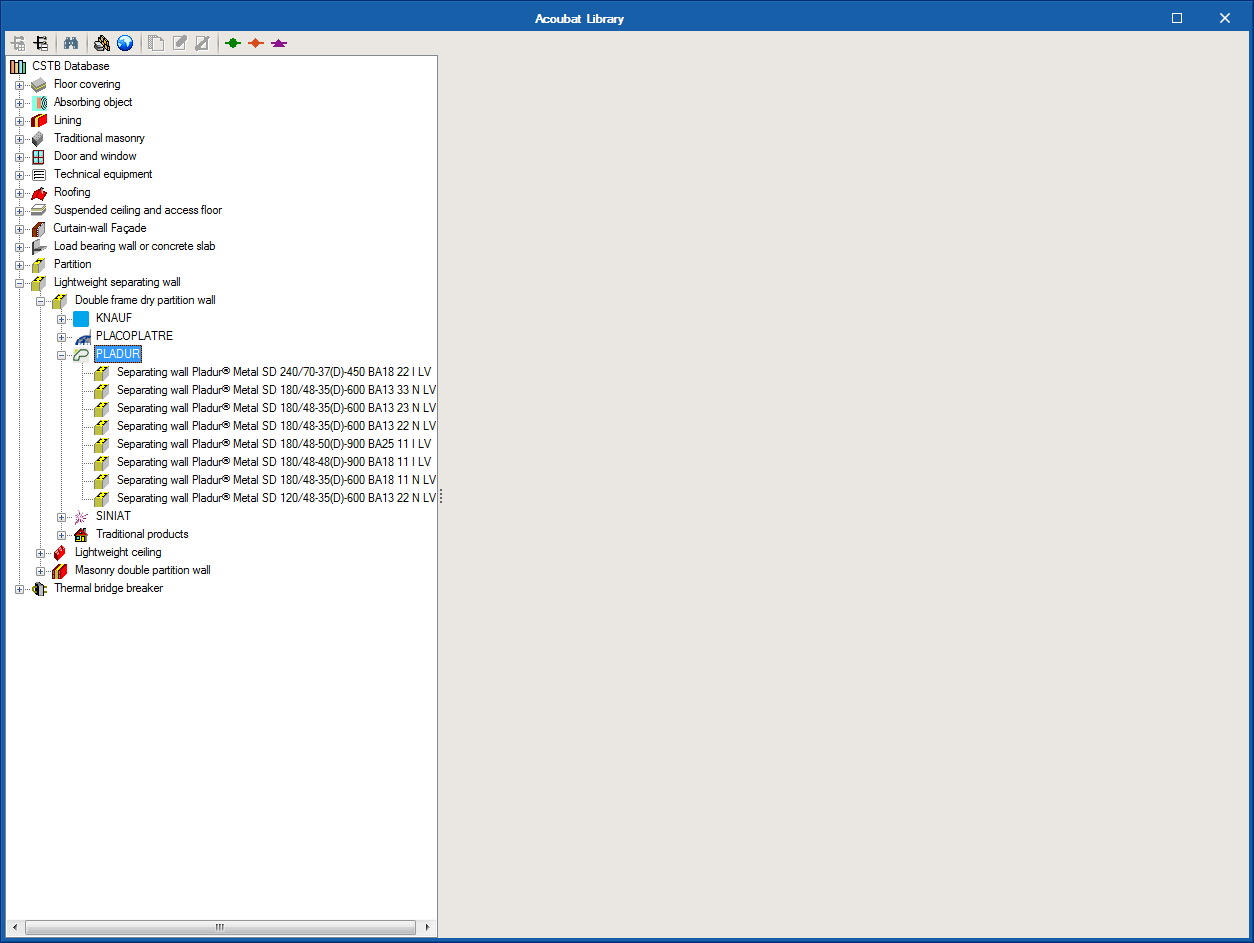
The “Description” tab has been added in the panel of the products contained in the database of acoustic tests of Acoubat. Within this tab, the general definition of the product can be viewed and, for cases for which it is available, a representative image of the element.

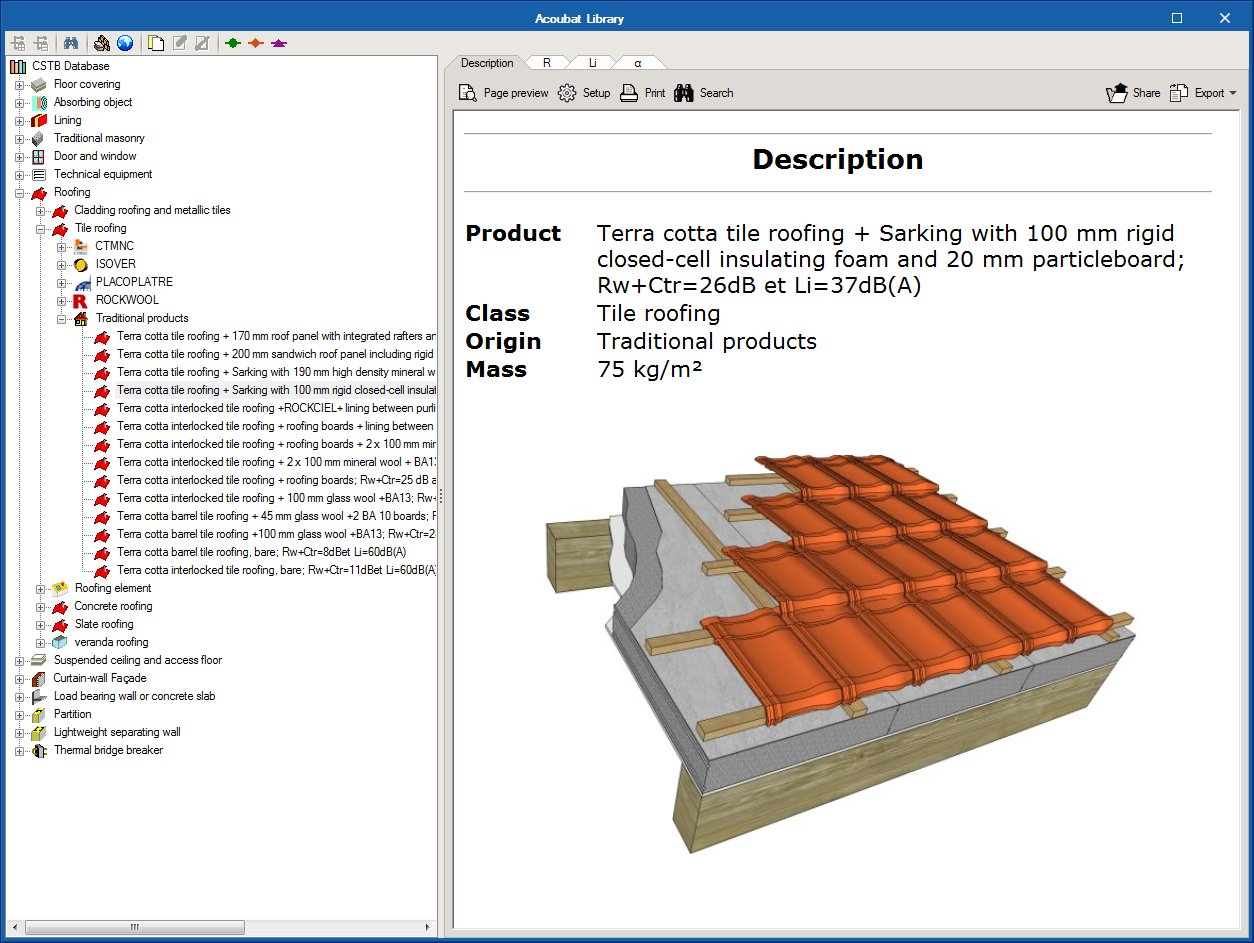
The source of the acoustic data has been included in the files corresponding to the products of the Acoubat database. If they have been obtained from laboratory measurements, the reference of the test is also displayed. Furthermore, users can also indicate the origin of the data that has been introduced for the element.

As of the 2018.a version, AcoubatBIM by CYPE allows for the ProductID of the elements of the database of Acoubat that have been generated by users to be modified. Thanks to this implementation, compatibility issues are avoided when sharing projects containing personalised products with other users.