
Update history​​

Plugin Open BIM - Revit

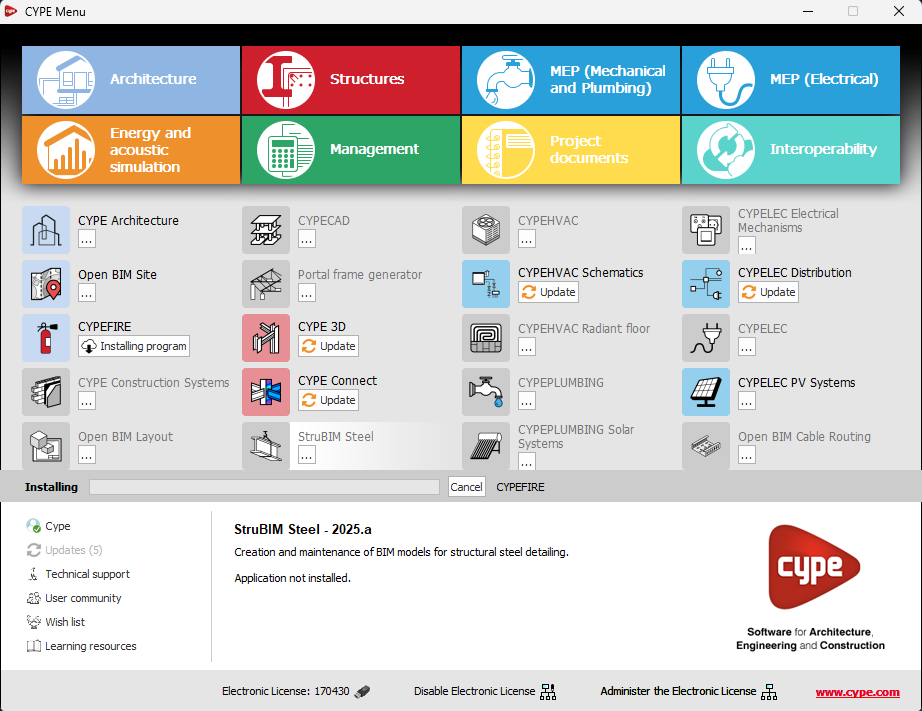
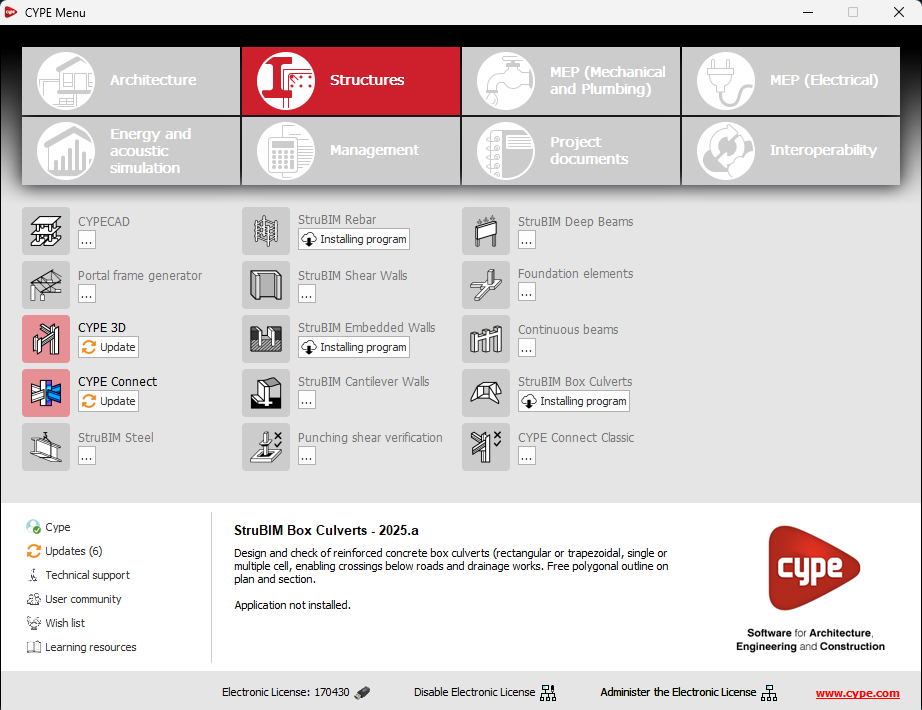
In the new 2025.b version of CYPE Menu, the background installation feature has been added. Users can now continue working on other tasks while applications are automatically installed in the background.

During the background installation process, the “Installing program” message is displayed next to the applications button in the main CYPE Menu window. Once completed, the message disappears and the application can be run.

This feature is designed to make applications easier to use and manage, improving productivity and the overall experience by minimising waiting time and interruptions during the installation of new applications or upgrades.
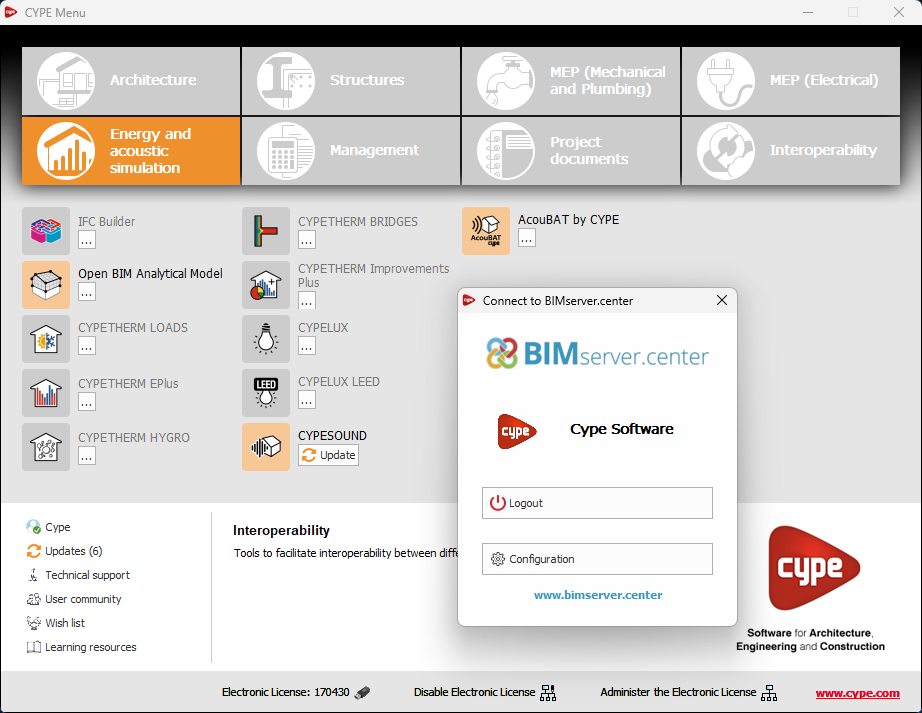
The following modifications have been made to the availability of the applications from the CYPE Menu.

New:

  • CYPEHVAC Schematics

  • ELODIE by CYPE (Only in the CYPE Menu in French)

Deleted:

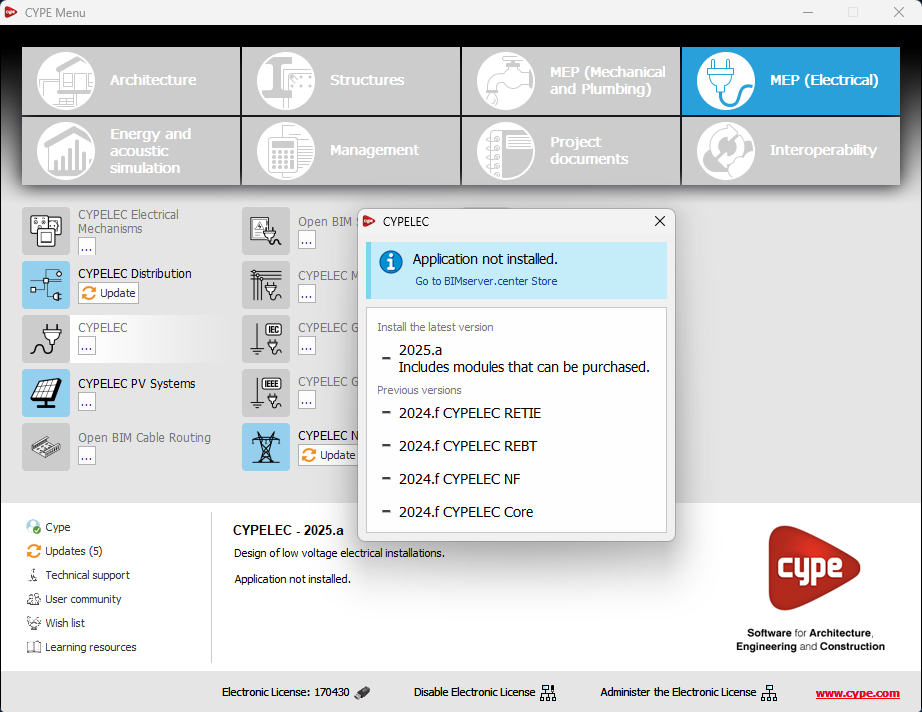
  • CYPELEC Core, CYPELEC REBT, CYPELEC NF and CYPELEC RETIE. They are joined together in a single program called CYPELEC.

  • CYPESOUND CTE, CYPESOUND NRA, CYPESOUND RRAE, CYPESOUND DRAPDE. They are integrated into CYPESOUND.

  • CYPEURBAN. Available for download and installation from the BIMserver.center platform.

  • IFC Uploader. New contributions can now be created directly from the project page on the BIMserver.center platform.

  • CYPEFIRE FDS Viewer. CYPEFIRE FDS can be used to view FDS simulations.

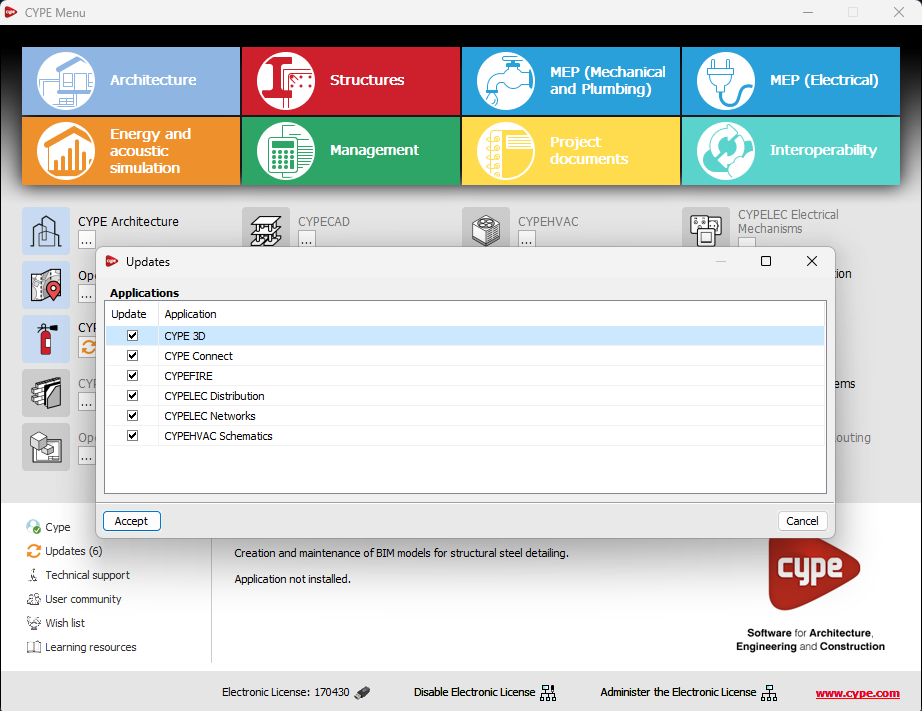
The "Updates" option has been implemented in the main CYPE Menu window. Thanks to this tool, multiple updates of installed applications can be carried out via the CYPE Menu.


When clicking on the “Updates” option, a window opens with a list of all installed applications. Select a set of them and, after clicking "Accept", the update process will start.

During this process, progress is displayed in the main CYPE Menu window indicating the current status of the update.

If an update is available for the CYPE Menu itself, it is shown below the list of applications to be updated. However, it is important to note that the update of the CYPE Menu is carried out on its own.


This new feature makes application maintenance easier, ensuring that the latest improvements are always available.

As of version 2025.a, the CYPE plugins for Revit "Plugin Open BIM - Revit" and "Plugin MedBIM - Revit" (the latter included in the Arquimedes module "Bill of quantities of BIM models") are compatible with Revit version 2025.

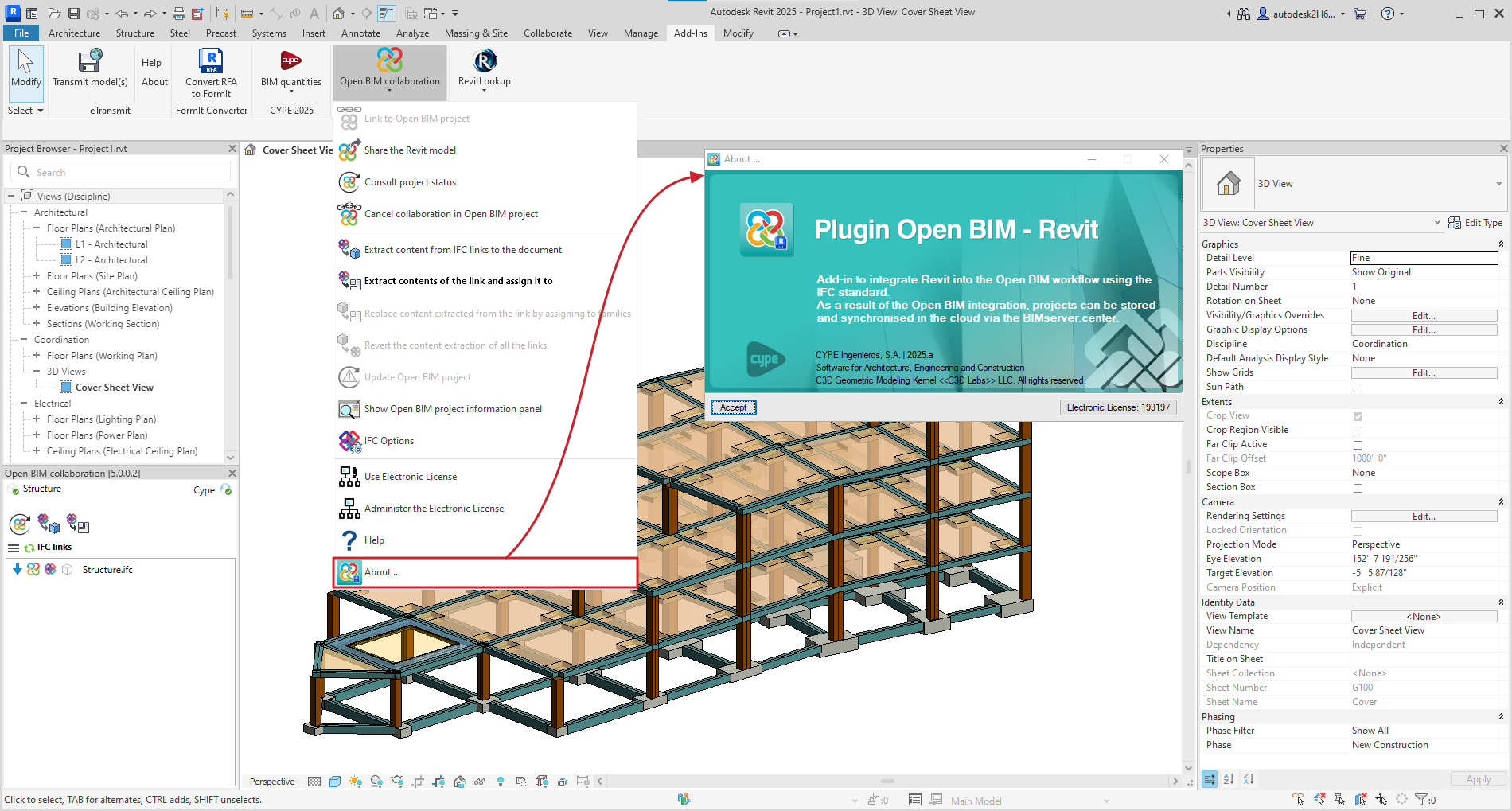
An "About..." option has been added to the "Open BIM - Revit Plugin" menu to consult the plugin information and its version.

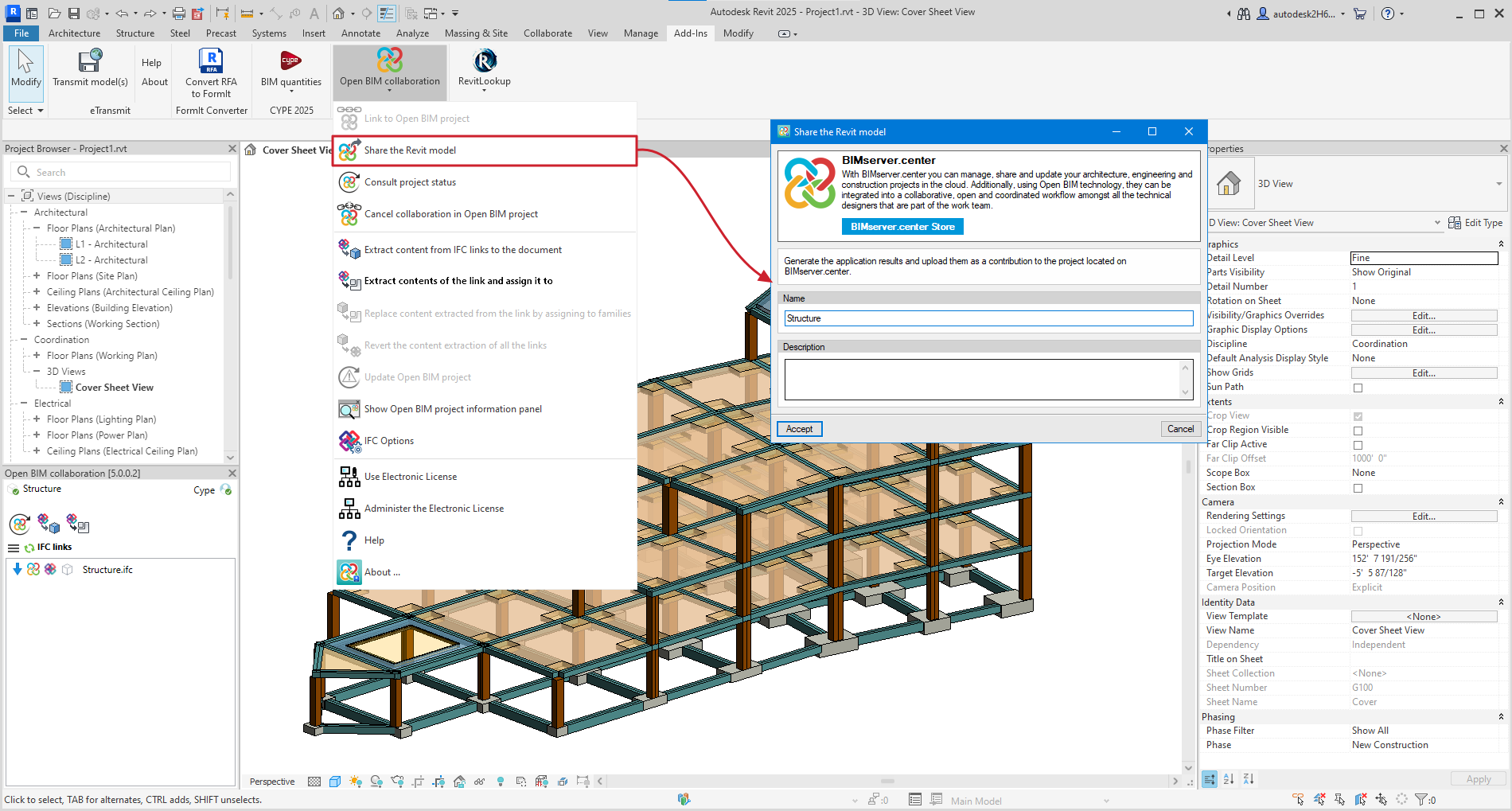
In the "Share the Revit model" option, the "Description" field has been implemented so that users can provide a description when sharing the Revit job with a BIMserver.center project.

In version 2025.a of the "Open BIM - Revit Plugin" a new feature has been implemented that allows users to collaborate via a central model on a local server (LAN). This feature allows the synchronisation of all previously imported IFC links from the BIMserver.center platform to the collaborative model, making it easier for other users to stay in sync with the latest version of the central model.

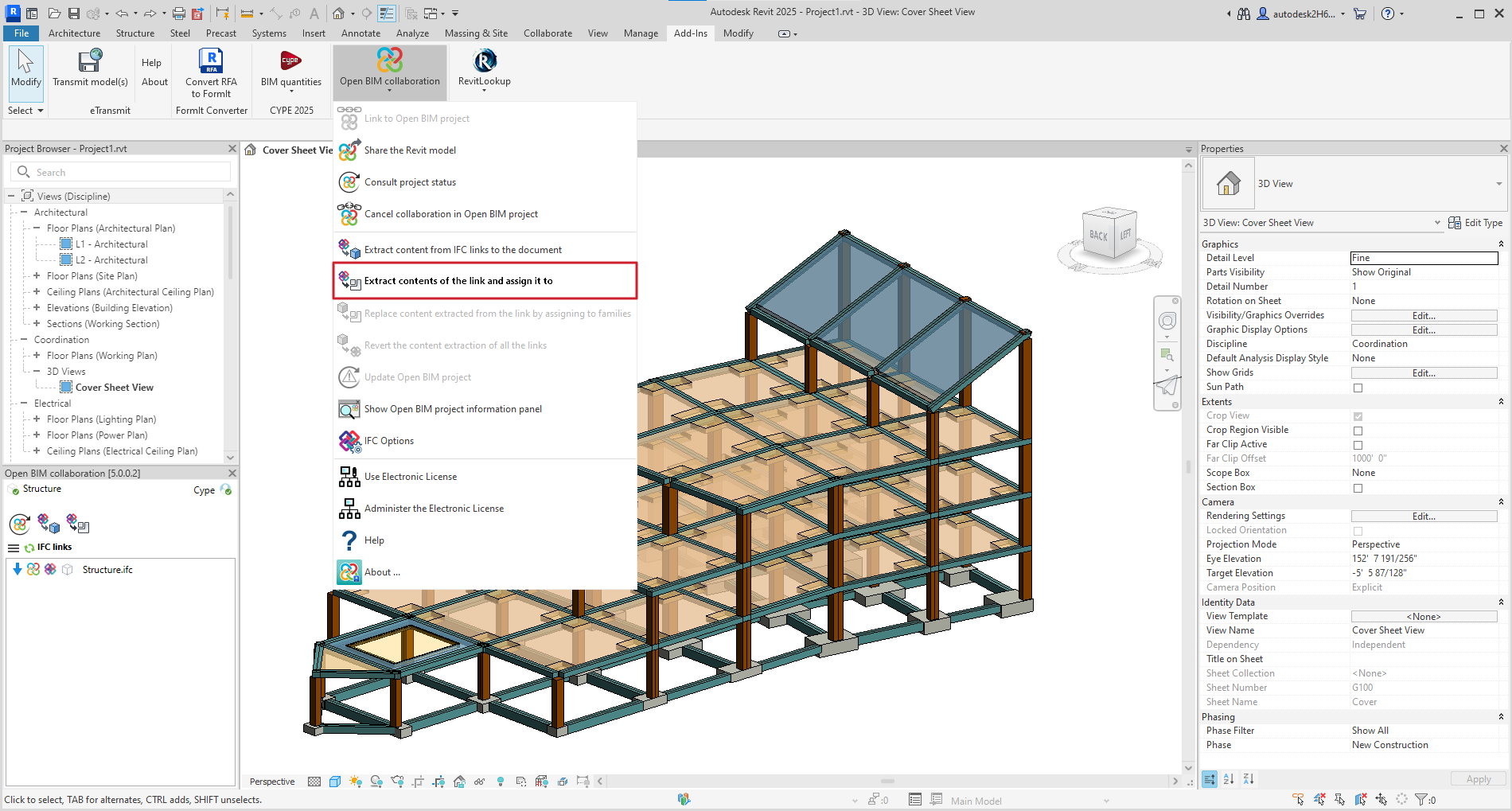
Version 2025.a of "Open BIM - Revit Plugin" includes a new module that allows users to convert a structural model (included in a project on the BIMserver.center platform) into native Revit elements by assigning families. The options of this module are centralised in the "Extract contents of the link and assign it to families" option in Revit's "Open BIM Collaboration" menu.

To use the "Generation of native Revit elements based on a structural IFC" module, users must install the "Open BIM - Revit" plugin (which can be downloaded from the BIMserver.center platform) and have the necessary permissions in a separate CYPE license, which is purchased through an annual subscription.

As well as implementing this module, version 2025.a of the "Open BIM - Revit Plugin" is compatible with Revit versions 2021 to 2025.

How to use the "Generation of native Revit elements based on a structural IFC" module

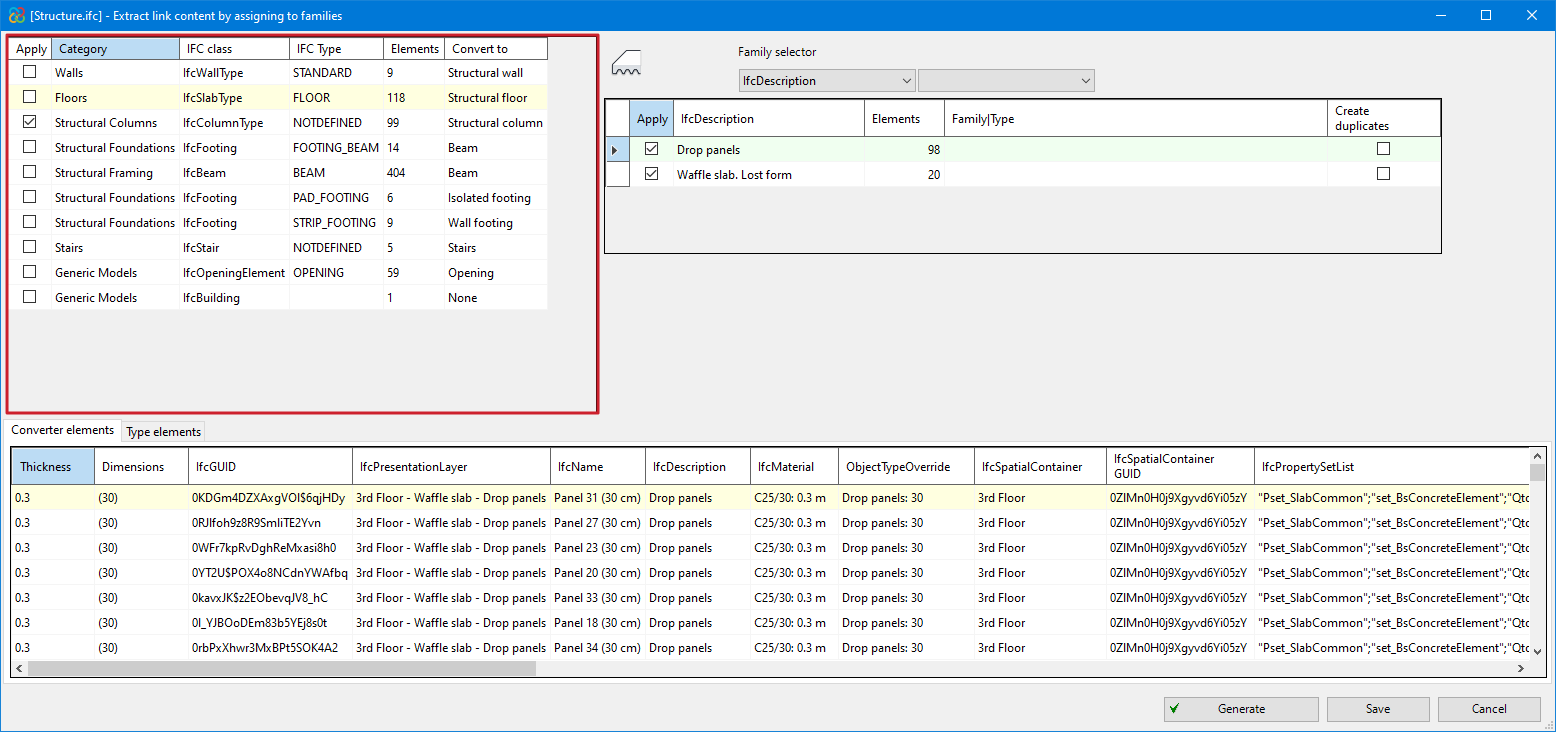
After selecting the "Extract contents of the link and assign it to families" option, a dialogue box with the same name opens, which is described in detail below:

  • Main section
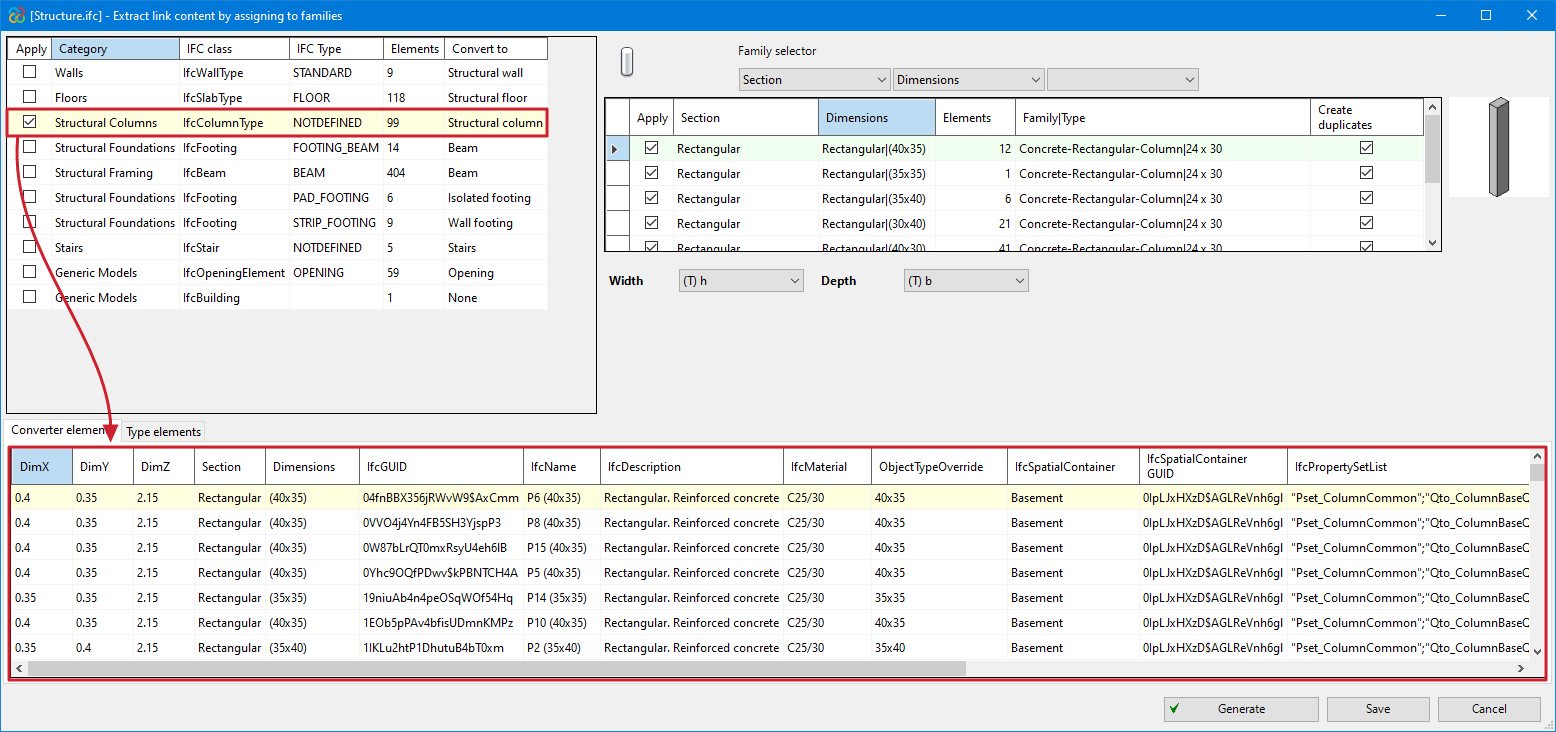
    All the categories of structural elements detected in the IFC links of the imported model are shown in the top left corner and are grouped by the Class and Type of IFC to which they belong. The number of existing instances and the Revit native category to be converted are also displayed from these groups.

    The categories that can be detected in this version (2025.a) are the following:
    • Walls
    • Floors
    • Structural columns
    • Structural framing
    • Structural foundation
    • Stairs
    • Ramps
    • Opening
  • Revit native family selector (Converter)
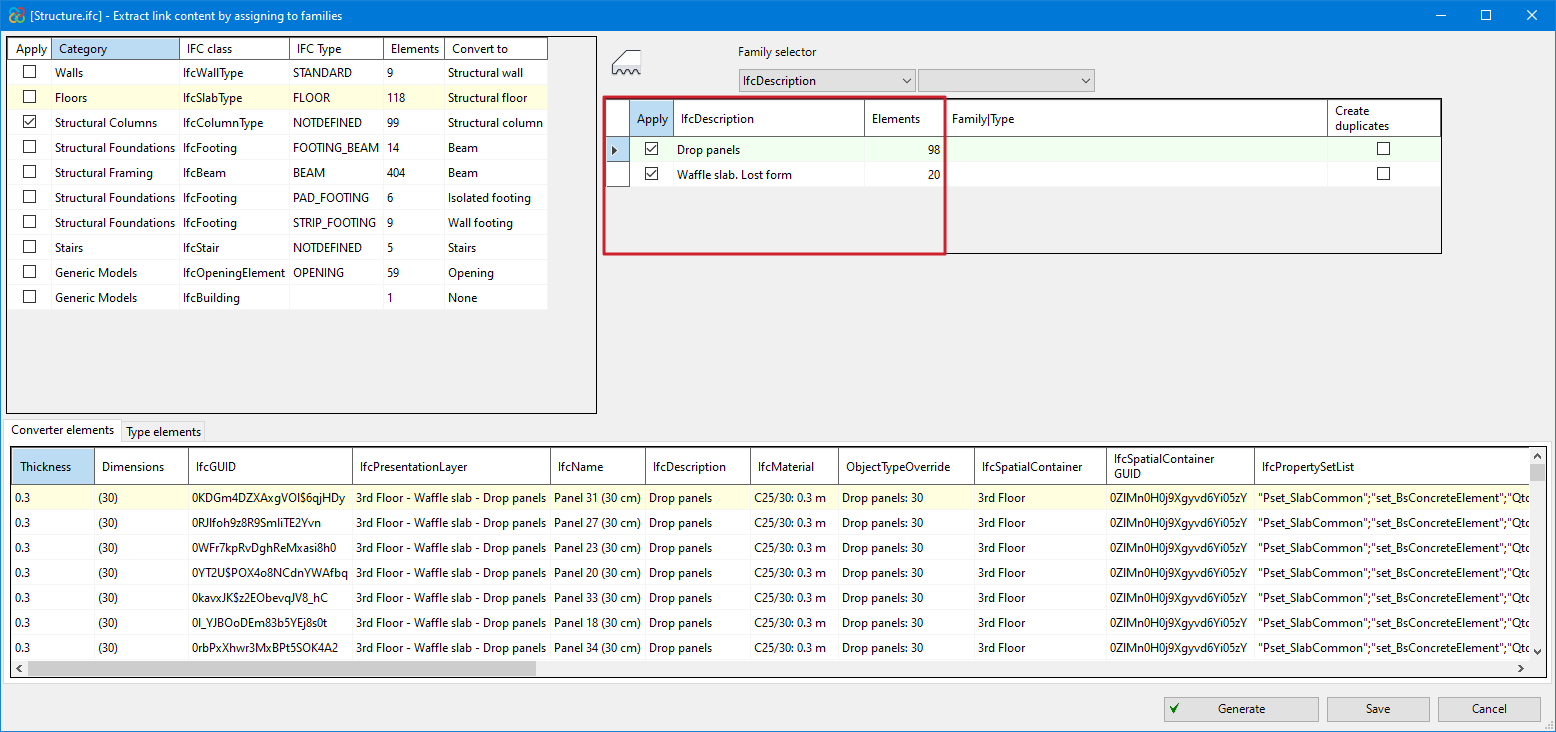
    In the highlighted red part of the image, all types are shown together with the instances of the category that have been selected in the "Main section". The existing families in the Revit template can be assigned to them and converted to native.
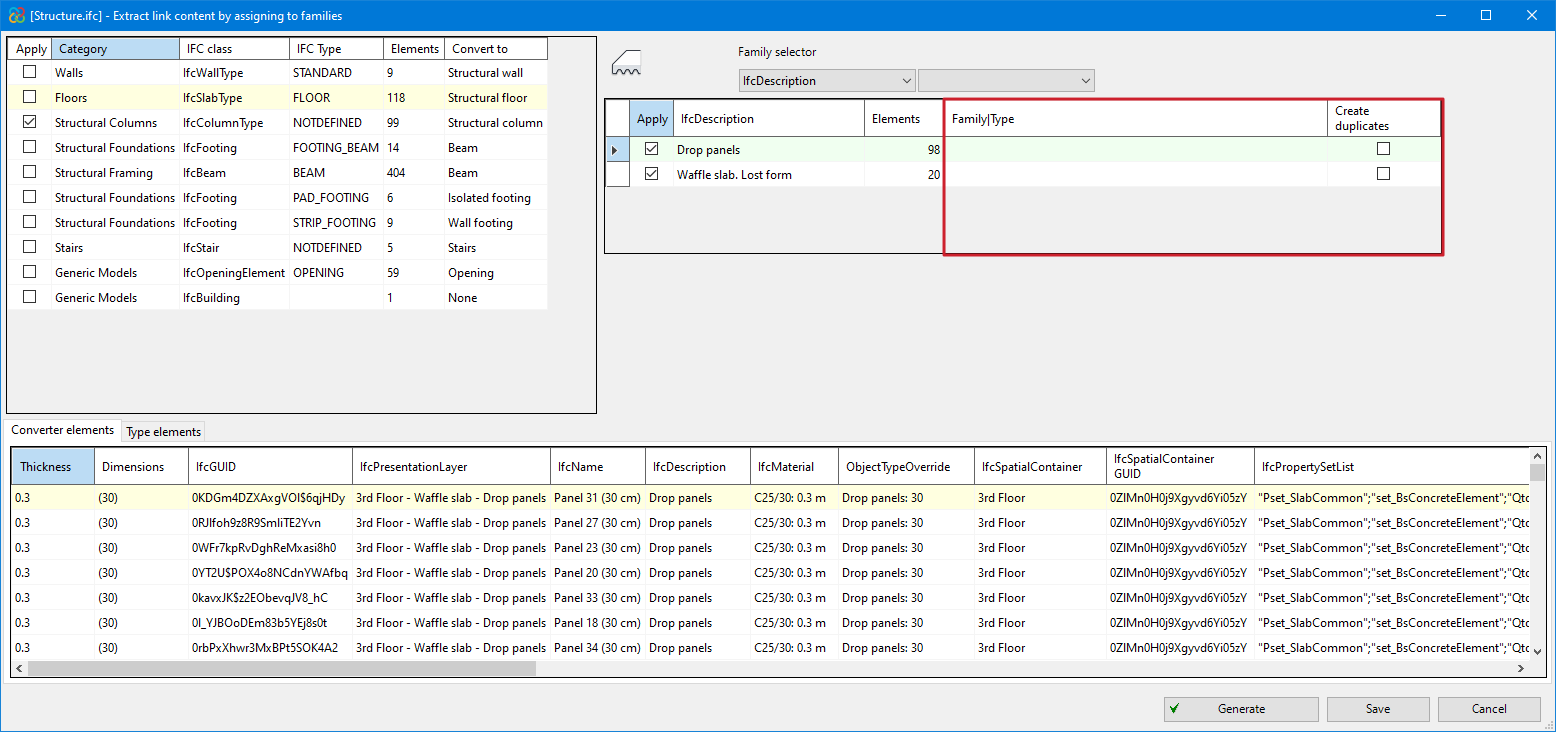
  • The same table allows users to create duplicates if the assigned family contains type parameters and not instance parameters ("Create duplicates" column).
  • When assigning a family with instance parameters, users must assign the parameters of the family with no need to duplicate types (users are recommended to load the families that are necessary and are not included by default in the Revit template before exporting).
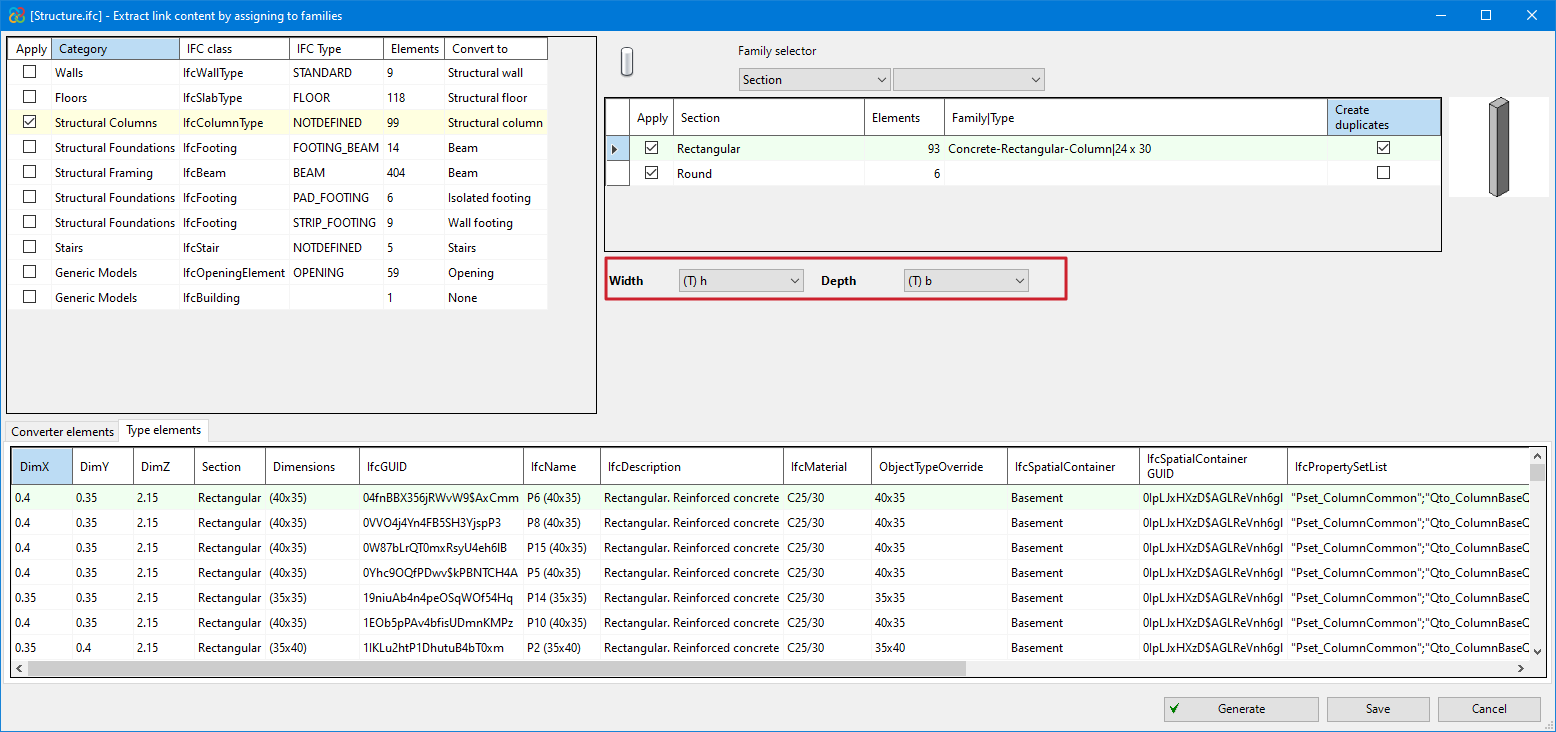
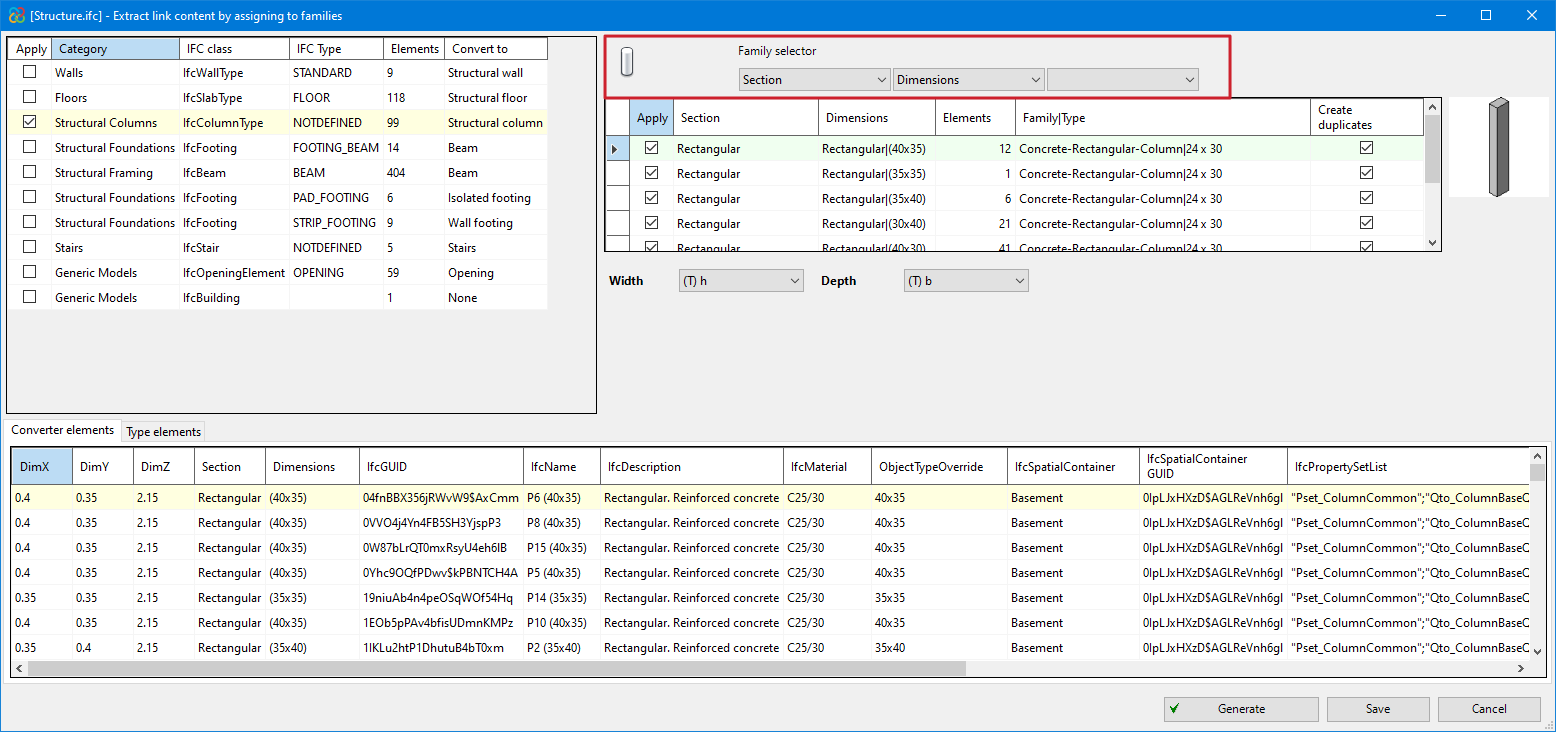
  • Several filtering buttons are available to make the workflow easier for the users, allowing them to view different types of instances.
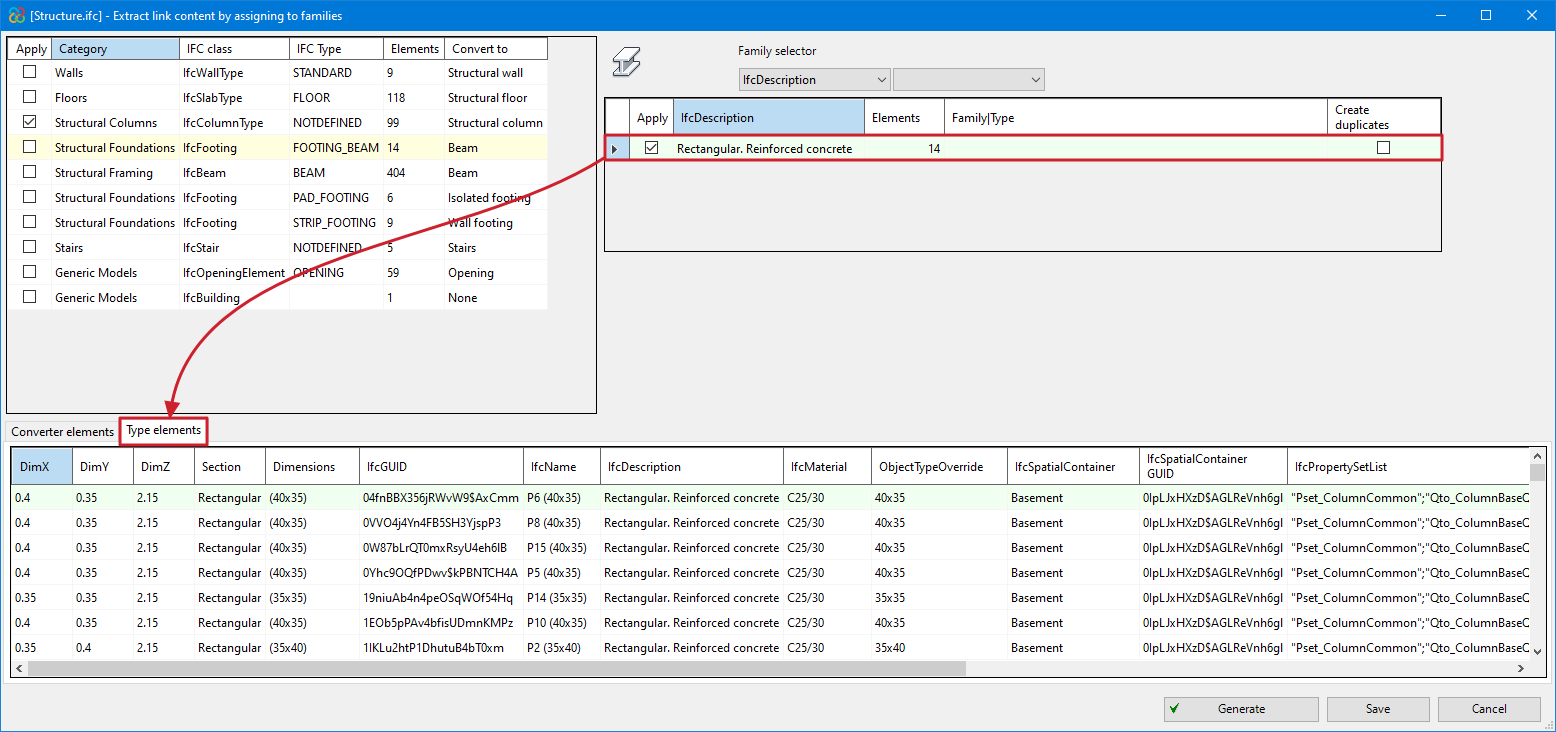
  • Converter instances/Type instances


    In the bottom part of the dialogue box "Extract contents of the link and assign it to families", the information for all the instances of the converter is displayed or, in the case of selecting a specific type, only the information for the instances of this type can be seen.

Version 2025.a of the "Open BIM - Revit Plugin" includes a new module that allows users to convert a structural model (included in a project on the BIMserver.center platform) into native Revit elements by assigning families. The options of this module are centralised in the "Extract contents of the link and assign it to families" option in Revit's "Open BIM collaboration" menu.

To use the "Generation of native Revit elements based on a structural IFC" module, users must install the "Open BIM - Revit" plugin (which can be downloaded from the BIMserver.center platform) and have the necessary permissions in a separate CYPE license, which is purchased through an annual subscription.

As well as implementing this module, version 2025.a of the "Open BIM - Revit Plugin" is compatible with Revit versions 2021 to 2025.

More information about this new module can be found in the new feature "Generating native Revit elements based on a structural IFC".

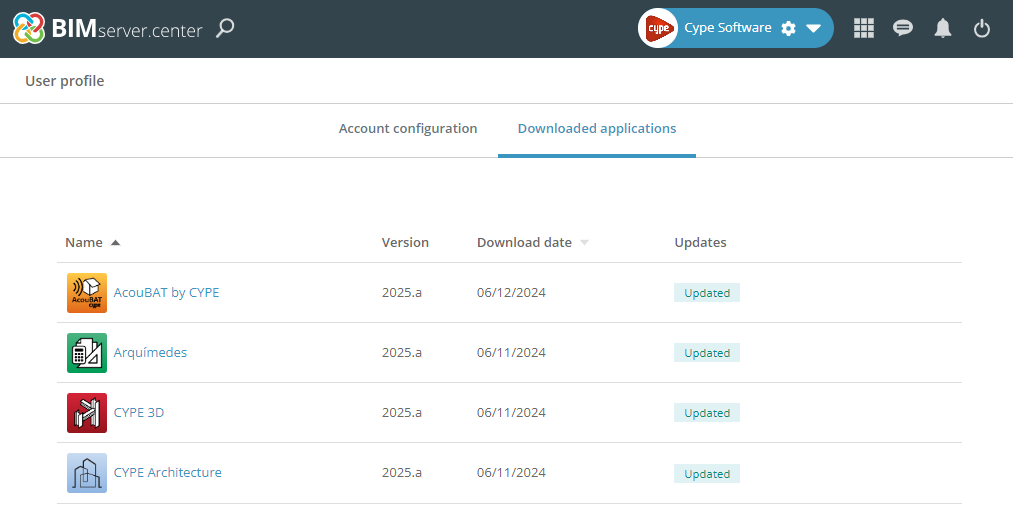
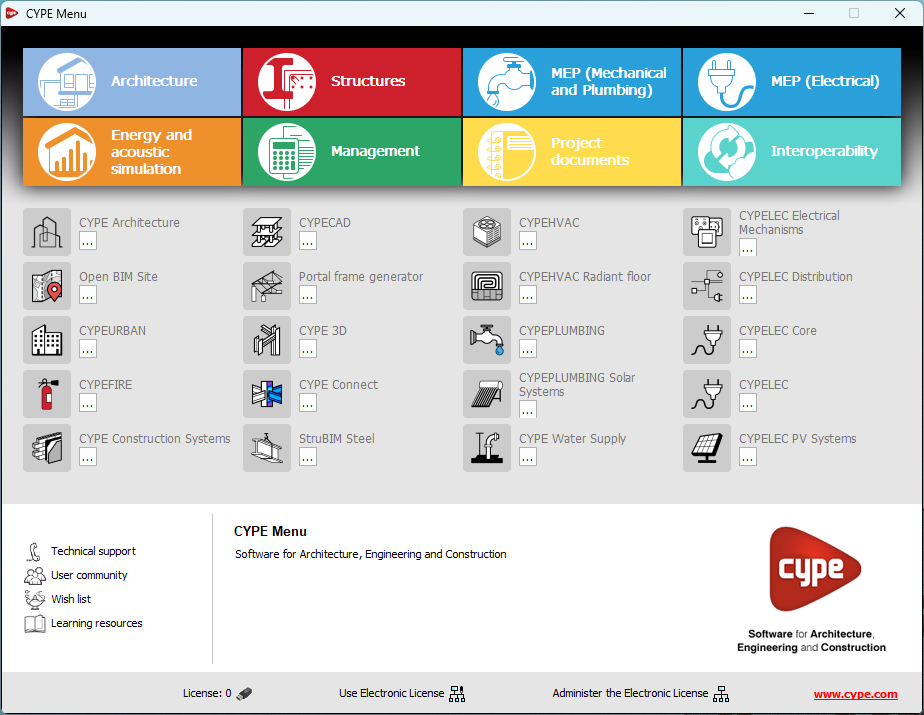
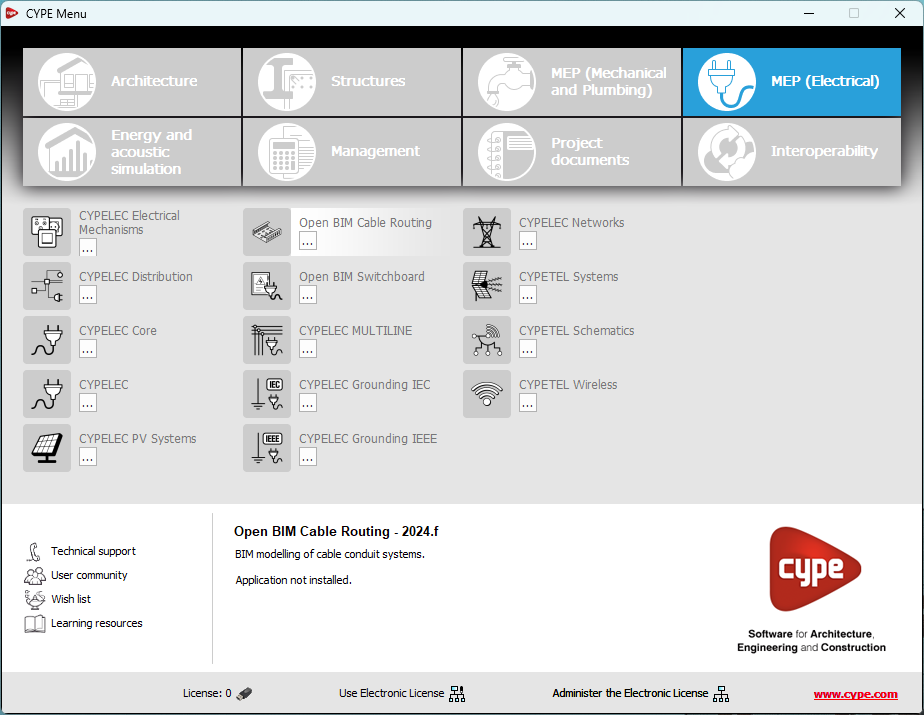
In version 2025.a, CYPE Menu (which can now be downloaded exclusively from the BIMserver.center platform) has new program groups.

  • Architecture
  • Structures
  • MEP (Mechanical and Plumbing)
  • MEP (Electrical)
  • Energy and acoustic simulations
  • Project management
  • Project documents
  • Interoperability

Most of the CYPE applications are sorted into these groups. In previous versions, most of these applications could only be downloaded as single applications from the BIMserver.center platform.

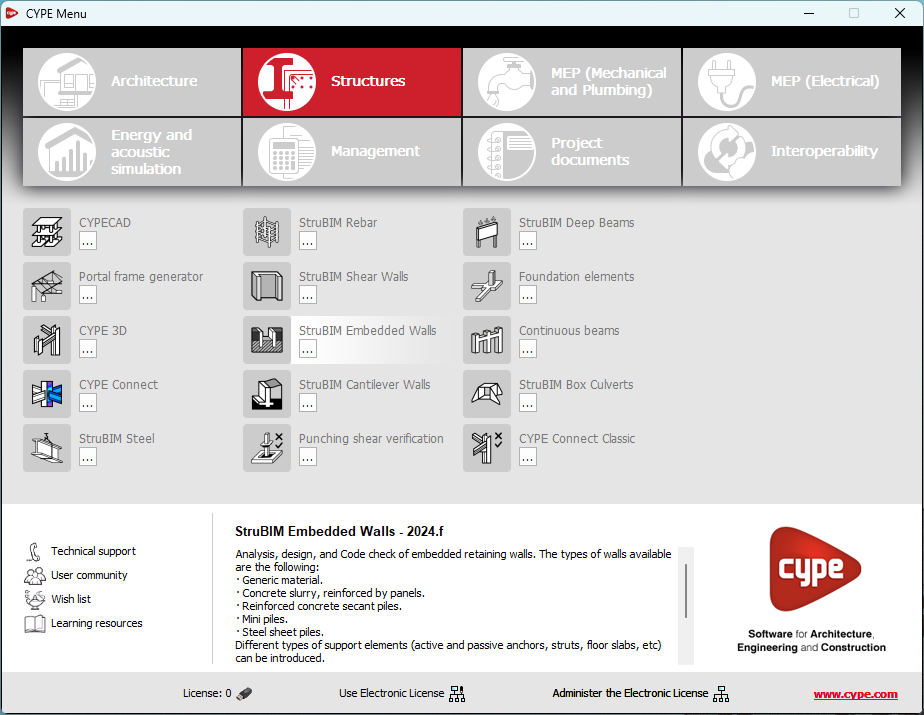
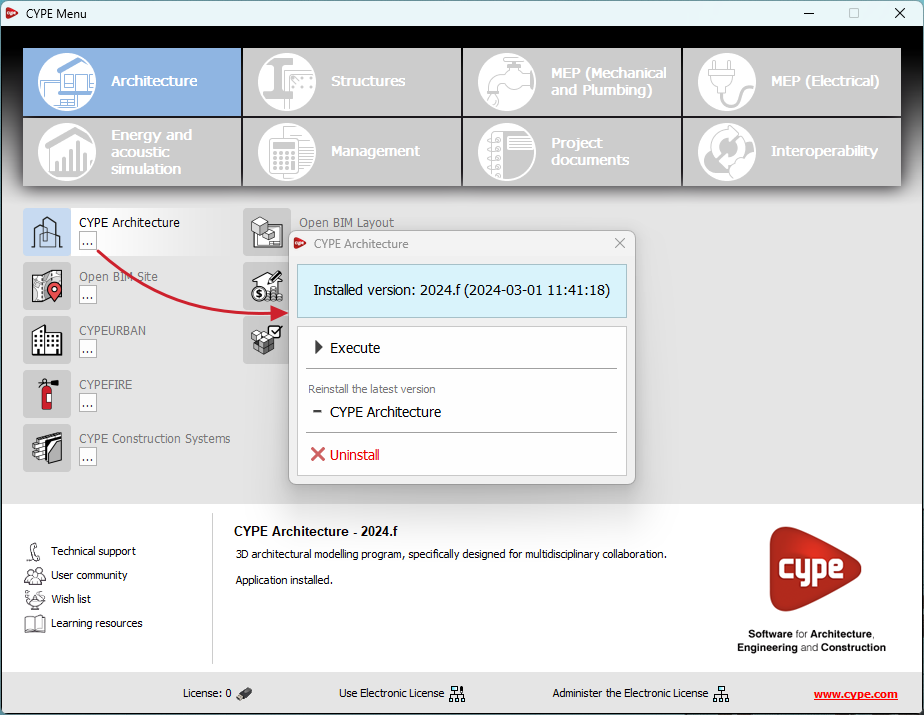
By downloading and installing CYPE Menu, users will only have the CYPE programs menu installed, but none of the applications included in it will be downloaded or installed. Initially, each of the icons representing the CYPE Menu applications appears in a box with a grey background. When clicking on any of them for the first time (or on the button under the application's name), a contextual menu will appear allowing users to download and install the latest version of that application or an earlier version if available. Earlier versions (from 2024 onwards) will be available for those programs that include paid modules. Normally, free applications will only allow the latest version of these programs to be installed. Any installed version of any application can be uninstalled.

When an application has been installed, by clicking on the button under its name, the context menu that appears includes the "Uninstall" option.

More information on this program menu can be found in the FAQ "How to download and install programs from CYPE’s general menu".

The CYPE Menu download of versions before 2025 (with the applications included) is still available in the download area of the CYPE website.

CYPE Mentor