
Update history​​

CYPE Architecture

The export of columns and basement walls has been improved:

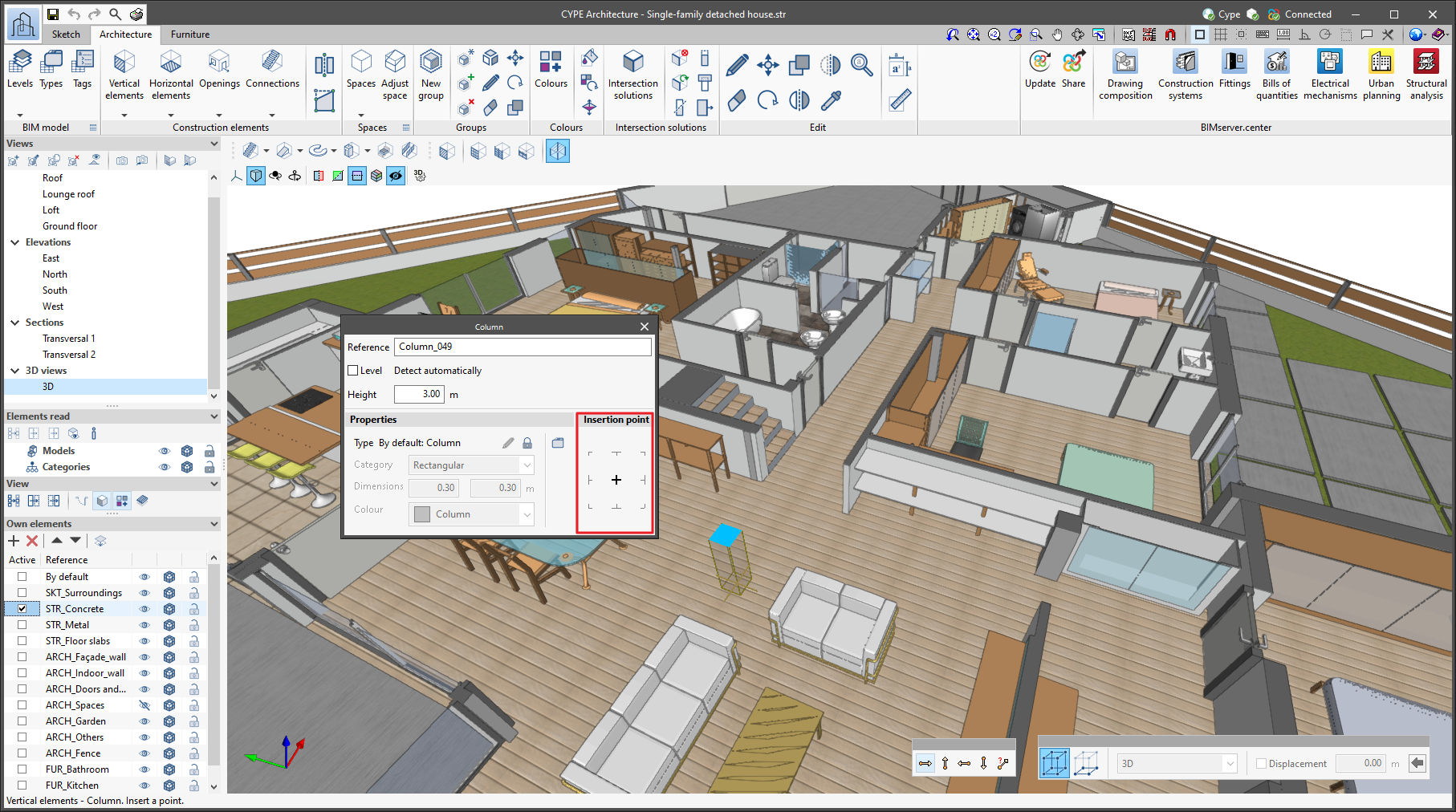
  • The export of columns includes the insertion point
    This property is read and imported by CYPECAD from the architectural model generated by CYPE Architecture. CYPECAD uses it to define the fixed point of the column.
  • Basement walls are exported as load-bearing walls
    This property is read and imported by CYPECAD from the architectural model generated by CYPE Architecture.
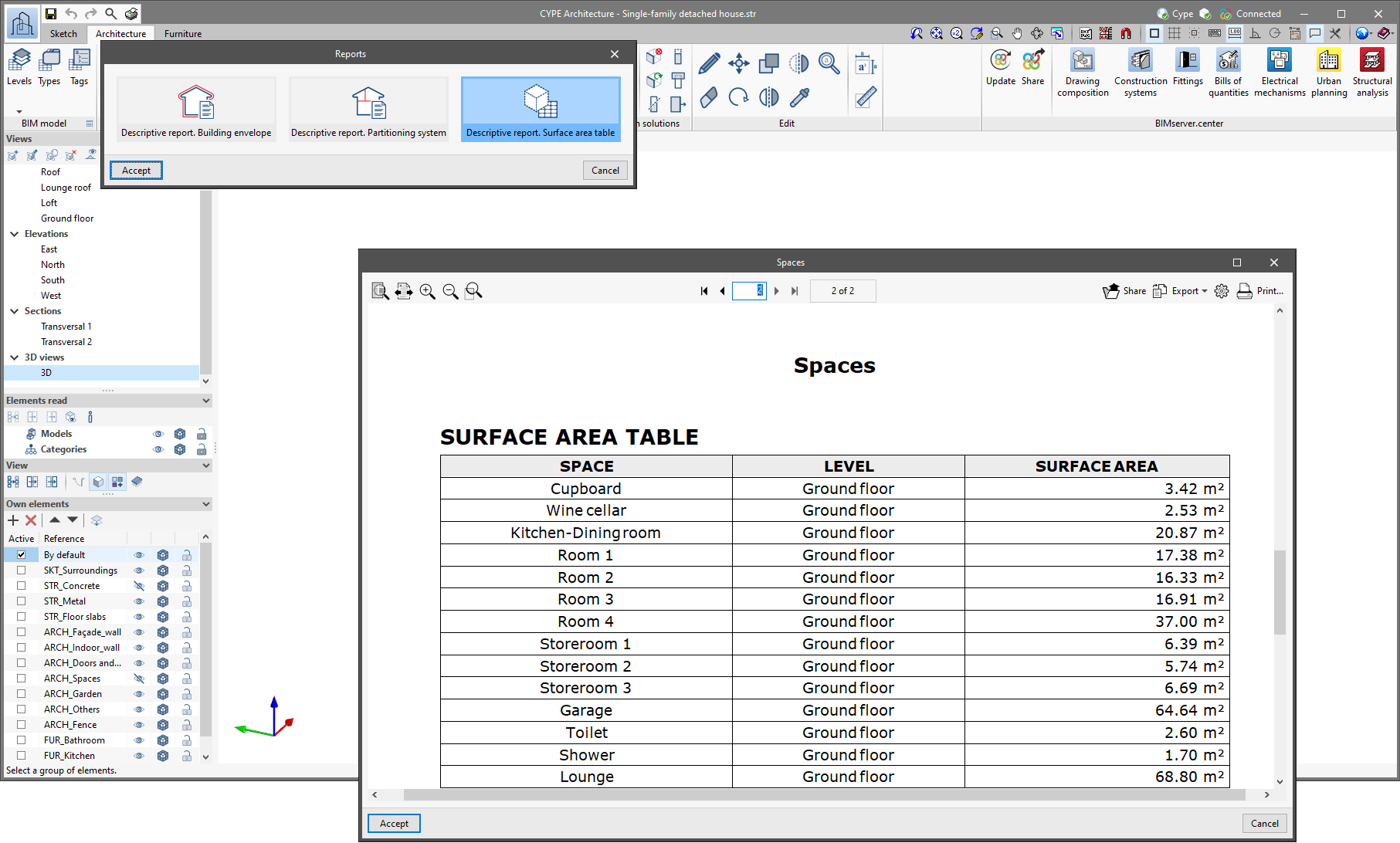
The program generates space table reports that can be displayed on screen by selecting the "Reports" tool in the program's top toolbar. The reports can be included in the technical specifications and are exported to the project.

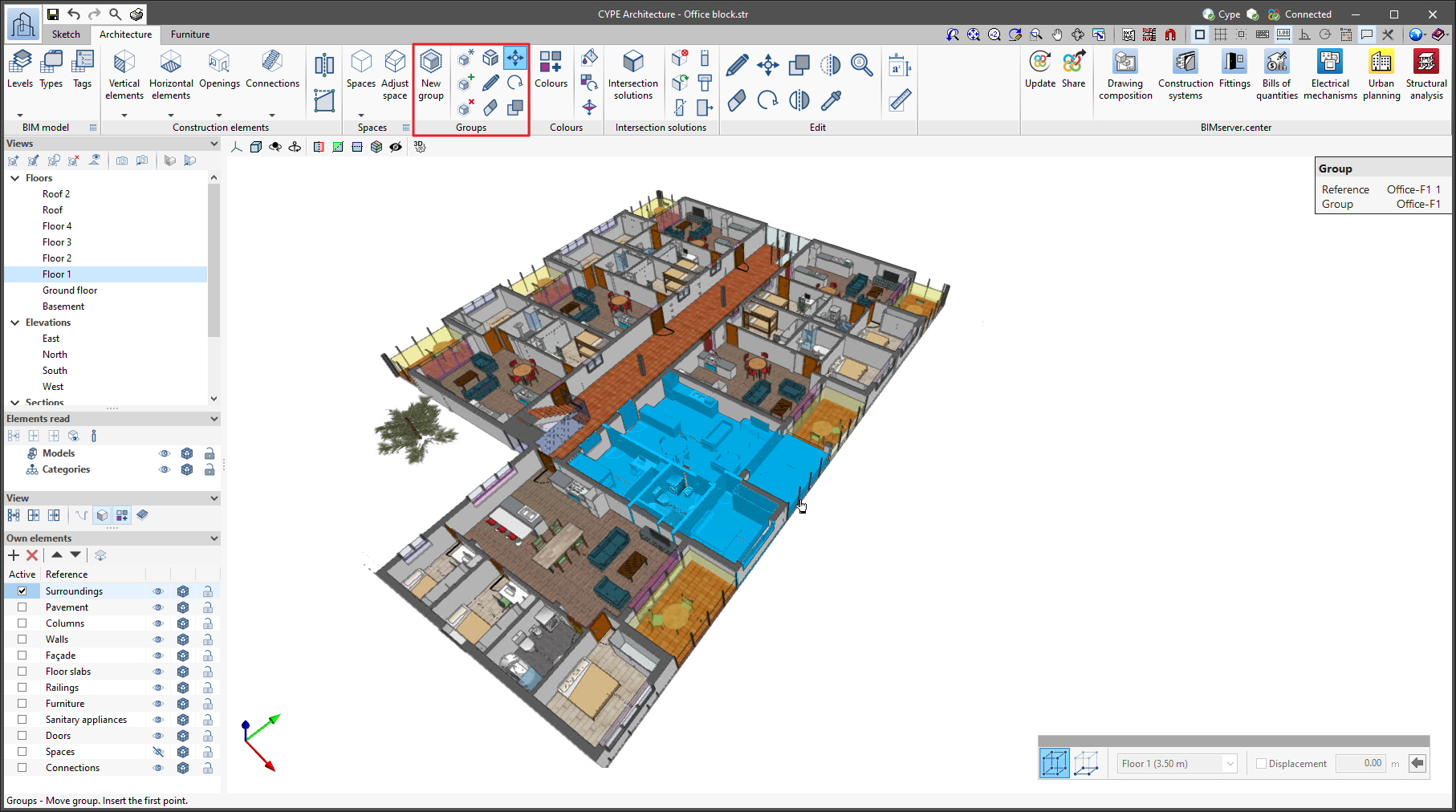
A new set of tools has been added to the top bar of the "Architecture" tab in the program. This is the "Groups" feature that allows architectural and furniture elements to be grouped together. Any modification made to a group will also have an effect on the equal groups, thus facilitating the modelling of the building and its subsequent corrections.

Groups are particularly useful in buildings with repetitive elements, such as types of dwellings or building premises.

The "Groups" feature has several tools:

  • New group
    Allows users to select the architectural and furniture elements to be included in a group and to give the group a name.
  • Copy group
    Creates a copy of a group, generating an equal group. Any modification generated in the group or its copies will be reflected in the rest of the equal groups.
  • Move group, Rotate group, Delete group and Edit group
    These tools allow all elements in the group to be edited at the same time.
  • Explode group
    Ungroups all elements in the group and deletes the group. The elements remain in the job, but no longer belong to a group.
  • Make unique group
    Creates a new group from an existing group, but this new group will not be linked to the original group nor to those that are equal.
  • Add elements to a group
    This feature can be used for adding an element to a given group. If an element is added, this action will also be carried out in the equal groups.
  • Unlink elements from a group
    This feature can be used for unlinking an element from a given group. If an element is unlinked, this action will also be carried out in the equal groups.

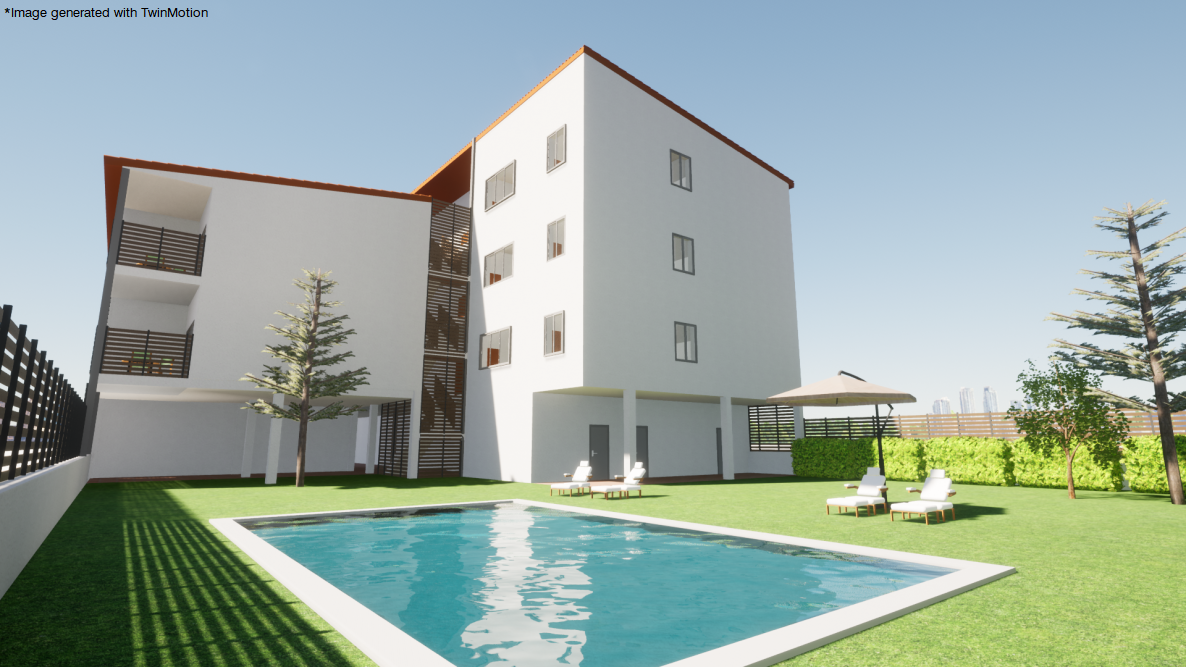
Version 2023.a of all CYPE programs that have the "Print/Save the current view" tool (usually all programs that display graphic information in a window) allows any generated 3D model to be exported in FBX format. This is one of the most common and accepted formats among rendering software (Twinmotion, Enscape, Sketchup+Vray, among others).

Exportation in FBX format is found in the dialogue box that opens when selecting the "Print/Save the Current View" button in any of the programs that include this tool. This feature allows users to export any element that is visible in the current window at that moment in FBX format (as well as elements that have been imported from other programs).

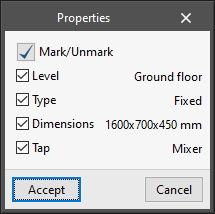
The "Copy properties" tool has been implemented in the "Edit" group of the "Furniture" tab. This tool allows users to copy properties between the same type of elements (Reference, Level, Colour, etc.).

To copy the properties of an element, follow the steps below. Please note that you can only copy properties between elements of the same type.

  1. Click on the "Copy properties" button in the "Edit" menu.
  2. Select the item for which you wish to copy the properties.
  3. A panel will appear with a list of properties that can be copied and their values.
  4. Choose the properties you wish to copy and accept the panel.
  5. Select the elements to which you wish to copy the chosen properties.
  6. Right-click the mouse and the properties will be transferred to the selected elements.

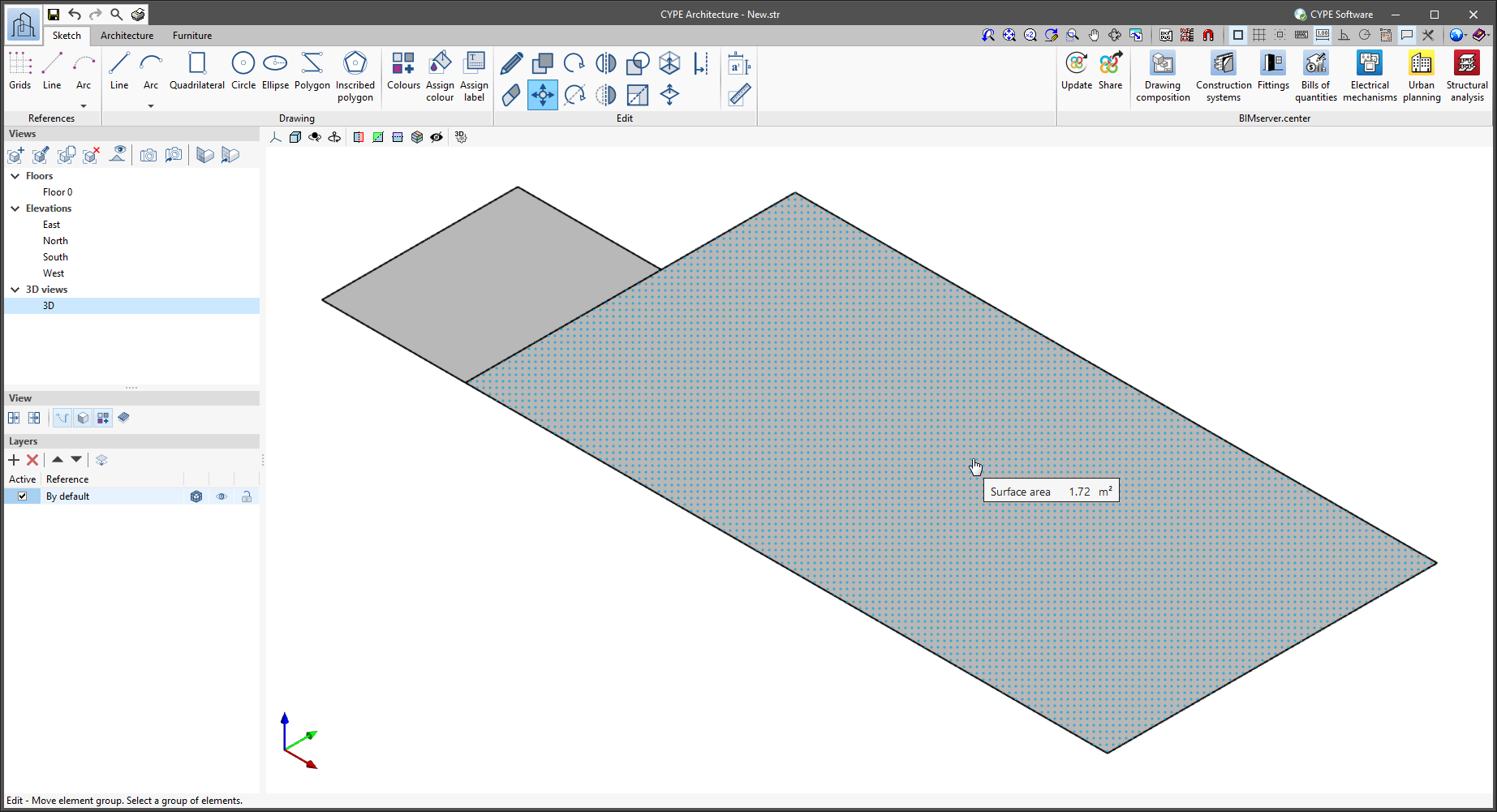
By activating the "Show information texts" feature and hovering over any surface generated with the tools in the "Sketch" tab, the area of that surface will be displayed. Furthermore, the program exports the area information and the label of the surface so that it is accessible in other programs from the Open BIM workflow and in the BIMserver.center viewer.

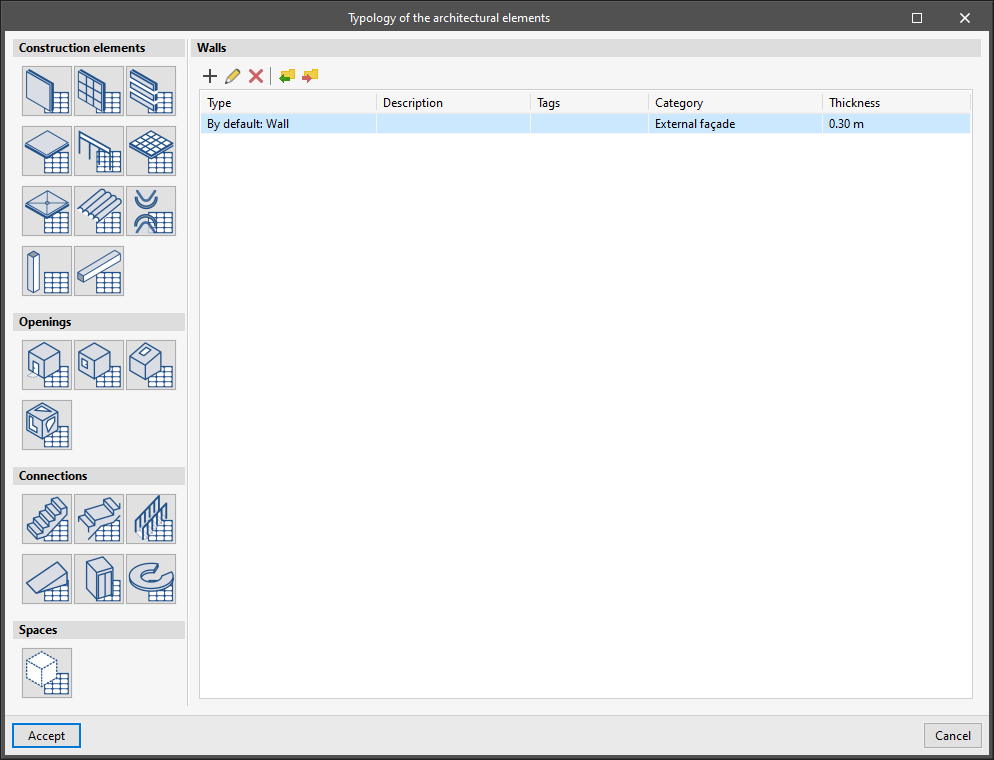
When opening a new job, the program will assign a typology by default for each one of the architectural elements.

Typologies simplify the introduction of elements and their later modification and also allow the elements to be classified in other programs in the Open BIM workflow.

The functionality of the "Search" button in the "Edit" group in the "Architecture" tab allows searching not only by the reference to the element but also by its associated typology.

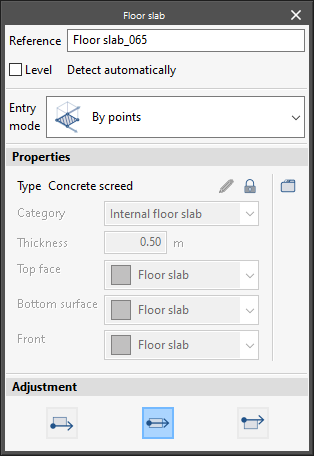
The program facilitates the introduction of architectural elements and furniture in 3D views, automatically detecting to which level they belong.

This new function can be deactivated, in which case the program will allow the user to manually choose the level where they wish to enter the element.

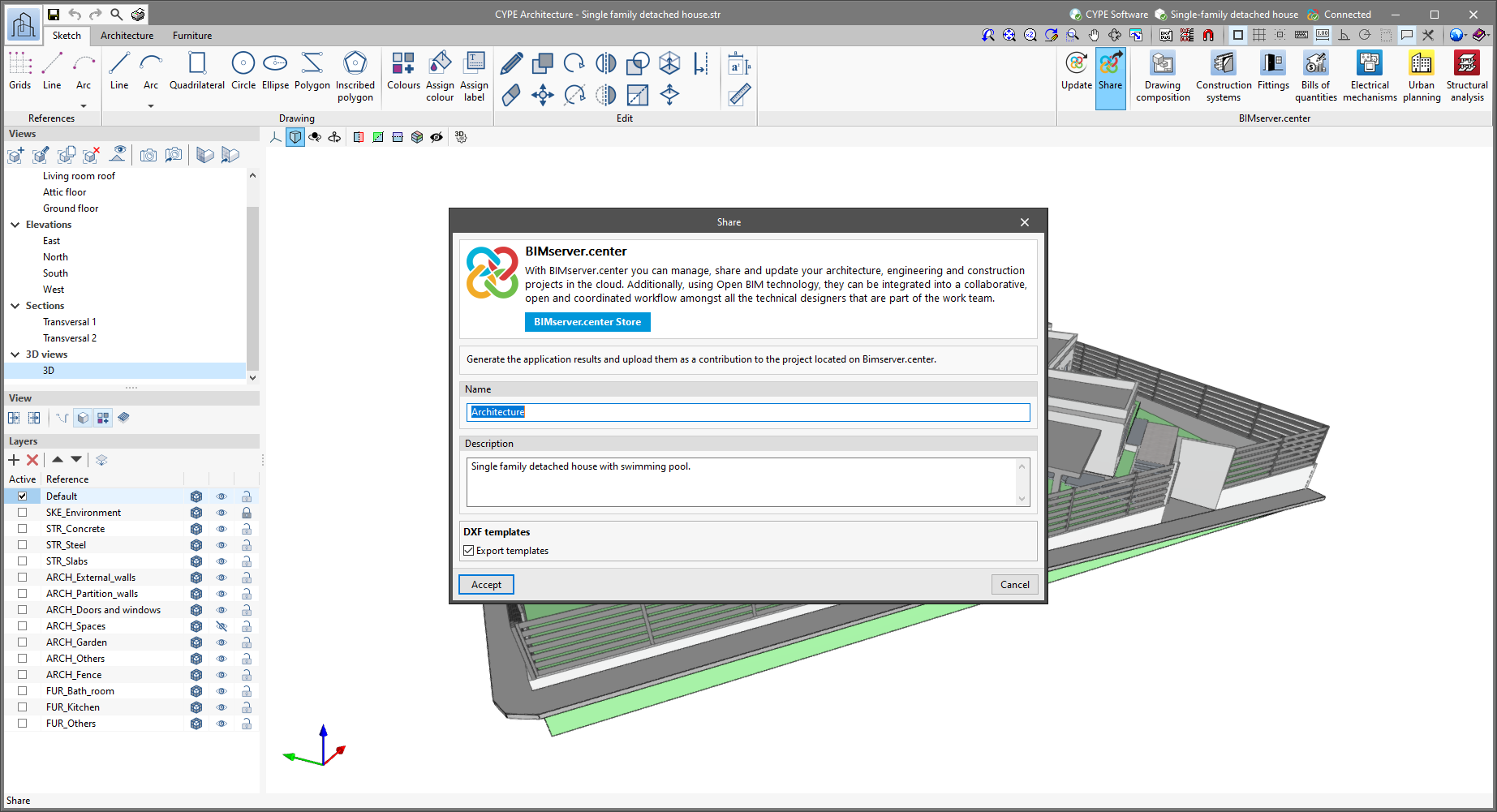
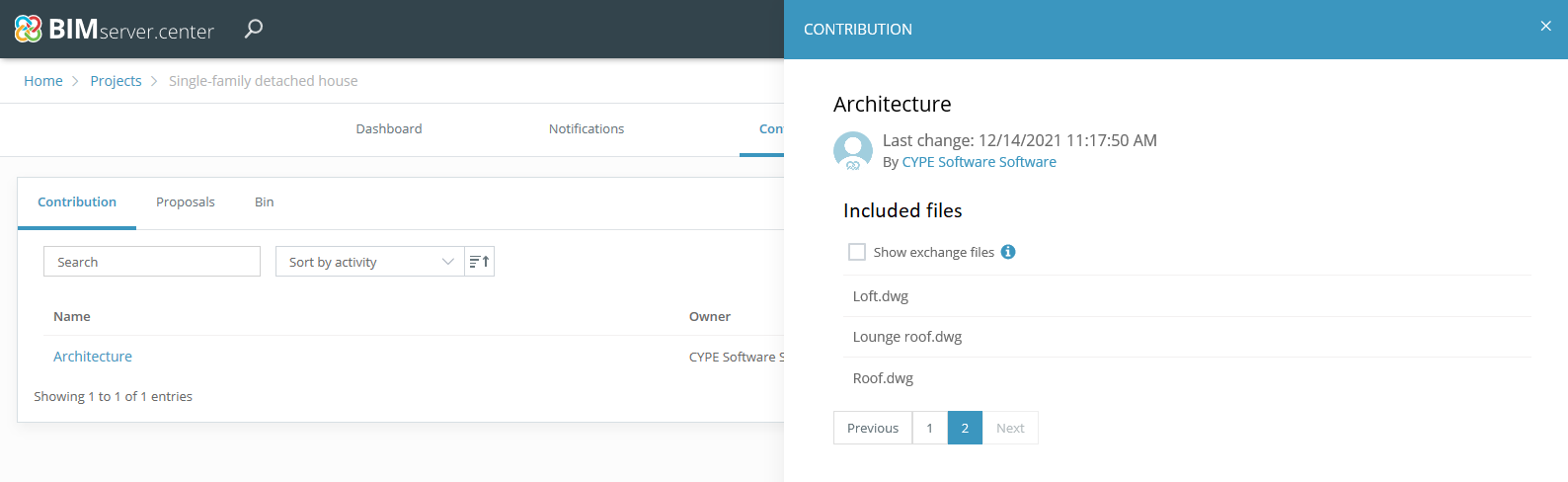
When exporting the CYPE Architecture architectural model in a BIMserver.center project, the program can automatically generate templates in DWG format. These templates will facilitate modelling in other Open BIM workflow programs that are connected to that project, especially for those working in a 2D environment.

The templates are generated from each of the plan views available in the "Views" panel, taking the "Distance to the top plane" of each of them as a reference.

Once the CYPE Architecture architectural model has been exported to the chosen project on the BIMserver.center platform, the templates can be loaded in other Open BIM workflow programs connected to that project, and their visibility can be configured from the "DXF-DWG Template" button in each program.

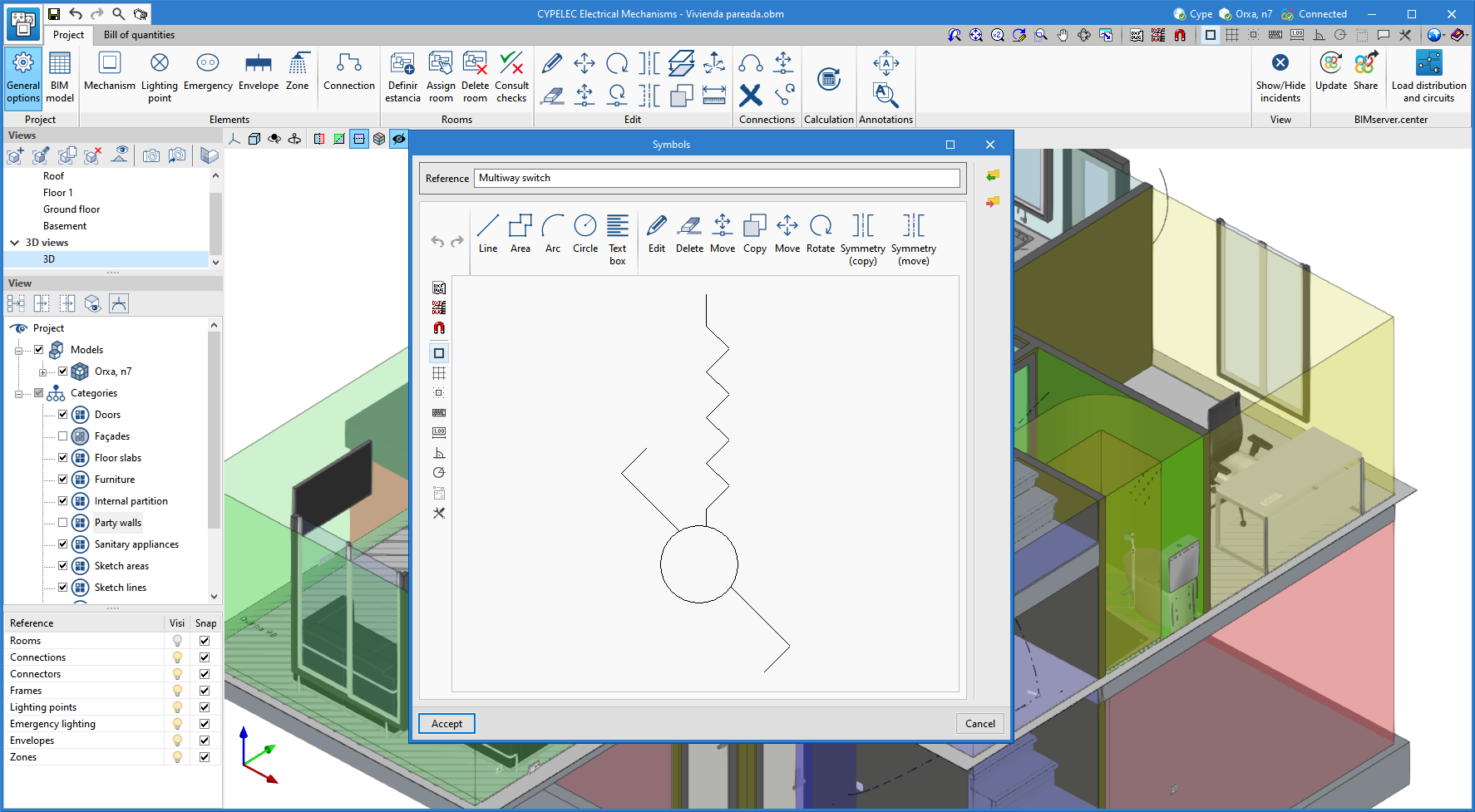
In the applications listed below, apart from the symbols included to represent elements that are introduced in their corresponding installations, symbols in DXF or DWG format can be imported:

  • CYPELEC Electrical Mechanisms
  • CYPEPLUMBING Water Systems
  • CYPEPLUMBING Sanitary Systems
  • CYPEPLUMBING Solar Systems
  • CYPEPLUMBING Schematic Diagram
  • CYPEHVAC

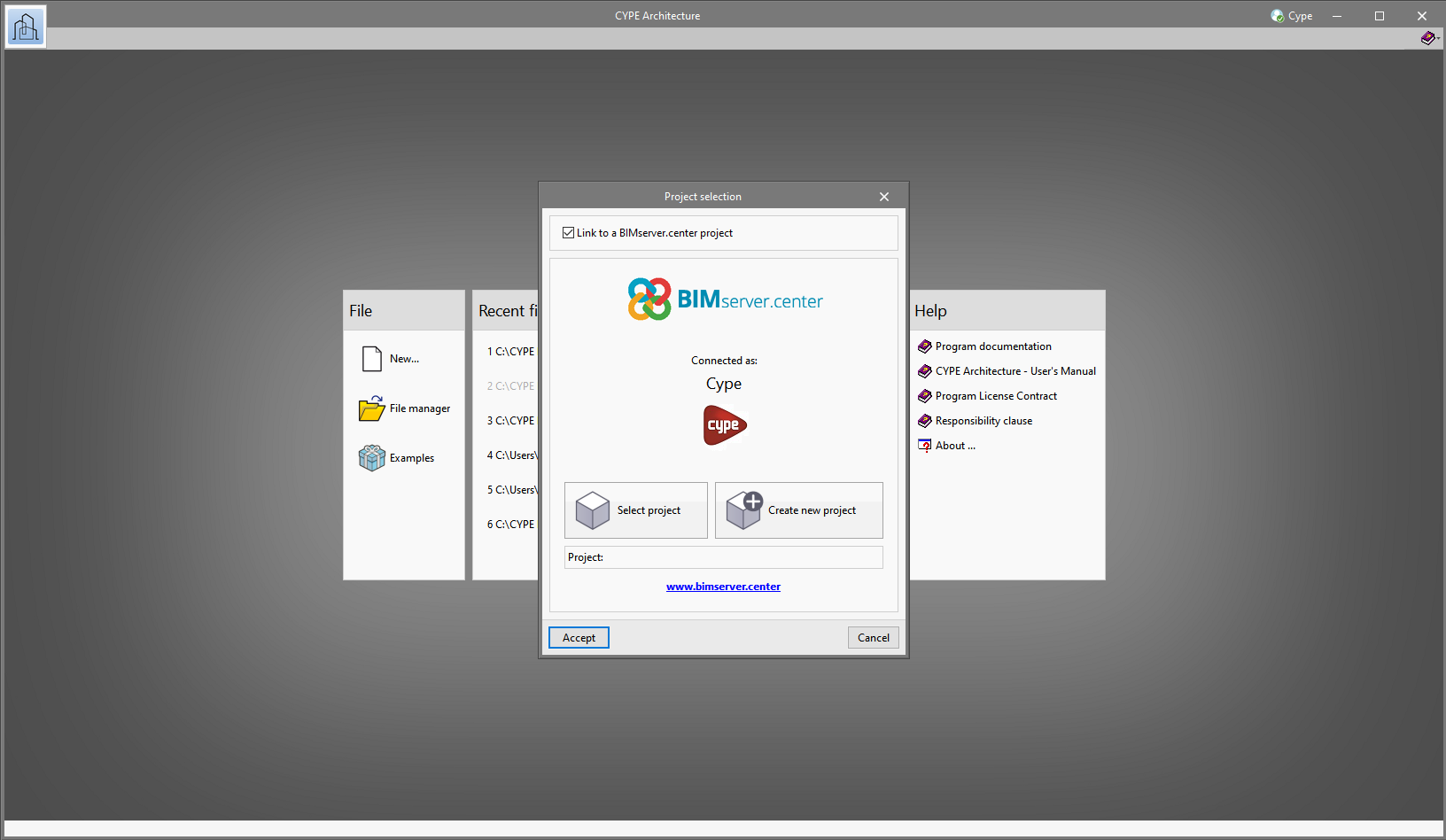
As of version 2022.e, applications that are connected to BIMserver.center communicate with the platform more directly. As a result, it is no longer necessary to specify the user account(s) and projects to be synchronised in the BIMserver.center Sync tool before using the applications. When a user signs in from a desktop application, it automatically establishes the connection to the project.

Previously, some applications required the user to connect to BIMserver.center and select a project in order to start a job. Now, this is no longer necessary and the link will only need to be established when updating the project or sharing a contribution.