

Update history​​

CYPECAD

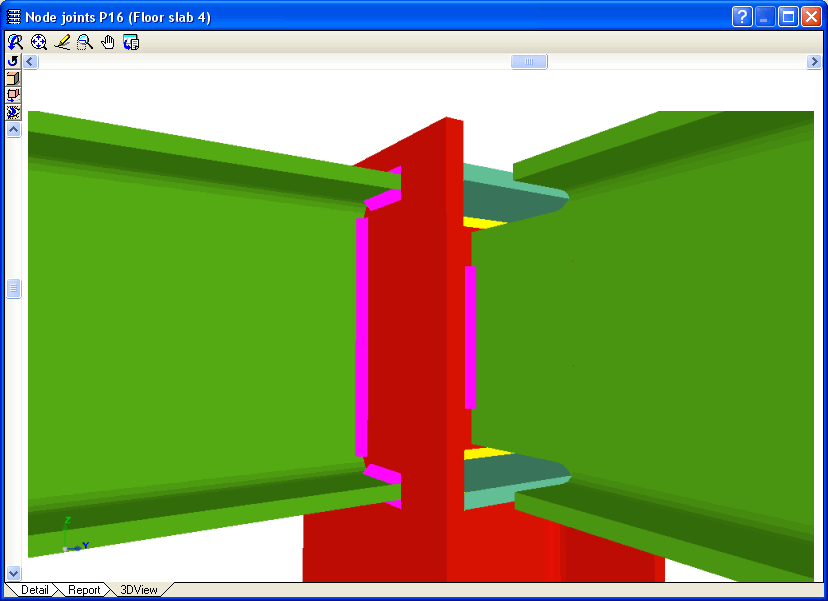
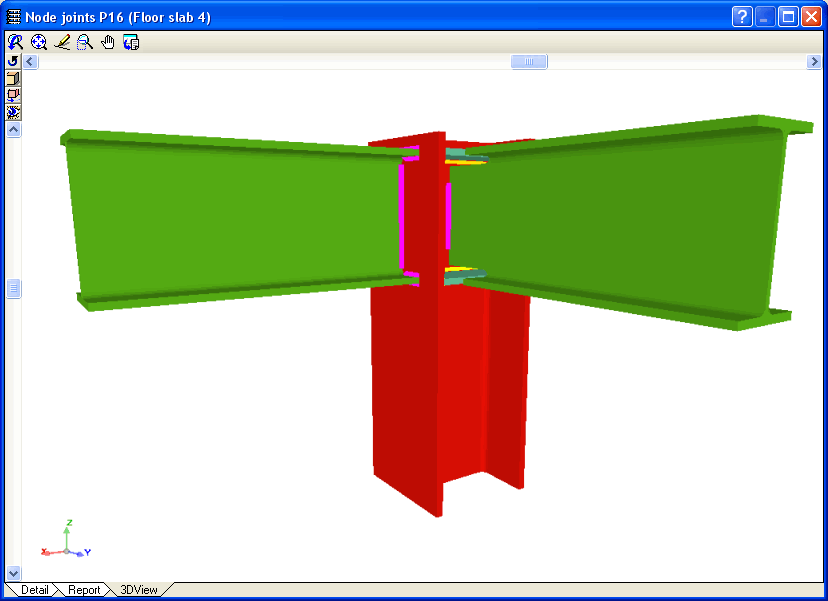
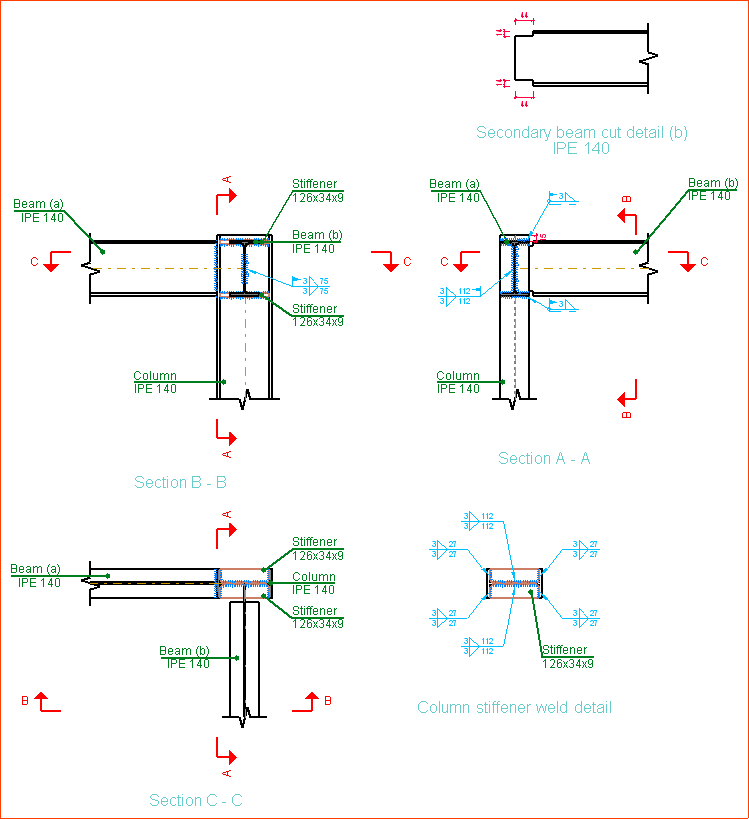
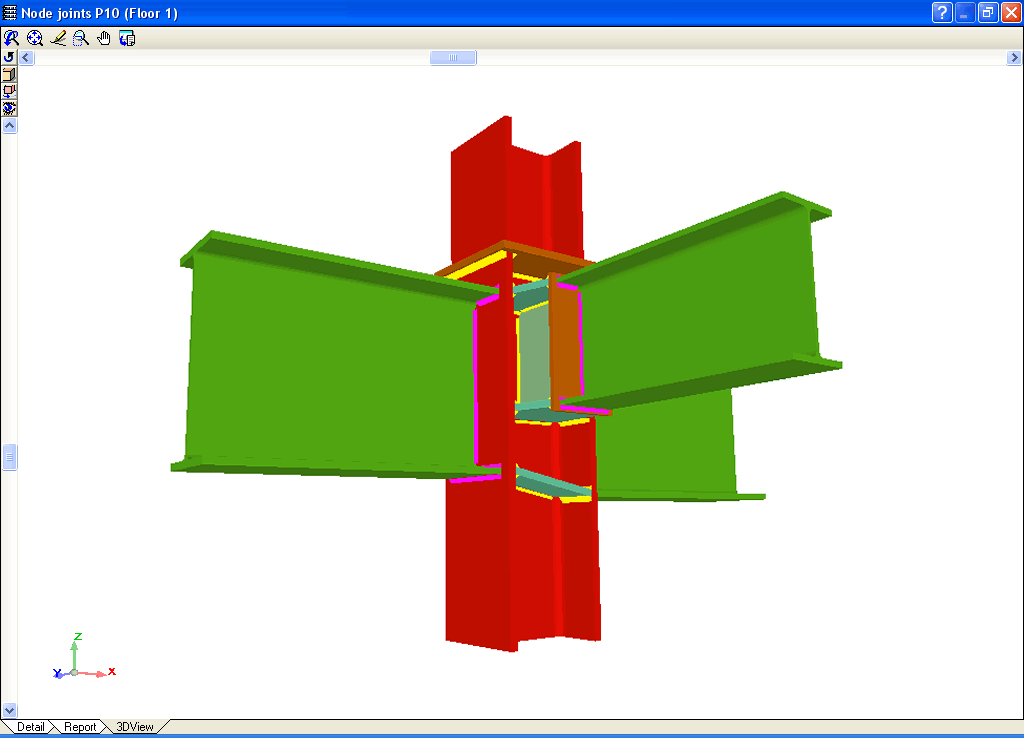
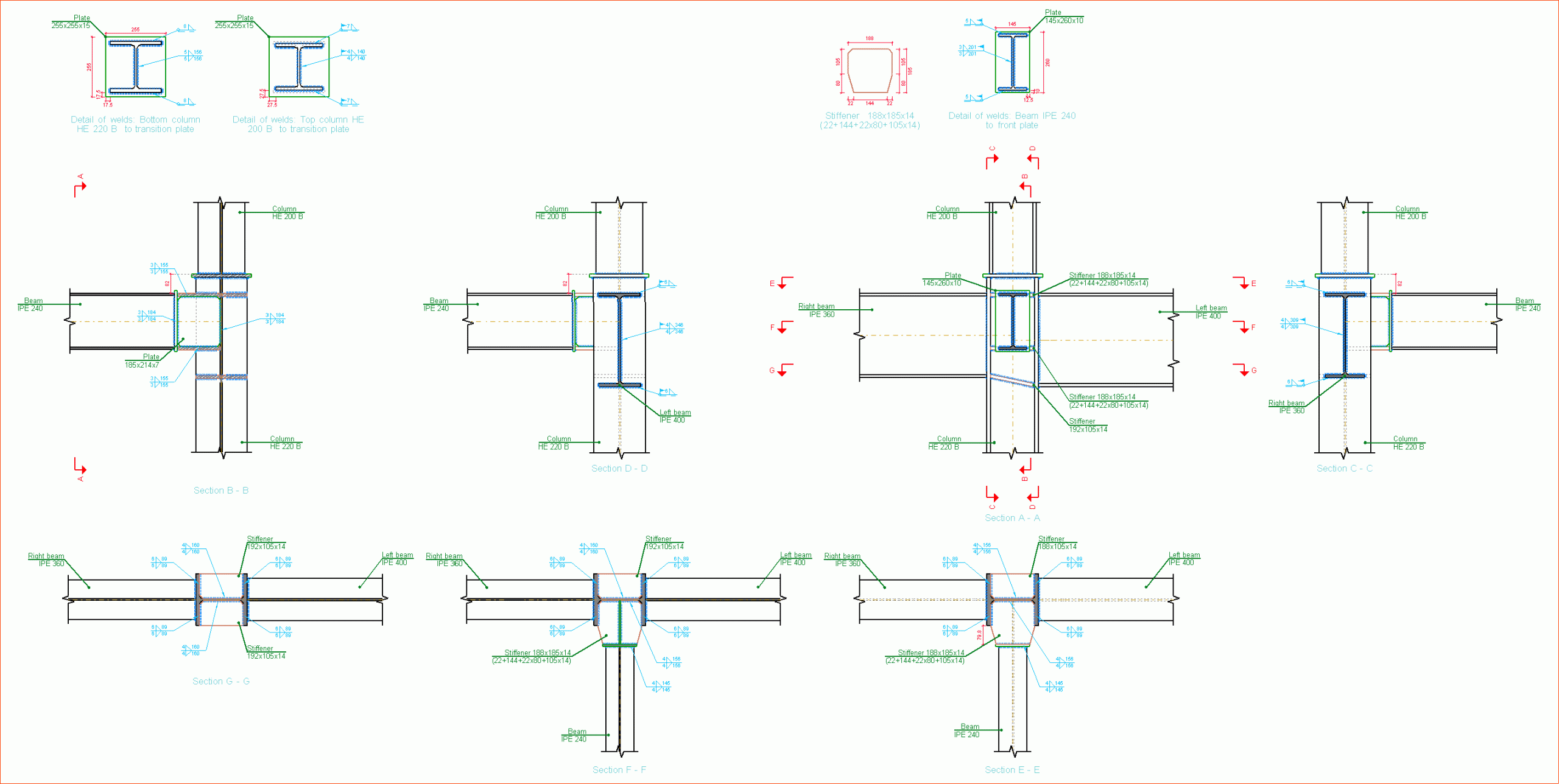
The new module: Joints III. Welded – Building frames with rolled and welded steel I sections allows CYPECAD, Metal 3D and the Integrated 3D structures of CYPECAD to carry out the automatic design of welded connections of common rolled and welded I steel sections in building frames.

More information on the properties of this module can be found in Welded joints for building frames with rolled and welded steel I sections (implement code, type of implemented connections…)

The following new features are available as of the 2010.a version of the program:

  • Creation of user drawing series
  • Longitudinal and transverse reinforcement in stairs
  • Final report of the last undergone analysis
  • Improvement in reports
    • Job data
    • Forces and reinforcement of columns, shear walls and walls
  • Improvements in the waffle slab dialogue box
  • Improvements in the soil lateral pressures dialogue box

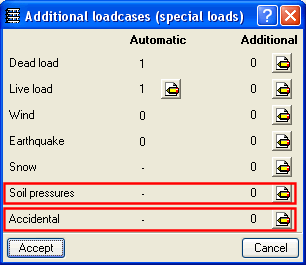
The following type of loads can be introduced for all the implemented codes:

  • Soil lateral pressures
    This type of load is included in persistent or transitory situations
  • Accidental loading (different to seismic or fire, e.g. impacts or explosions)
    This type of load is included in new accidental situations

Once the structure has been analysed, the columns, beams and details of the designed connections (designed with Joints I, Joints II and Joints III modules) of CYPECAD and its Integrated 3D structures can be exported to TEKLA Structure and TecnoMetal 4D and in CIS/2 format. Concrete columns and beams are exported as generic bars and steel bars as they appear in Metal 3D. For more information click on Export to TEKLA Structure, Export to TecnoMetal 4D and Export in CIS/2 format.

To be able to export the columns and beams of CYPECAD and its Integrated 3D structures to TEKLA Structure, TecnoMetal 4D and CIS/2 format, the Export to TEKLA Structure, Export to TecnoMetal 4D and Export in CIS/2 format modules are not required in the user license. If the user possesses one of the Joints I, Joints II or Joints III modules as well as one of the Export modules, the connections may be designed and exported to the aforementioned programs.

As well as the joints included in the new Joints III. Welded. Building frames with rolled and welded steel I sections module, it is also possible to design in CYPECAD I section (rolled or welded) columns and beams contemplated in modules: Joints I. Welded. Warehouses with rolled and welded steel I sections and Joints II. Bolted. Warehouses with rolled and welded steel I sections. In this first 2010 version of CYPE programs, the connections of modules Joints I and Joints II can only be designed in CYPECAD at the end of the last column span. However in future updates of the 2010 version, it will be possible to resolve connections in other spans of the column. In Metal 3D and in the Integrated 3D structures of CYPECAD, it is possible to design all the joints implemented in the Joints I, Joints II and Joints III modules.

The connections between elements belonging to Integrated 3D structures and steel beams and columns of CYPECAD can also be designed, as long as their type is included amongst the resolved connections of one of the Joints modules (Joints I, Joints II or Joints III).

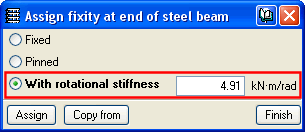
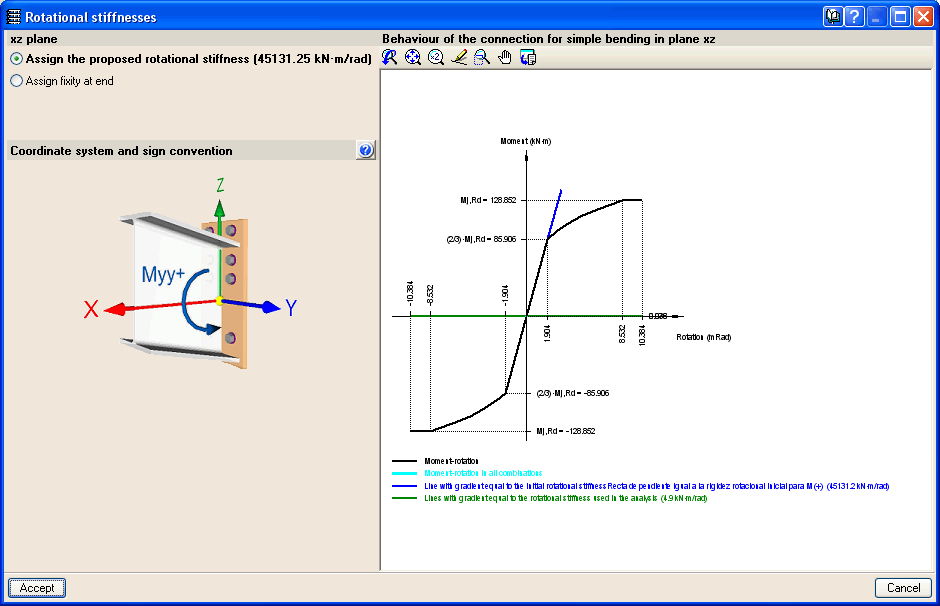
Now that bolted connections can be designed in CYPECAD (those contained in the Joints II module), it is possible to assign a rotational stiffness at beam ends (Beam Definition tab > Beams/Walls> Fixity at beam end).

The new Joints menu has been included in the Results tab, where the options for connection design, joint consultation and rotational stiffness at beam ends can be edited.

A bearing pressure check of the soil below the foundations by verifying the reference bearing pressure according to DTU 13.12 “Regles pour le calcul des fondations superficielles”. The check is undertaken for ultimate and serviceability limit states in accordance with the code, using the load combinations corresponding to each case and which CYPE programs generate automatically depending on the data introduced in the Limit states (combinations) menu.

P100 Seismic design code, Part 1 – P100-1/2006 (Romania), as of the 2010.a version.

ANSI/AISC 360 (LRFD) (USA), as of the 2010.a version.

Eurocode 2 (general document adapted to Romania) – EN 1992-1-1, as of the 2010.a version.

  • Check for shear buckling
    Within the shear checks carried out by the program, an additional check for shear buckling has been implemented for when the section web is slender.
  • Check for shear and bending
    When the shear effect in the calculation of the design bending moment is negligible, a justification text is generated.
  • Bending checks of elements
    When lateral buckling is negligible, a justification text is generated.
  • Torsion, shear, axial force, and biaxial bending checks of elements
    When the combined effect of torsion and shear is negligible, upon calculating the normal design forces, a justification text is generated.
  • Check for torsion
    The calculation of the plastic torsional modulus has been included in the checks for torsion, so a more precise analysis is carried out.
  • Sections with Iz > Iy
    It is now possible to check sections whose inertia in its Z-axis is greater than that of its Y-axis.

Code for Structural Design in the Republic of Panama (REP-04)
Implemented in CYPECAD and Metal 3D.

Algerian Seismic Loading Code RPA 99 / VERSION 2003 (Algeria)
Implemented in CYPECAD and Metal 3D.