
Update history​​

Plugin Open BIM - Revit

As well as the conversion of the structural elements "piles" themselves, in this 2025.d version, the possibility of converting the reinforcement of the piles into native entities within Revit has been incorporated.

This means that the reinforcement associated with these elements can be imported and recognised as native elements in the Revit model.

In this update, two new categories have been added to the Revit native entity converter: IfcPile and IfcMember, to extend and improve the classification and conversion of structural elements.

  • IfcPile
    Corresponds to deep foundation elements, specifically piles, which are topped by a pile cap. With this incorporation, these elements can be correctly identified within the IFC model and, subsequently, converted to native elements within Revit.
  • IfcMember
    Represents steel bar-type elements that are part of a structural assembly. With its implementation, these bars will be classified as column elements or beam elements, depending on their function within the structure, thus allowing their conversion to native elements without loss of information.

In version 2025.d, the ability to convert steel structures and 3D models integrated into native elements within the Revit environment has been added.

This feature can be used to import projects from CYPECAD or CYPE 3D that contain steel or composite structural components and their subsequent conversion to native Revit entities.

As of version 2025.d, the "Project selection" window in the apps connected to BIMserver.center incorporates a new notification system to inform users about the latest new features on the platform.

This space displays relevant messages about new features, enhancements and recommendations related to BIMserver.center. In addition, direct links to documents, tutorials and additional resources will be included to facilitate the adoption of these new features.

Version 2025.c of the Open BIM - Revit Plugin includes the following improvements and corrections to the program:

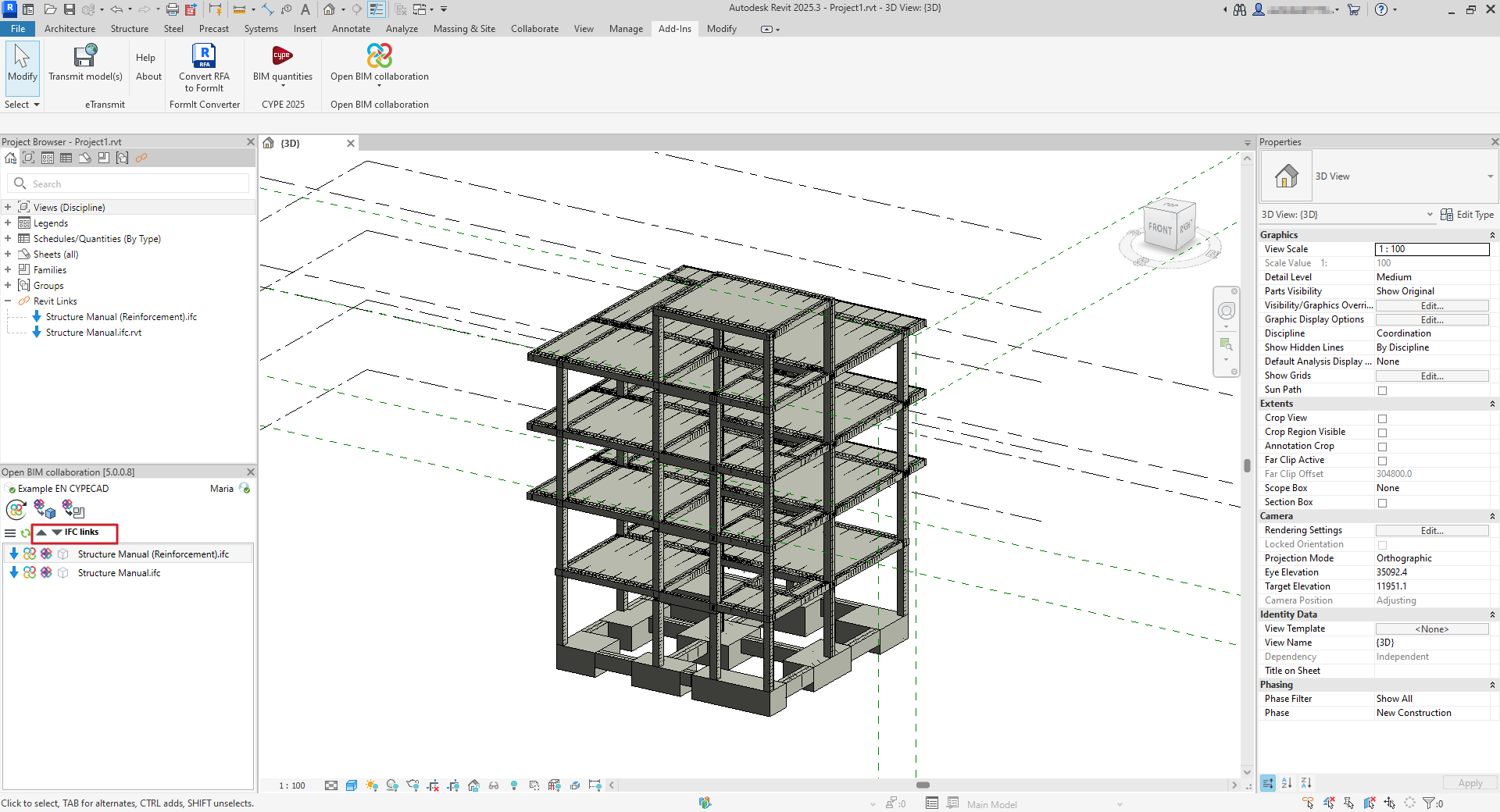
  • Sorting IFC links in the "Open BIM Collaboration" panel
    A new tool that sorts previously imported IFC links in the "Open BIM Collaboration" panel has been implemented.
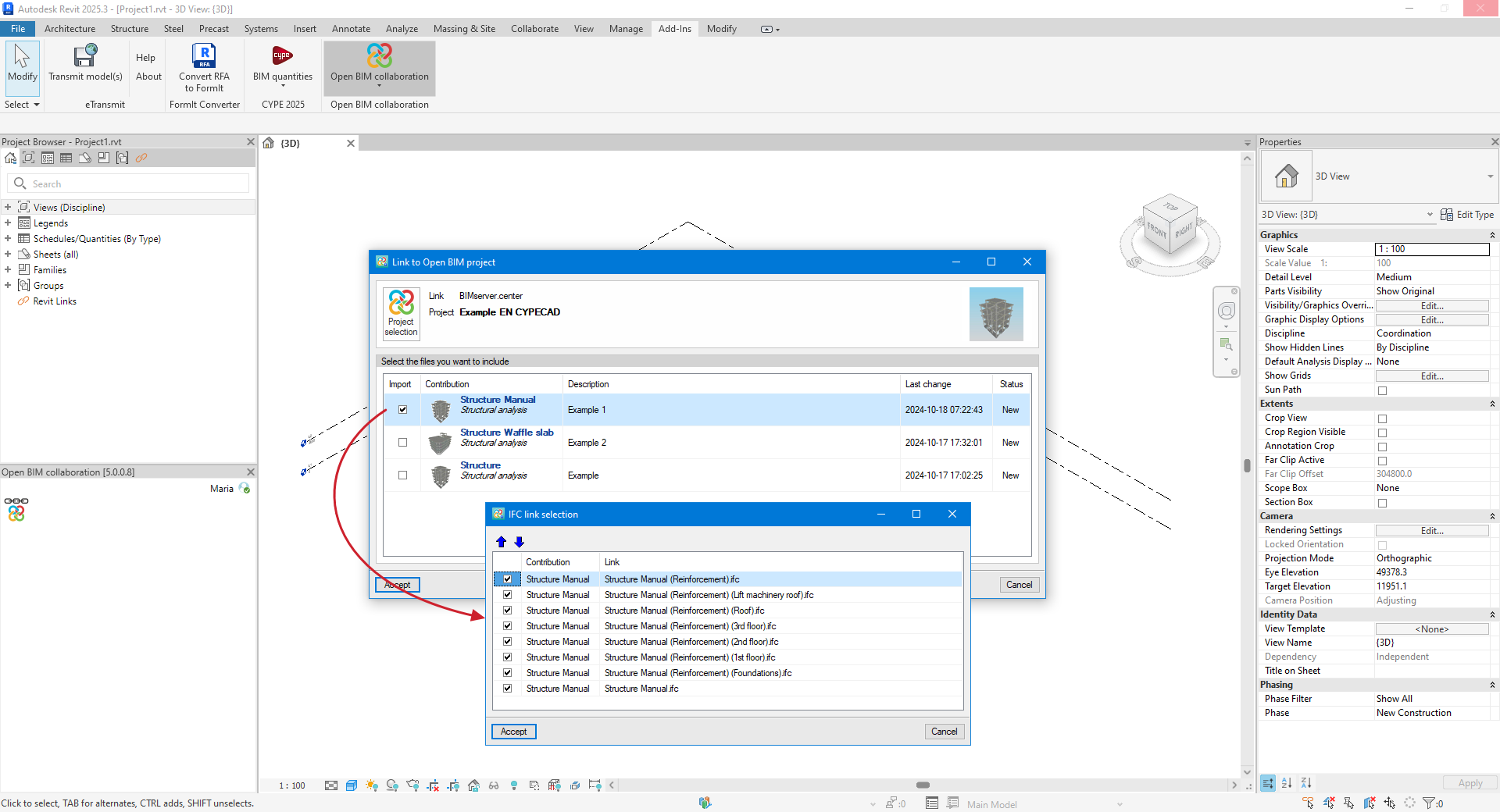
  • Selecting several IFCs from the same contribution
    When linking a BIMserver.center project to Revit, if the contribution to be imported contains two or more IFC files, users can specifically select the IFC files to be imported, without the need to load all of them.
  • "Link to Open BIM project" option is available

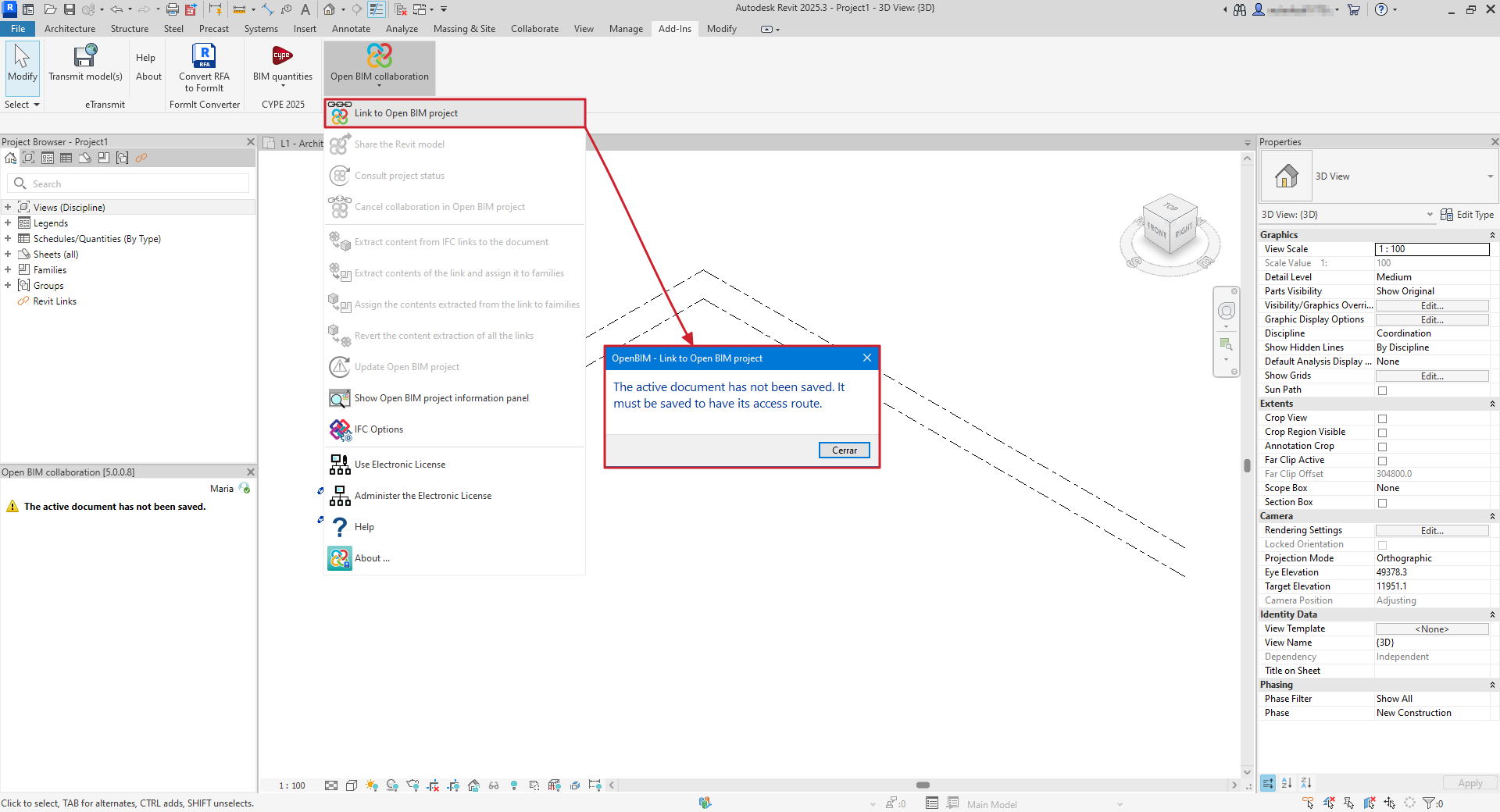
    In version 2025.b of the Open BIM - Revit Plugin, when generating a new model in Revit to link a contribution from BIMserver.centre, the "Link to Open BIM project" tool was not available until the job was saved for the first time and the Plugin obtained a path.
  • In version 2025.c, when a new Revit model is created, the "Link to Open BIM project" tool is available from the beginning.

    If this tool is used without recording the job, a warning like the one in the image will appear.

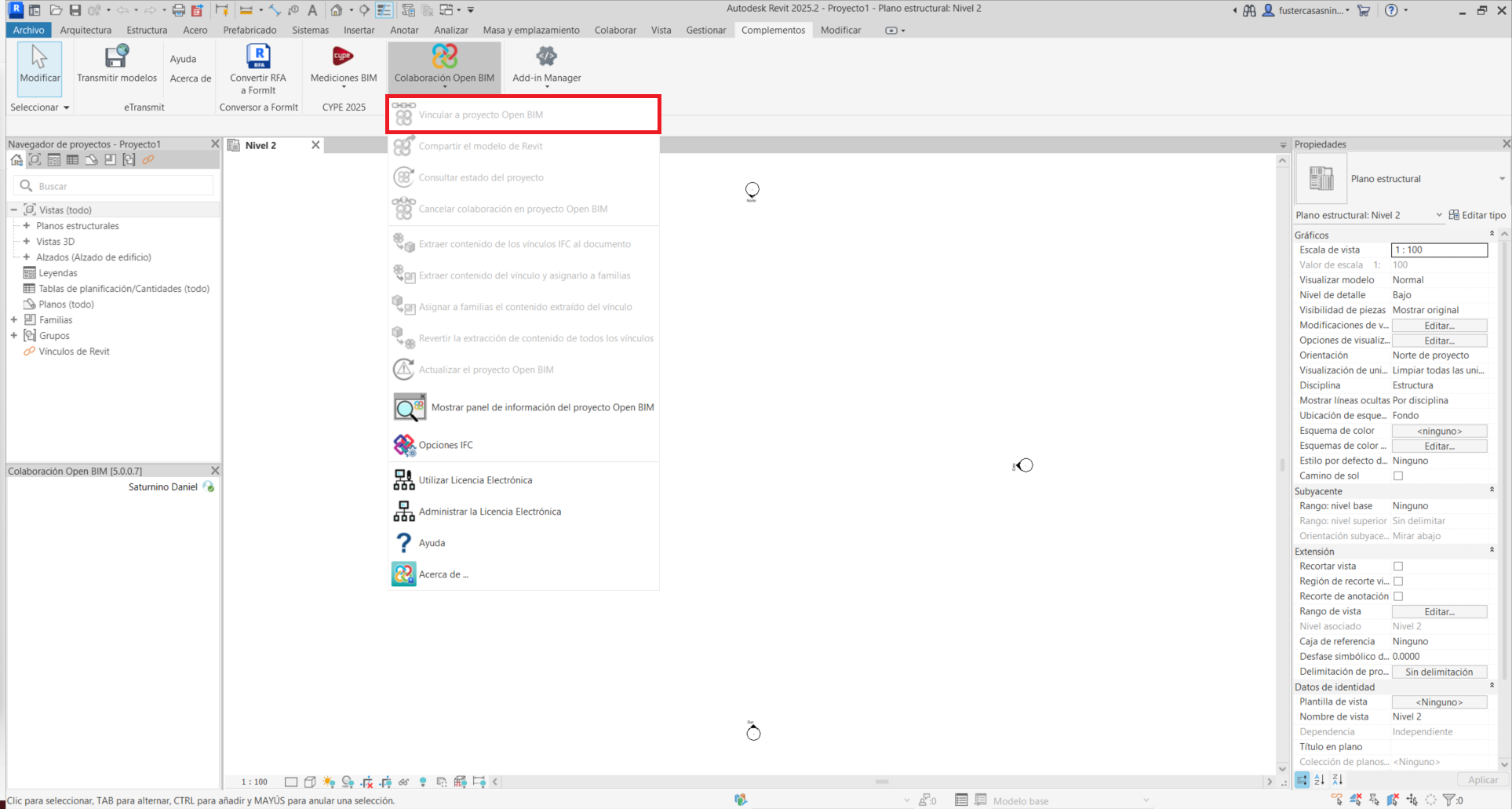
  • "Link Open BIM project" option
    When creating a new Revit model in version 2025.c, the "Link to Open BIM project" tool also appears in the "Open BIM Collaboration" side menu.

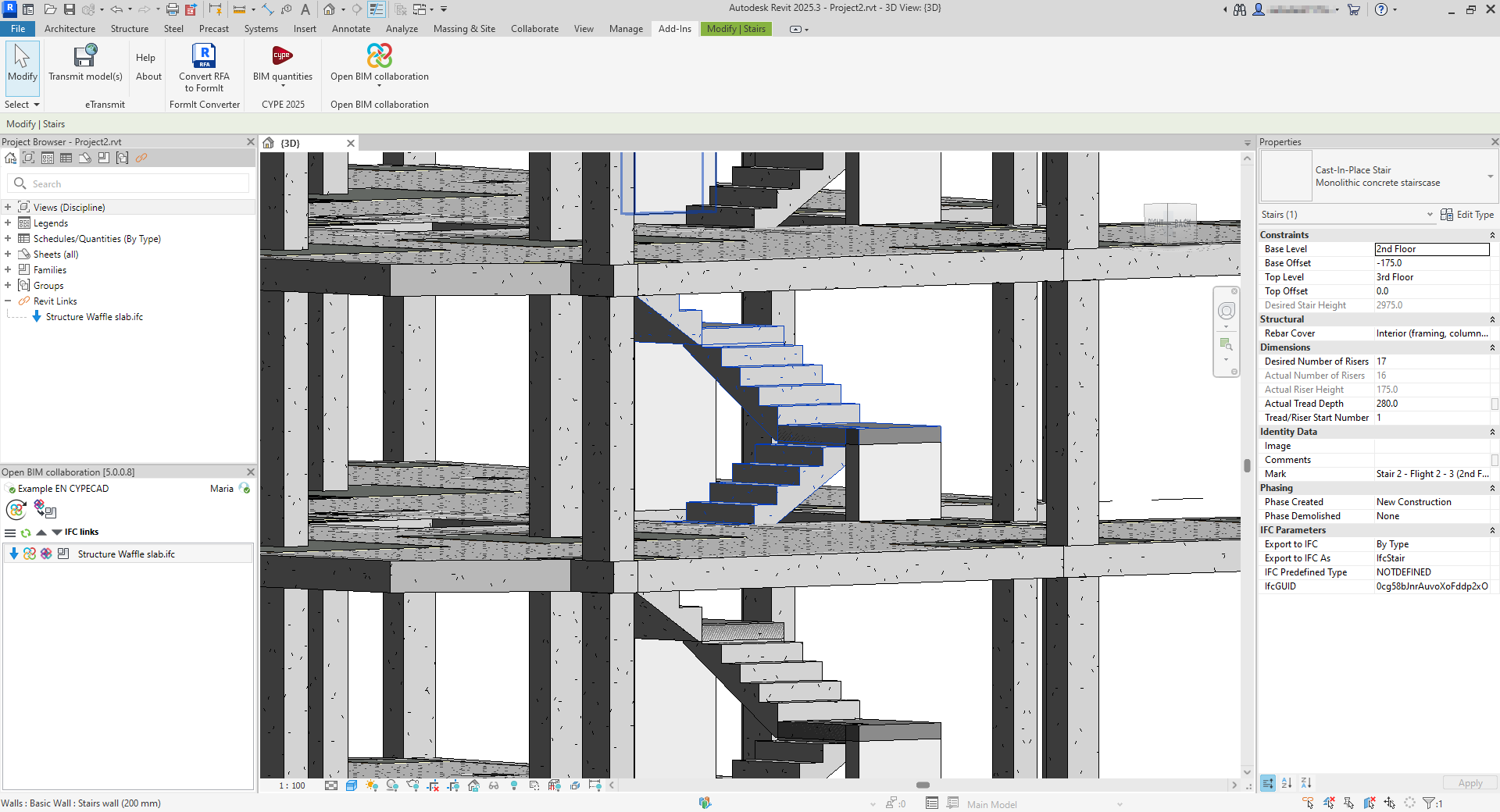
Previously, the conversion of stairs was carried out with a model group. This model group grouped together "sloping floors" (staircase landing), "floors" (staircase landings) and "walls" (stair support walls)  but the steps were not visible.

In this new version 2025.c, the set of these elements will be considered in Revit as a native staircase and the steps will be distinguished.

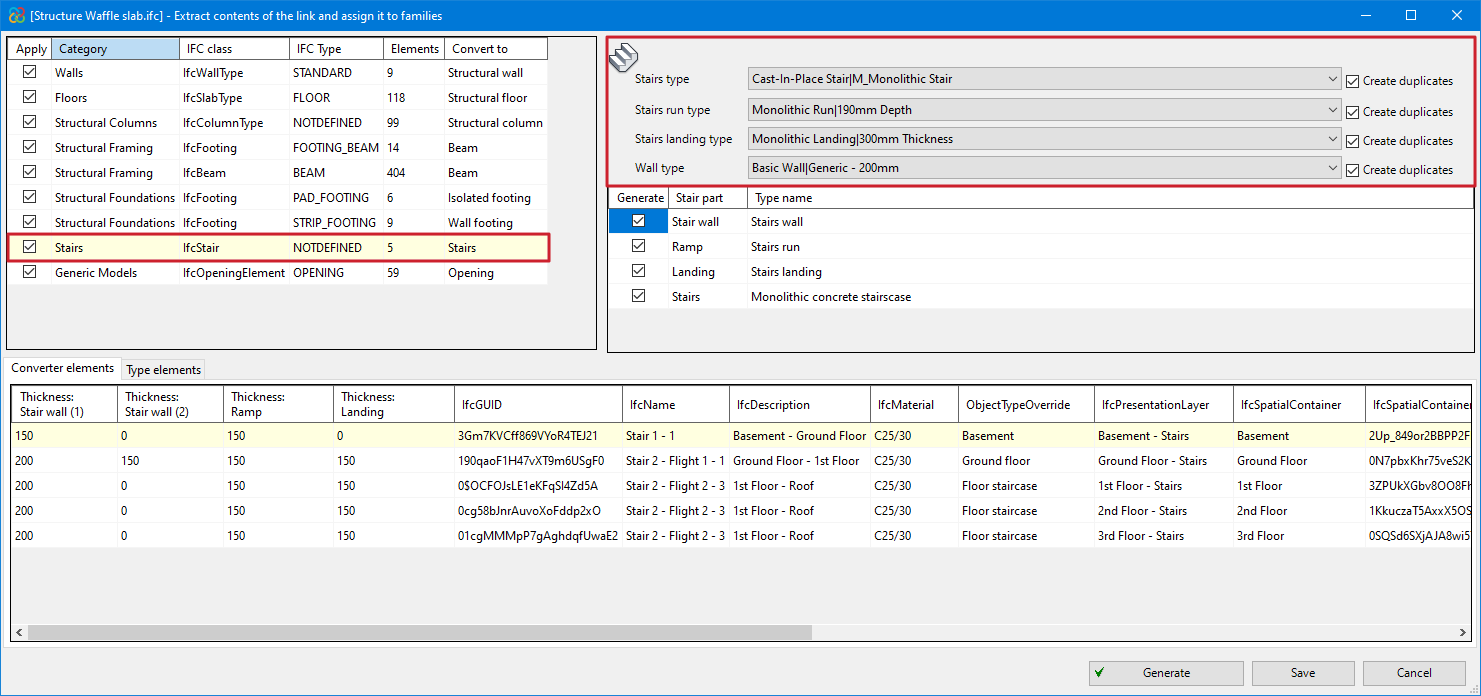
In previous versions of the Open BIM - Revit Plugin, the structural element "Stairs" was converted to Revit native entities by a "model group" consisting of "Floors", "Sloping floors" and "Walls".

In version 2025.c, the 100% native generation of the "Stairs" element has been implemented.

Just like in previous versions of the Plugin, as can be seen in the family assignment panel, both the family of the spans of the staircase and the family of the landings and walls must be entered. The type of staircase must also be selected. If the specific families are not available, users can ‘create a duplicate’ to create a family identical to the geometry imported from the structural design program.

In version 2025.a, the "Generation of native Revit elements based on a structural IFC" module was implemented in the Open BIM - Revit Plugin. This module allows the Open BIM - Revit Plugin to convert structural models to native Revit entities, making it easier to integrate them into the Revit environment.

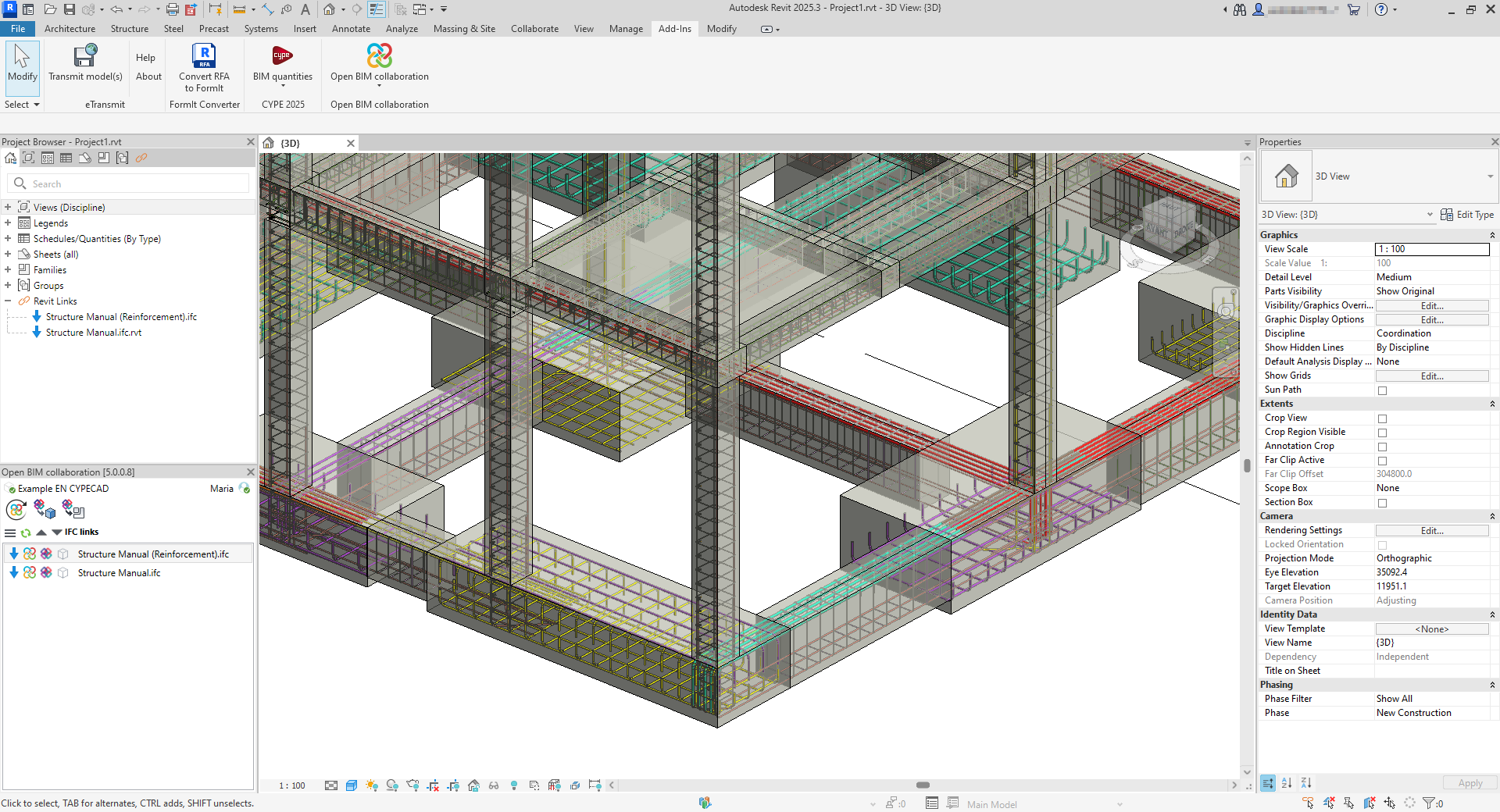
Now, in version 2025.c, the "Generation of native Revit elements based on a structural IFC" module extends its features with the Generation of reinforcement rebars to native Revit entities tool. This tool converts reinforcement models (included in a project on the BIMserver.center platform) to native Revit entities.

Converting reinforcement to native Revit elements using the new tool requires prior conversion of the host structural elements, such as beams, columns, floor slabs, footings or any other structural element containing reinforcement.

How to use the "Generation of reinforcement rebars to native Revit entities" tool

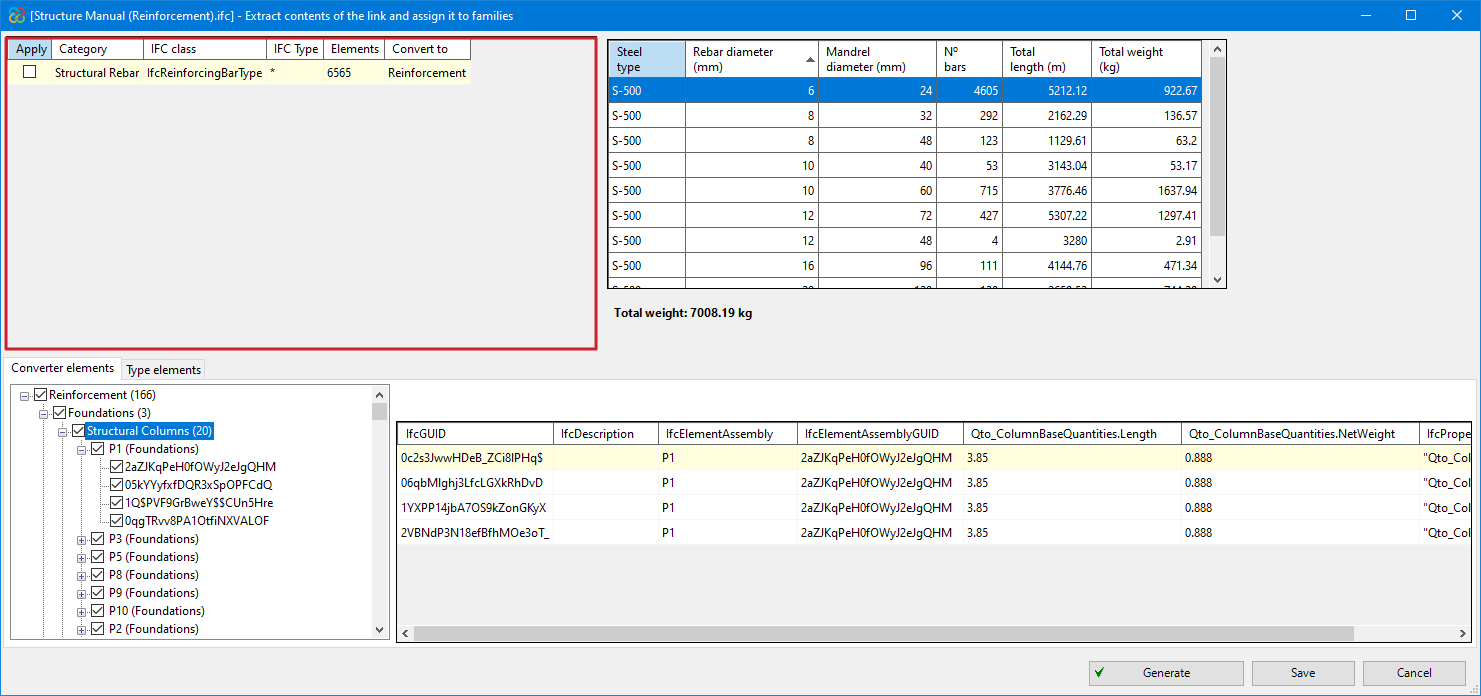
After selecting the "Extract link content and assign it to families" in a structural reinforcement IFC link option, a dialogue box with the same name opens, the operation of which is described below:

  • Main section
    In the main section, the categories to be converted to native entities are shown. In this case, as it is a reinforcement IFC, only the category "Structural reinforcement" will be shown. In the same way, the IFC class and the number of existing specimens in the IFC are shown.
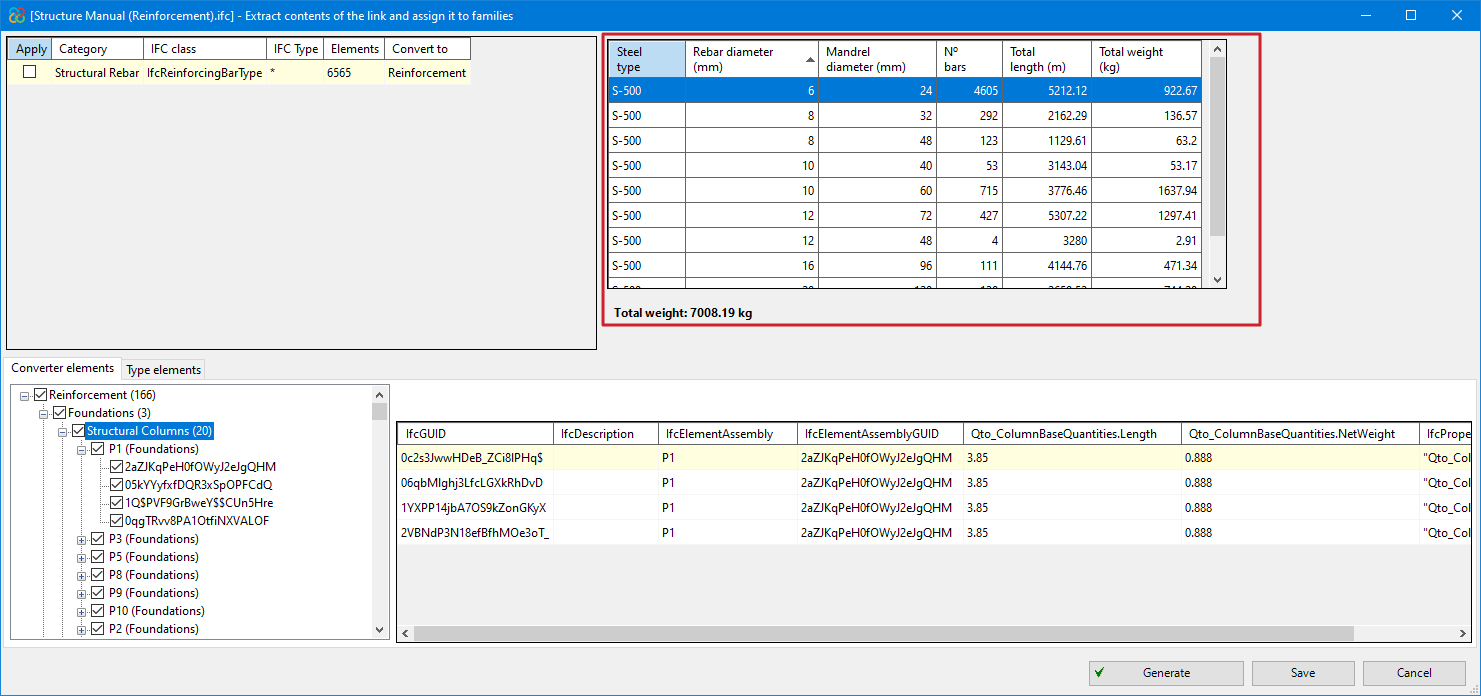
  • Quantities/amounts information panel
    Information on steel quantities is presented here. This information is classified by steel type, bar diameter and mandrel diameter. At the bottom of the table, there is also a summary of the total weight of steel expressed in Kilograms.
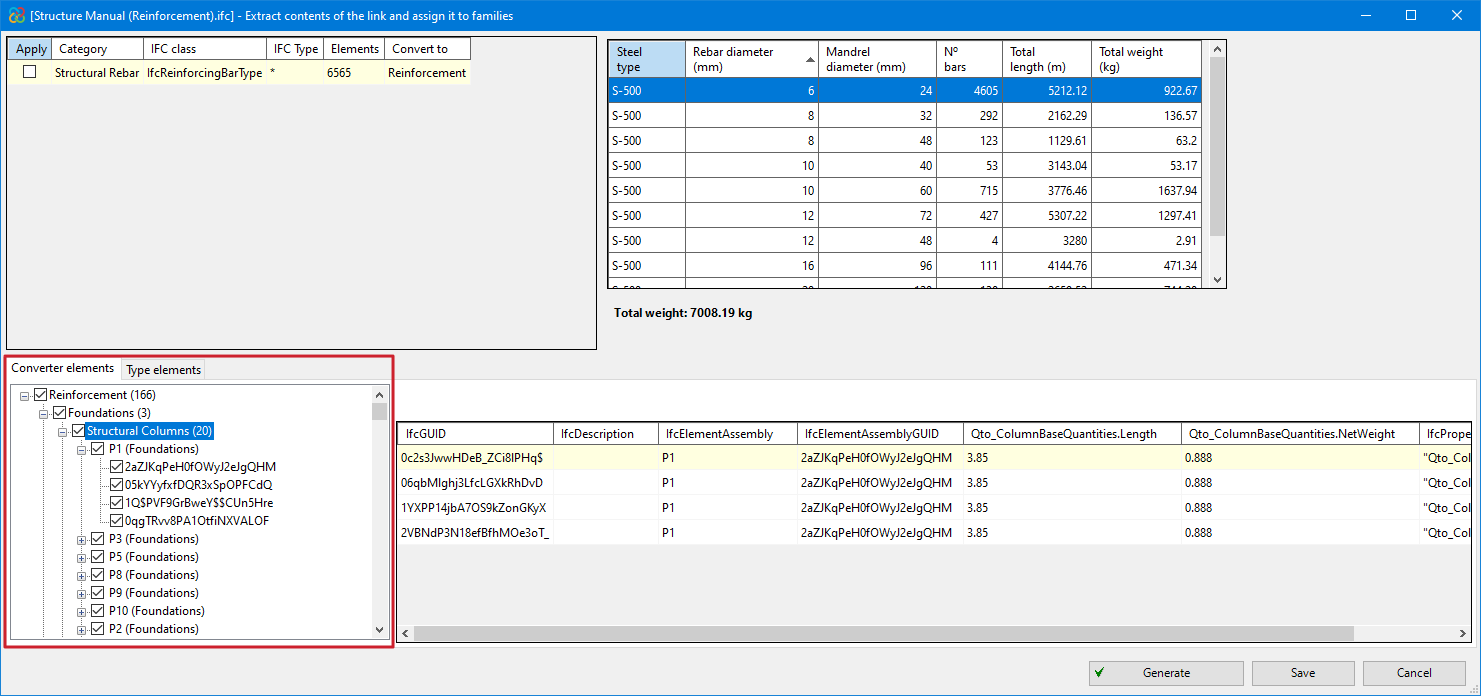
  • Converter examples
    In the bottom-left panel, the hierarchy of the converter examples is shown. This hierarchy is set in descending order:


    • General reinforcement (covering the whole model).

    • Floors or levels in the model (foundations, ground floor and following floors).

    • Categories of Revit structural elements belonging to each level (structural framing, structural columns, etc.).

    • Single structural element.

    • Reinforcement assemblies (sets or groups of bars forming the total reinforcement of a structural element).


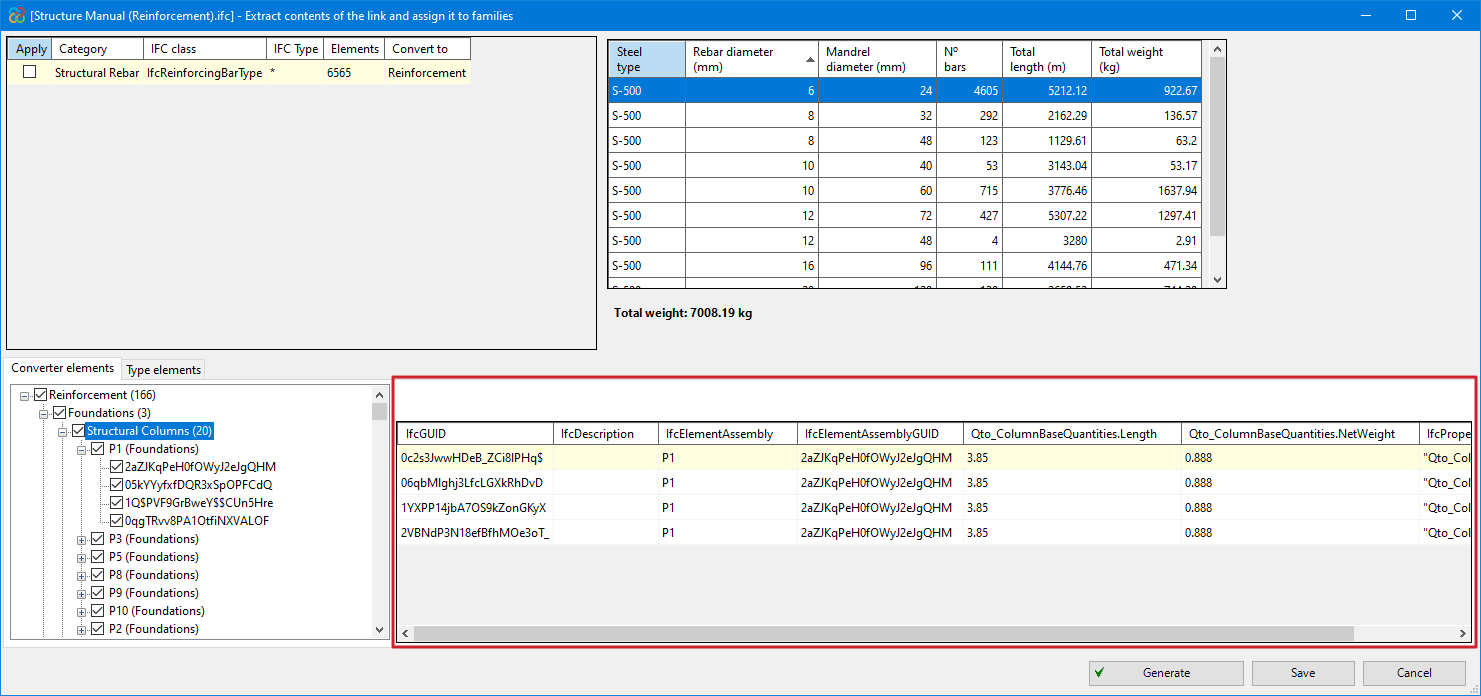
  • In the bottom-right panel, the information concerning each bar in each assembly is shown.

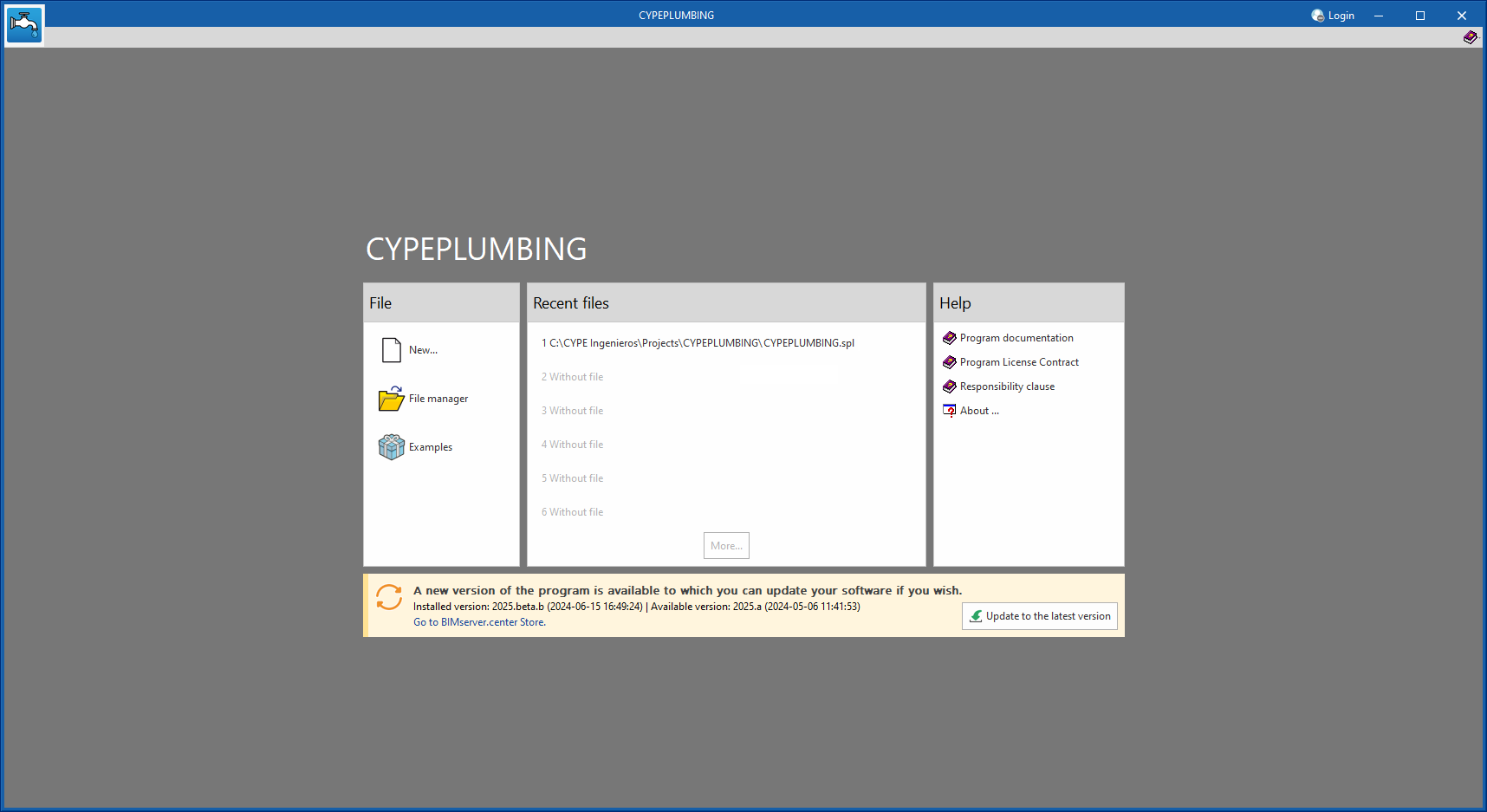
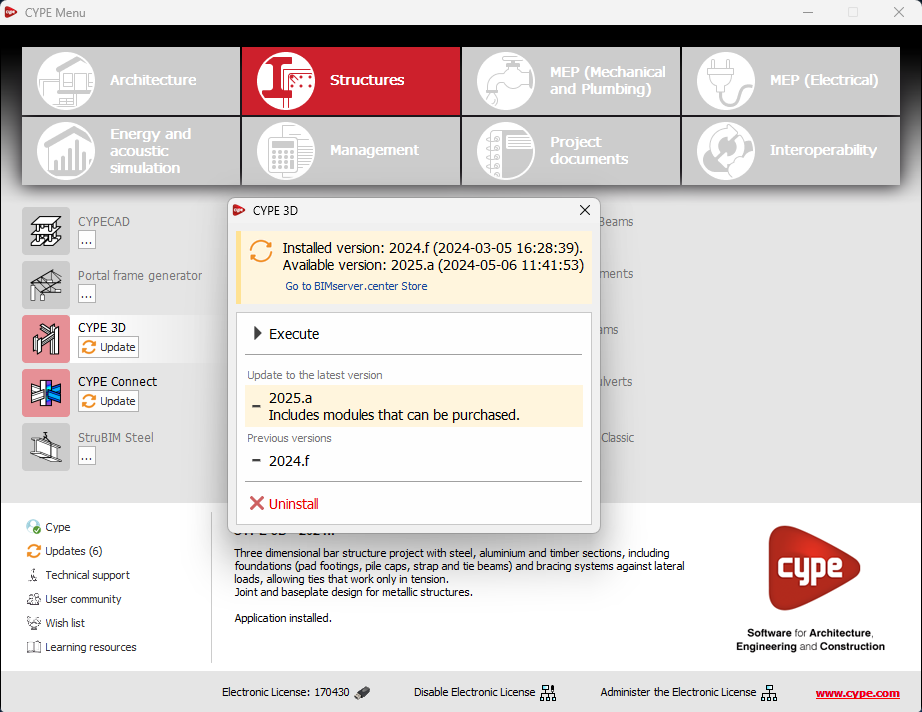
As of version 2025.b, applications now display a warning message in their initial window when a new update is available. This message provides information about the "installed version" and the "available version", together with a direct link to the Store page of the BIMserver.center web platform.

Clicking on the “Upgrade to the latest version” button automatically starts the download and installation process of the application. This feature ensures that the most current version of the program is always being used, thus benefiting from the latest improvements.

This method replaces the automatic notification and update process of a new version in the BIMserver.center programs available in previous versions.

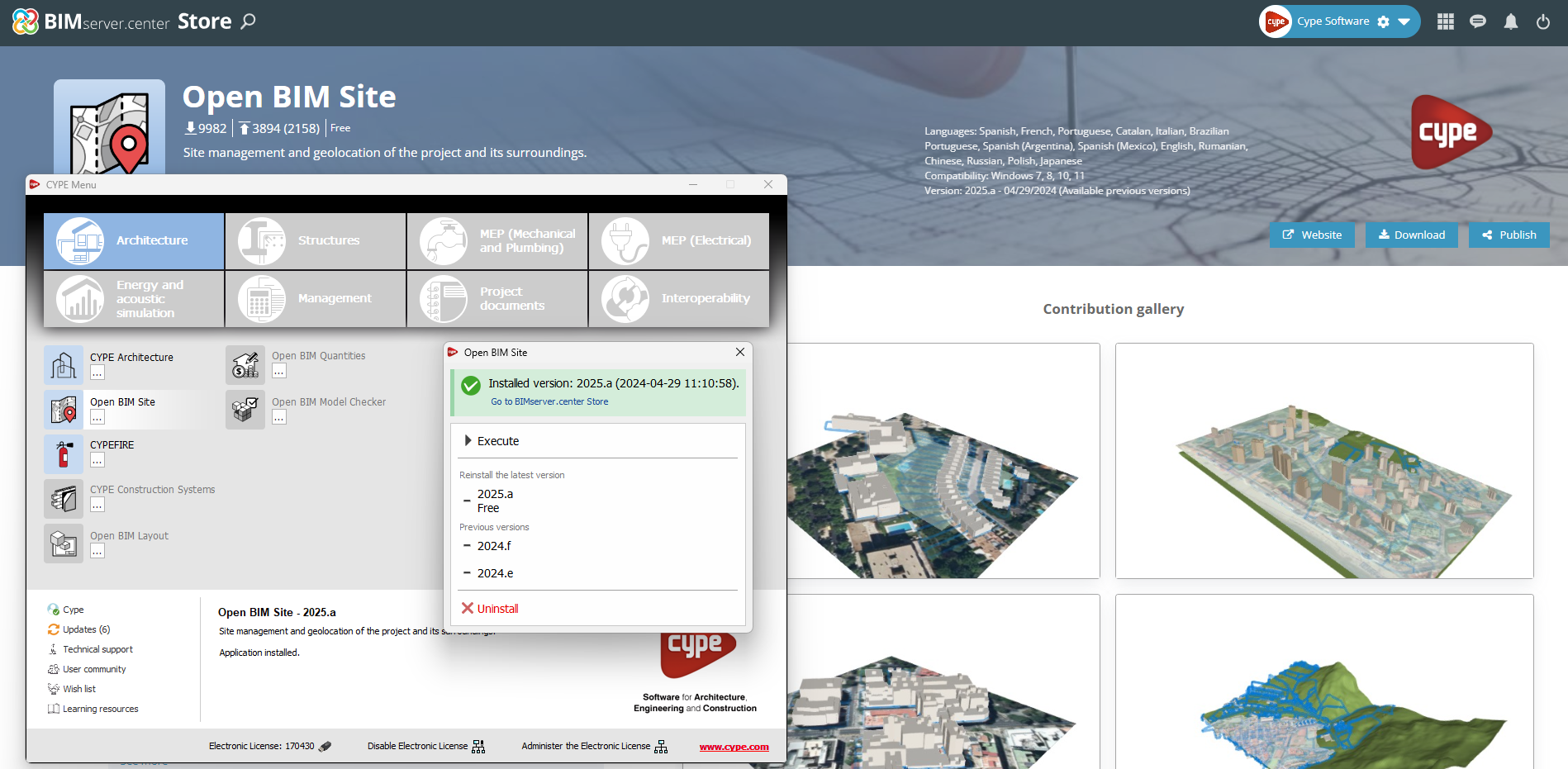
In the configuration panel for each application, a direct link to its page in the BIMserver.center web store has been included.

By clicking on the “Go to BIMserver.center Store” button, users are redirected directly to the corresponding page in the Store, where they can learn more about the application, view its features, read reviews from other users and see examples of real contributions.

This feature provides easy access to additional resources and support, enhancing the user experience by providing quick and easy access to all relevant information about the applications.

CYPE Mentor