Update history​​

CYPECAD

The seismic code of Ecuador, NEC-11 (Norma Ecuatoriana de la Construcción. Capítulo 2.- Peligro sísmico y requisites de diseño) was already implemented in CYPECAD and Metal 3D as of previous versions.

As of the 2013.n version, if users select the NEC – 11 seismic code of Ecuador and combine it with the ACI 318M-08 (USA) concrete code, CYPECAD’s Advanced beam editor and column editor may also be used. Additionally, by using this code combination, CYPECAD applies the ductility reinforcement criteria and capacity design criteria of the NEC-11 code to the seismic design of concrete beams and columns.

The calculation of the shifting of the bending moments has been optimised, in the Advanced beam editor of CYPECAD.

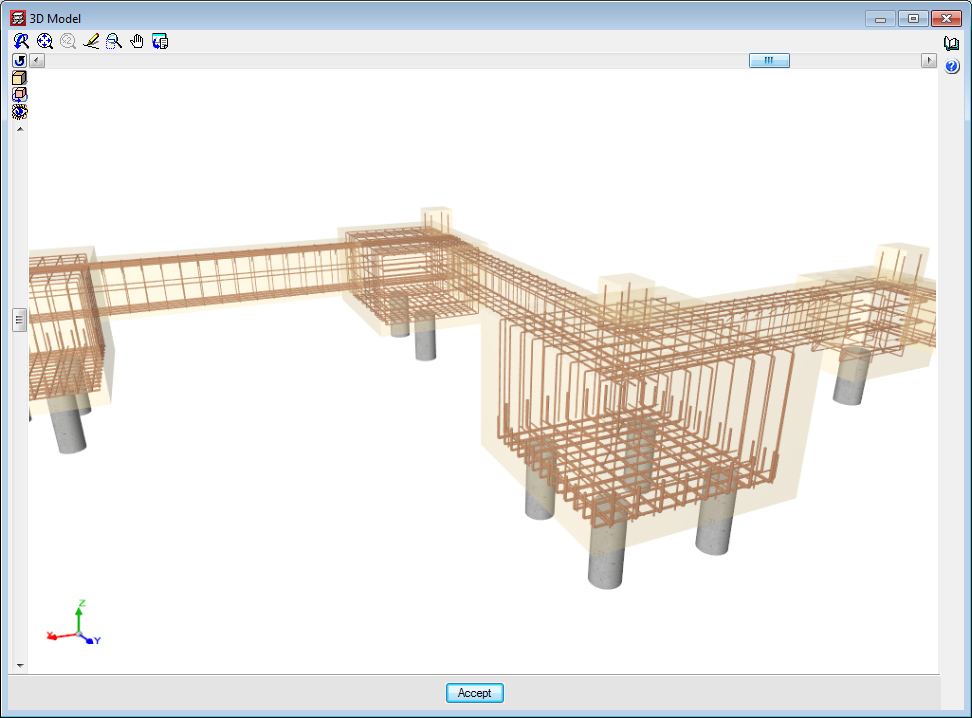
New for the 2013.n version is the option to introduce one and two-pile pile caps with an eccentric column with respect to the axis defined by the piles. Similarly, the program can also analyse pile caps with three or more piles, with a column that lies outside the area defined by the centres of the piles.

Strap beams are required for both cases, to absorb the bending moments that are generated due to the eccentricity of the column. The main reinforcement of the pile cap is designed assuming it is exposed to centred compression loads.

In the case of one and two-pile pile caps, the strap beam is required so to guarantee the equilibrium of the foundation if, as usually occurs, the piles supposedly only resist axial forces.

In all cases, the fact the column is situated outside the area defined by the piles implies the load transmission mechanism from the support to the piles is similar to that of a corbel. The program assumes that the top reinforcement provided in the strap beam is capable of resisting the tensile forces as would the main reinforcement of the corbel, hence the transmission mechanism is guaranteed. This is true as long as the reinforcement of the strap beam has been designed correctly to resist the centring forces and is anchored below the column.

Norma Ecuatoriana de la Construcción. Capítulo 2.- Peligro sísmico y requisitos de diseño.

This seismic load was already implemented in CYPECAD and Metal 3D as of previous versions.

As of the 2013.n version, if users select the NEC – 11 seismic code of Ecuador and combine it with the ACI 318M-08 (USA) concrete code, CYPECAD’s Advanced beam editor and column editor may also be used. Additionally, by using this code combination, CYPECAD applies the ductility reinforcement criteria and capacity design criteria of the NEC-11 code to the seismic design of concrete beams and columns.

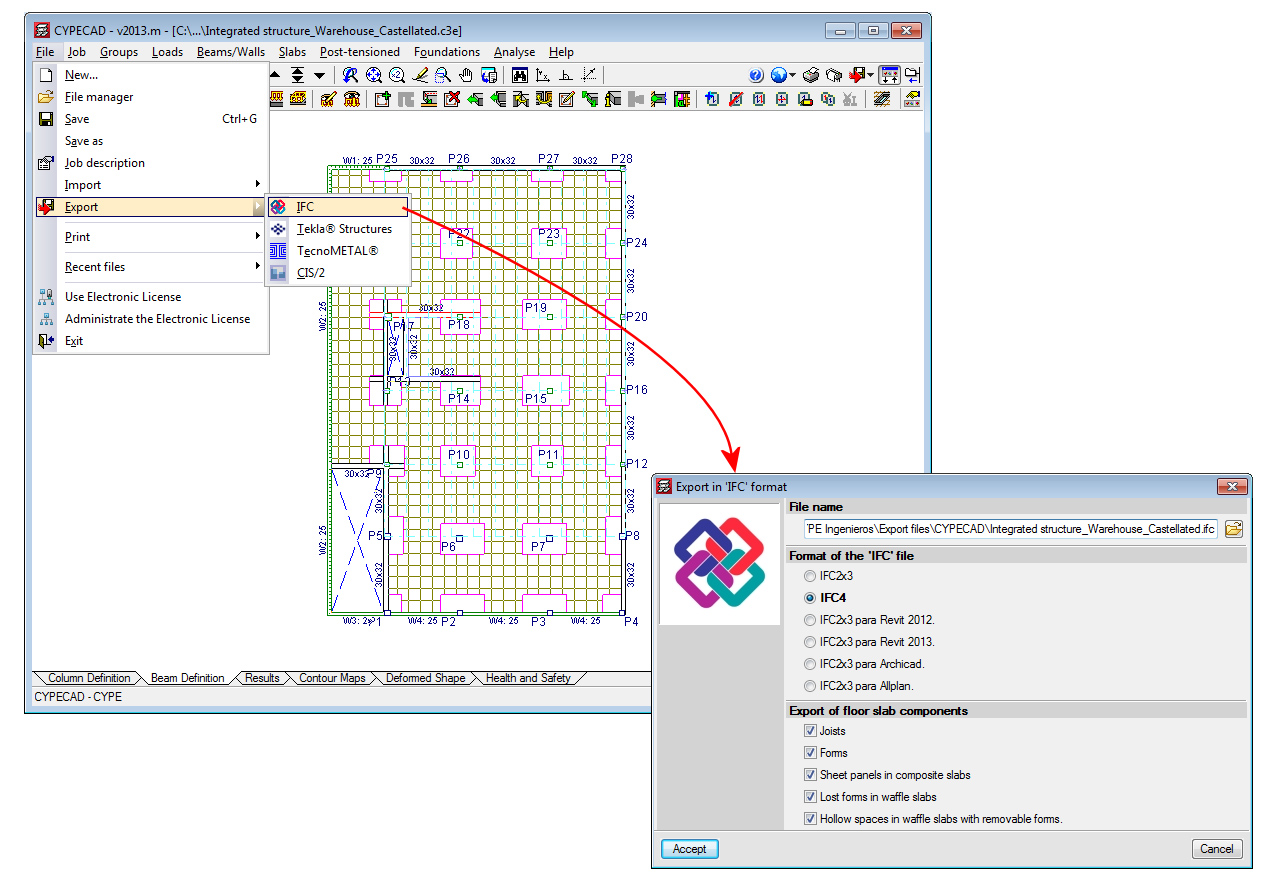
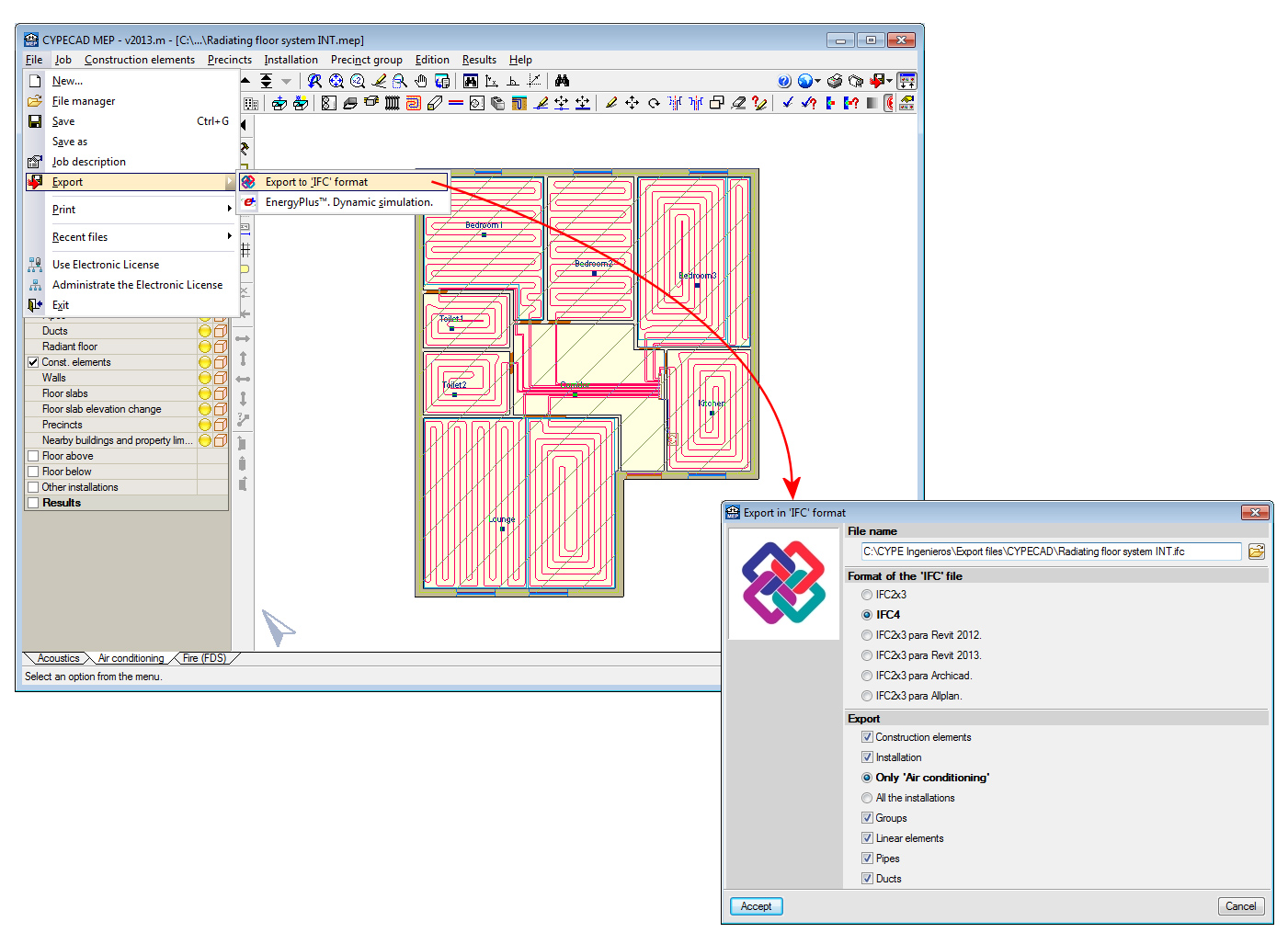
The 2013.m version of CYPE programs incorporates the generic export to IFC4 format (Industry Foundation Classes) in CYPECAD and CYPECAD MEP. More information on this new feature can be found in the Export to IFC4 format from CYPECAD and CYPECAD MEP section on this webpage.

The quantity export to Arquimedes of rectangular columns, shear walls and footings is carried out in a detailed manner and in such a way that the three dimensions of these elements are included.

More information on the seismic design criteria for concrete columns and beams applied by CYPECAD with these two design codes can be found in the section on Improvements in code application (Concrete code and Loads on structures. Seismic loads) on this webpage.

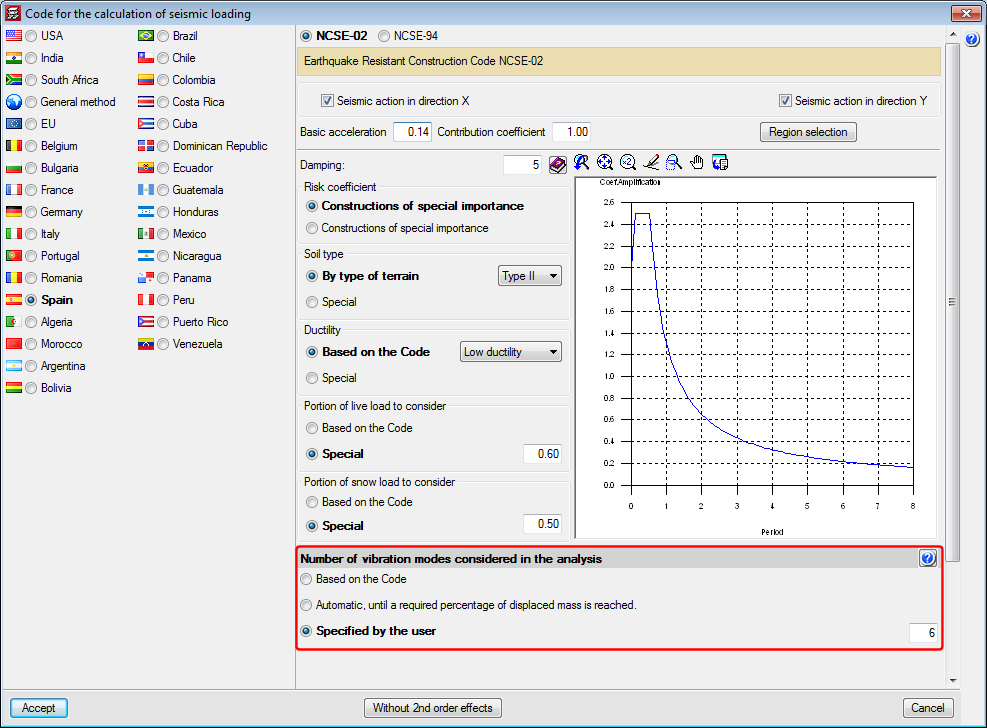
A new section has been implemented within the dialogue box where the selected seismic code parameters are defined (Job > General data > Select With seismic loading > Choose a seismic code): Number of vibration modes considered in the analysis. Here, the program offers different ways to establish the number of vibration modes to be considered in the seismic analysis of the structure:

  • Based on the Code
    The analysis is carried out in accordance with that specified in the selected seismic code. This section may not exist if the selected seismic code does not specify this data.
  • Automatic, until a required percentage of displaced mass is reached
    Users define the minimum percentage of accumulated modal mass that is required to be displaced in each direction.
  • Specified by the user
    Users indicate the number of vibration modes based on their own judgement. Until now, this was how the number of vibration modes was indicated for the seismic analysis, where users had to choose the value bearing in mind the requirements of the selected code, the structure to be analysed and/or their own considerations.

The 2013.m version of CYPE programs incorporates the generic export to IFC4 format (Industry Foundation Classes) in CYPECAD and CYPECAD MEP. This way, CYPE programs have become the first engineering and construction software to export to IFC format with the specifications of the new definitive version: IFC4 (previously known as IFC 2x4).
CYPECAD and CYPECAD MEP currently allow for the export to IFC in the following formats:

  • IFC2x3
  • IFC4
  • IFC2x3 for Revit 2012
  • IFC2x3 for Revit 2013
  • IFC2x3 for Archicad
  • IFC2x3 for Allplan

As Revit, Archicad and Allplan gradually incorporate reading of the IFC4 format in their software, CYPECAD and CYPECAD MEP will incorporate specific exports to these programs in IFC4 format.

Norma Técnica E.030 Diseño Sismorresistente.

This concrete code was already implemented in CYPECAD and Metal 3D.

Now, in the 2013.m version, if users select the NTE E.030 code with its corresponding concrete design code (NTE E.060: 2009), CYPECAD’s Advanced beam editor and column editor may also be used. Additionally, by using this code combination, CYPECAD applies the ductility reinforcement criteria and capacity design criteria of the NTE E.060: 2009 code to the seismic design of concrete beams and columns.

Norma Boliviana de Diseño Sísmico (2006). Título A. Análisis y diseño sismo resistente.

This concrete code was already implemented in CYPECAD and Metal 3D.

Now, in the 2013.m version, if users select the Bolivian NBDS 2006 seismic code with the ACI 318M-08 concrete code, CYPECAD’s Advanced beam editor and column editor may also be used. Additionally, by using this code combination, CYPECAD applies the ductility reinforcement criteria of the Bolivian NBDS 2006 seismic code to the design of concrete beams and columns.

Reglamento nacional de edificaciones. Norma E.060 Concreto Armado.

This concrete code was already implemented in CYPECAD, Metal 3D and in other CYPE structural programs.

Now, in the 2013.m version, if users select the NTE E.060: 2009 code with its corresponding seismic design code (Norma Técnica E.030), CYPECAD’s Advanced beam editor and column editor may also be used. Additionally, by using this code combination, CYPECAD applies the ductility reinforcement criteria and capacity design criteria of the NTE E.060: 2009 code to the seismic design of concrete beams and columns.

CYPE Mentor