Update history​​

Open BIM Quantities

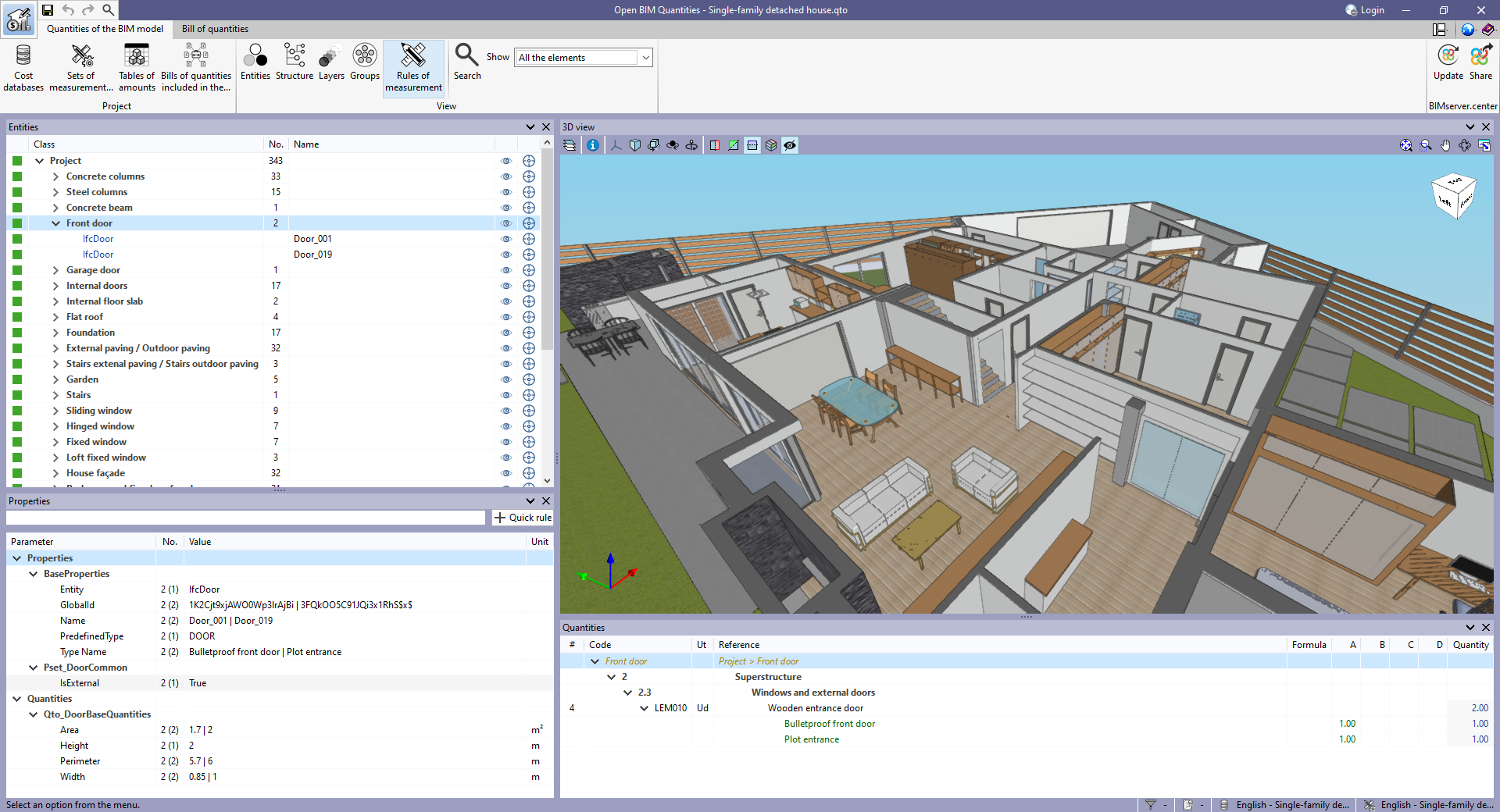
As of version 2024.f, Open BIM Quantities offers five different ways to view the BIM model component tree in the "BIM model measurement" tab.

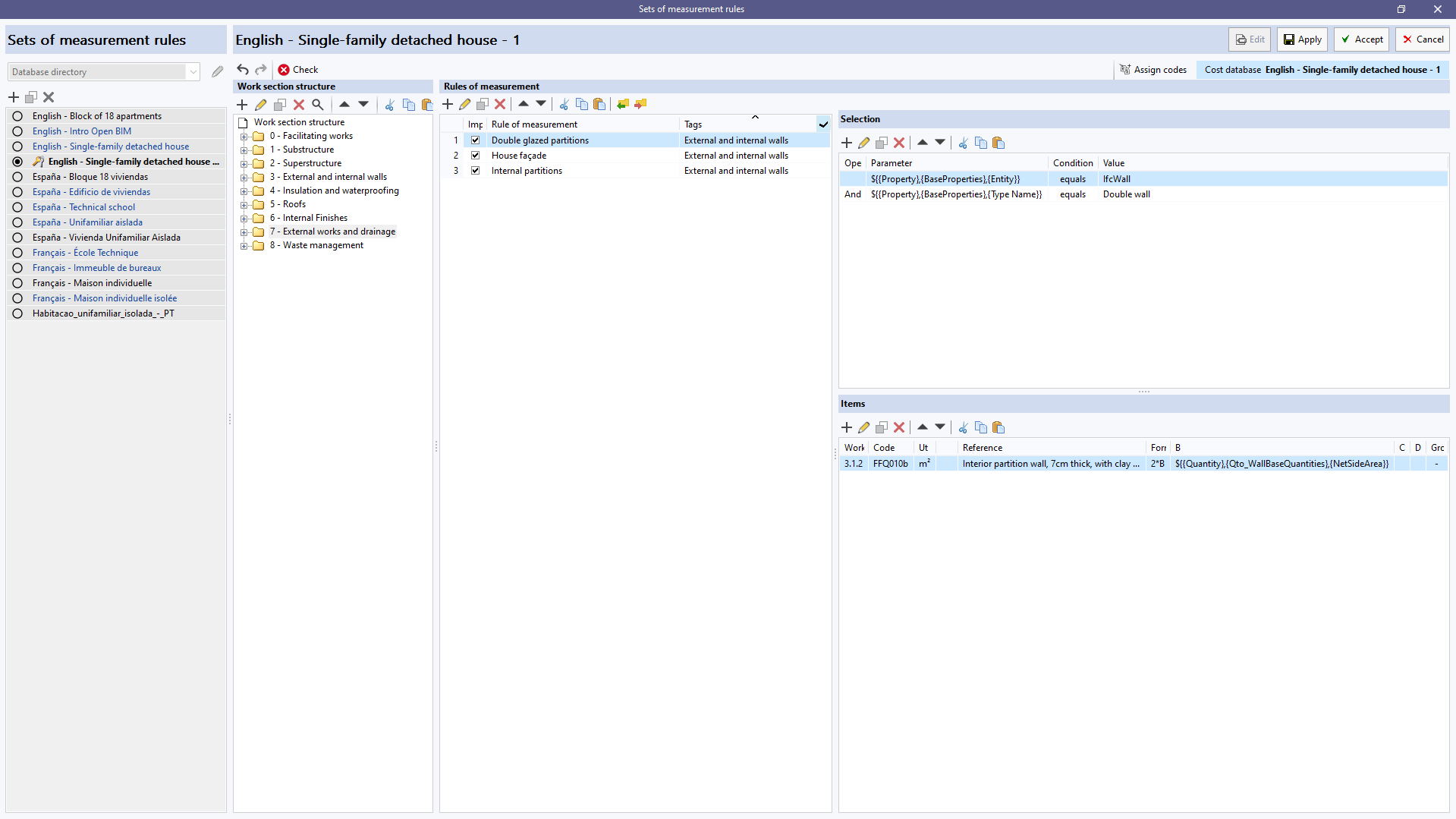
Until now, elements could be arranged according to the IFC entity they belong to (IfcWall, IfcSlab, IfcSpace, etc.), the spatial structure (IfcSite>IfcBuilding>IfcBuildingStorey, etc.), from the layer or the group they are in. In this update, the "Rules of measurement" option has been added to the "View" group of options in the application's toolbar. When clicking on this option, the elements are organised based on the rules of measurement where they have been selected. Elements used in a rule of measurement are collected in a branch of the tree, which is assigned the name of the rule of measurement.

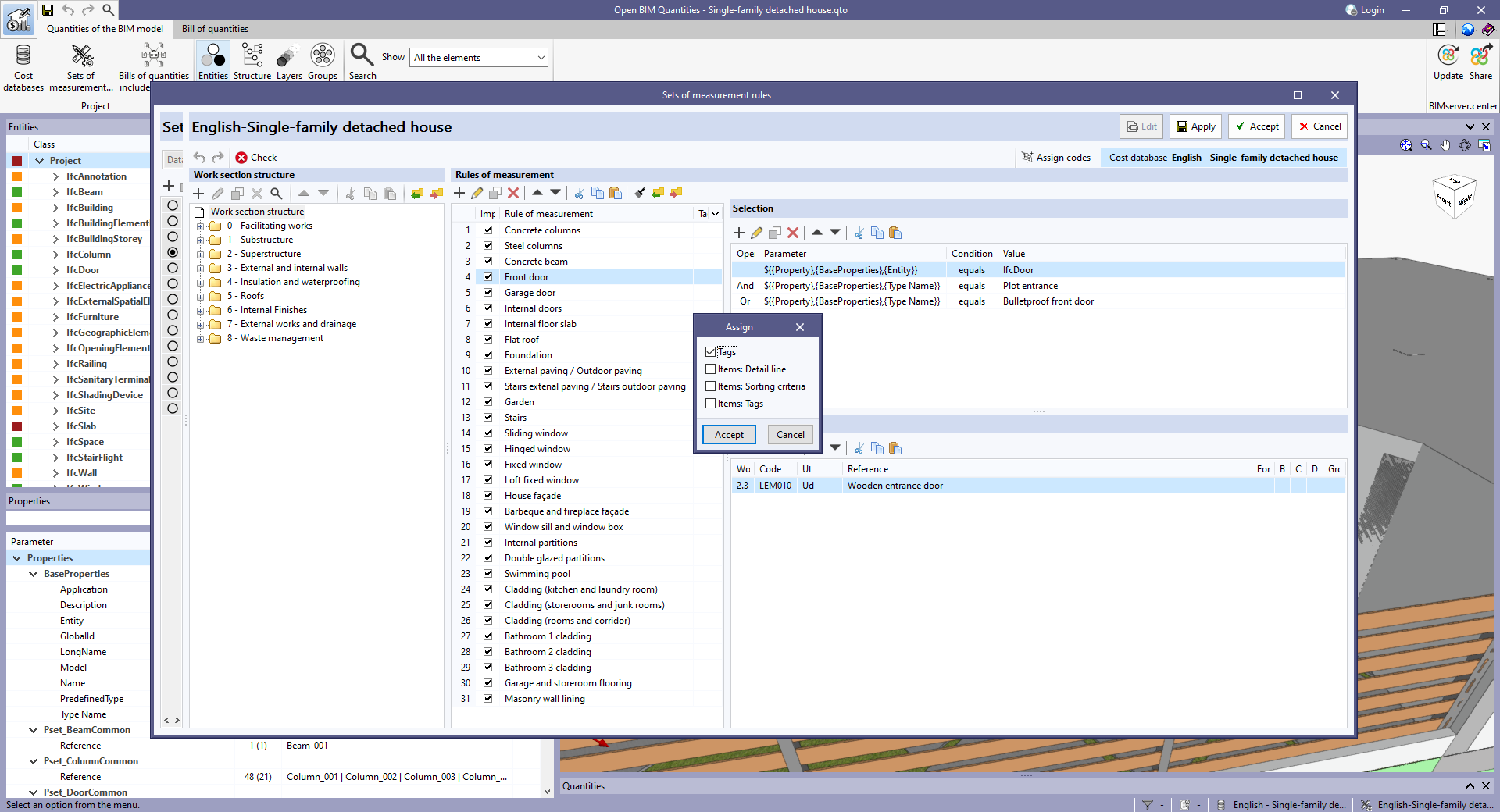
The "Assign" option has been added to the options bar of the "Rules of measurement" list in the "Sets of measurement rules" editing window.

With this tool, users can assign the properties from one rule of measurement to another.

Clicking the "Assign" option displays a window with a list of the properties of the selected rule that can be assigned. The following properties are currently available to choose from:

  • Tags
  • Items: Detail line
  • Items: Sorting criteria
  • Items: Tags

Once the fields have been selected, a new window is displayed with the list of rules of measurement where users can select those rules whose properties are to be modified with the values of the previously selected rule. This way, with version 2024.e, users can edit multiple measurement rules defined within the same set.

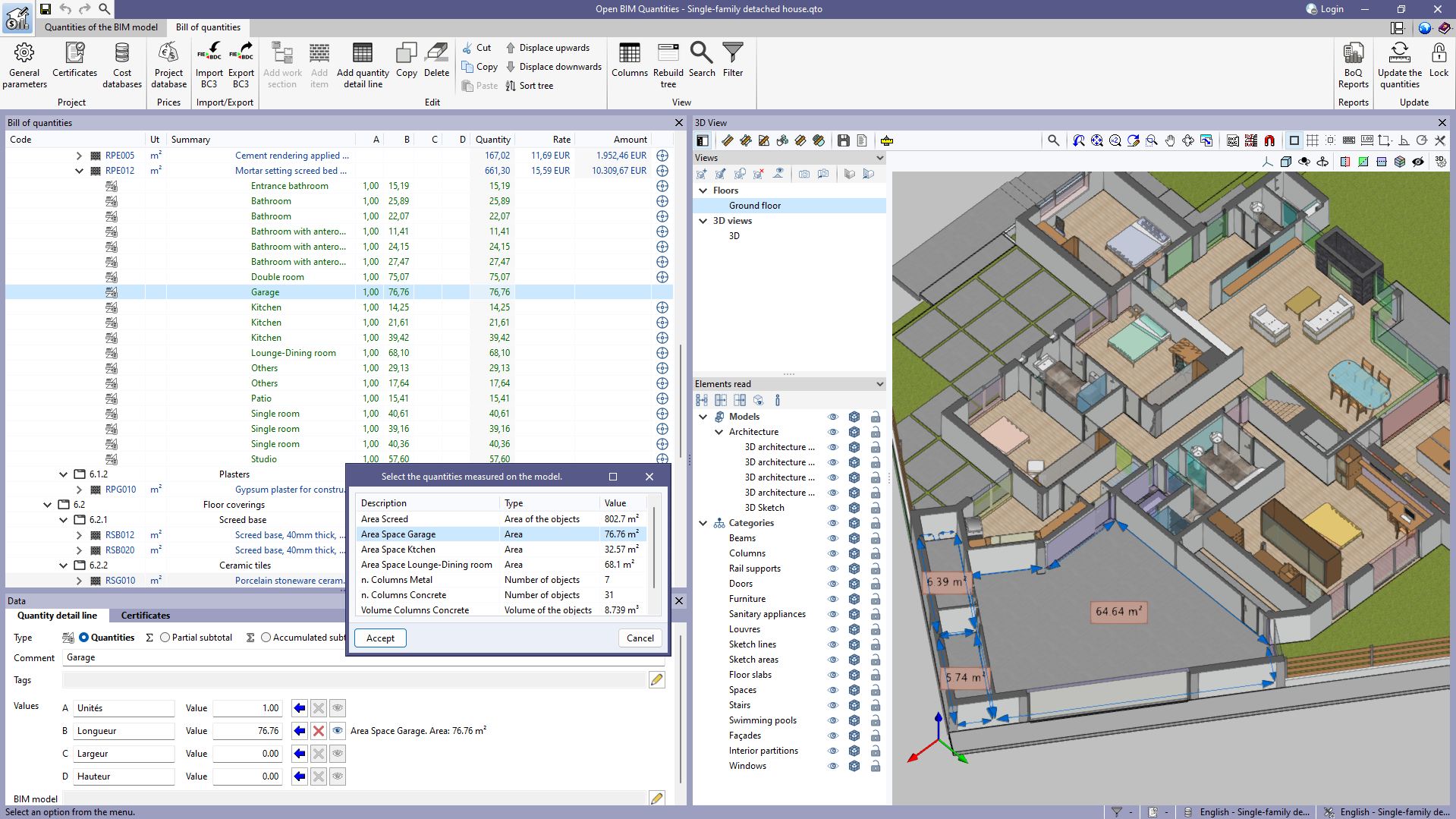
In version 2023.d, the "Quantities on the 2D/3D model" were implemented in the applications that have a "Bill of quantities" tab. This tool has now been enhanced in order to allow users to save quantities measured on the 3D view so that they can be used in several quantity detail lines. To this end, the "Save the current quantities" option has been added to the toolbar of the 3D view. By clicking on it, a window is displayed where a description for the quantity can be entered before saving it. In order to display the list of saved quantities, the "Measurements carried out on the model" option has also been added. This option displays a list of the measurements taken, showing the description, type of measurement (length, area, angle, etc.) and value for each one.

The "Assign the quantities measured on the model to the variable" option, which appears next to each variable in a quantity detail line, has changed the way it works as a result of this new feature. In previous versions, clicking on it assigned the last measurement taken on the 3D view, whereas now the "Measurements carried out on the model" list is displayed to select the saved quantity to be used.

Additionally, next to each variable linked to a quantity on the model, the description, type of measurement (length, area, angle, etc.) and value of the selected measurement can be viewed. Also, the "Delete the link between the variable and the quantities measured on the model" and "View the quantities measured on the model in the 3D view" options have been added. The first option allows users to remove the link between the value of the variable and the quantities measured on the model. The second option allows users to display the representation of the assigned measurement in the 3D view. If this option is used on another variable or if another element is selected in the "Bill of quantities" window, this representation will no longer be displayed.


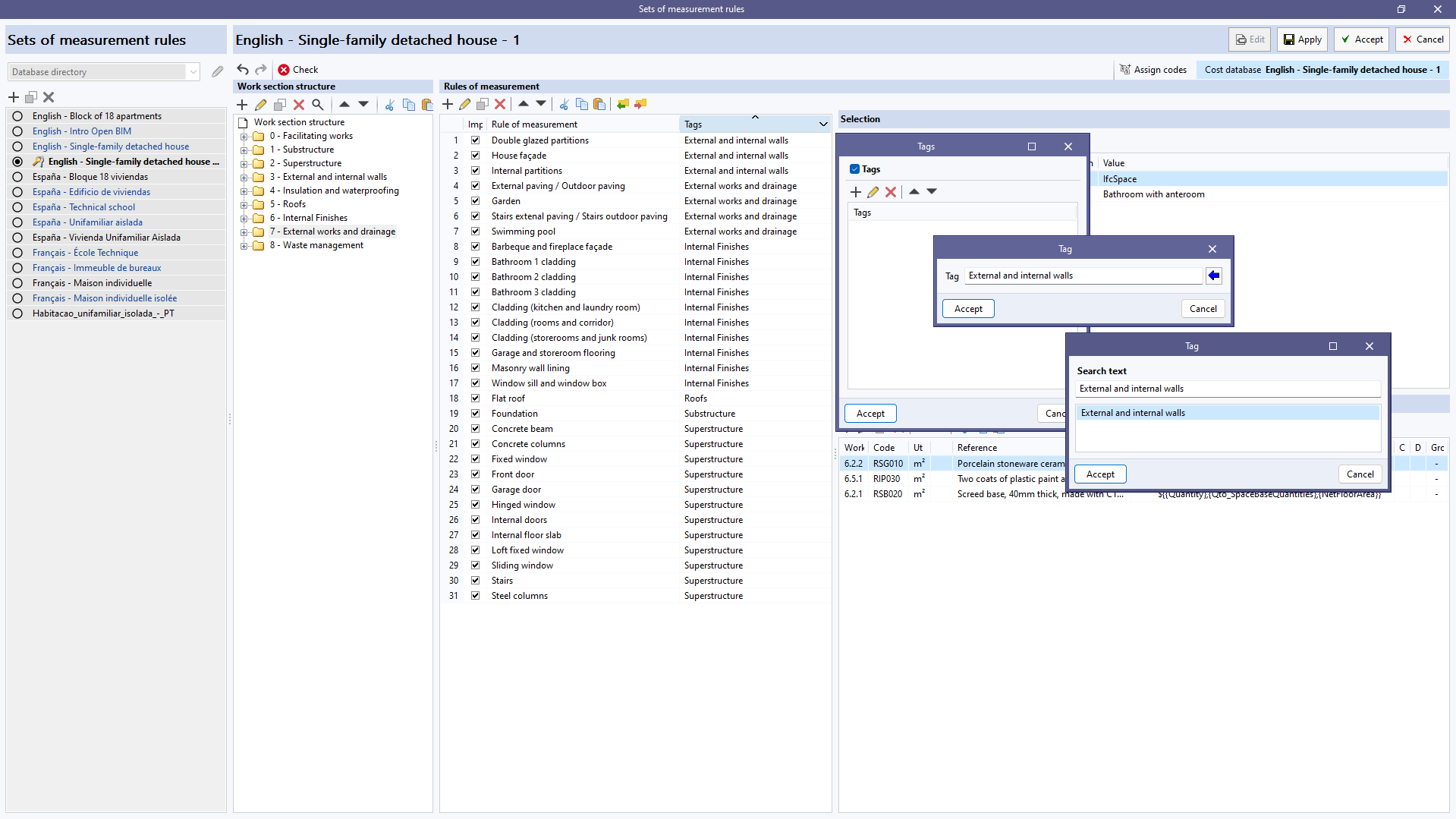
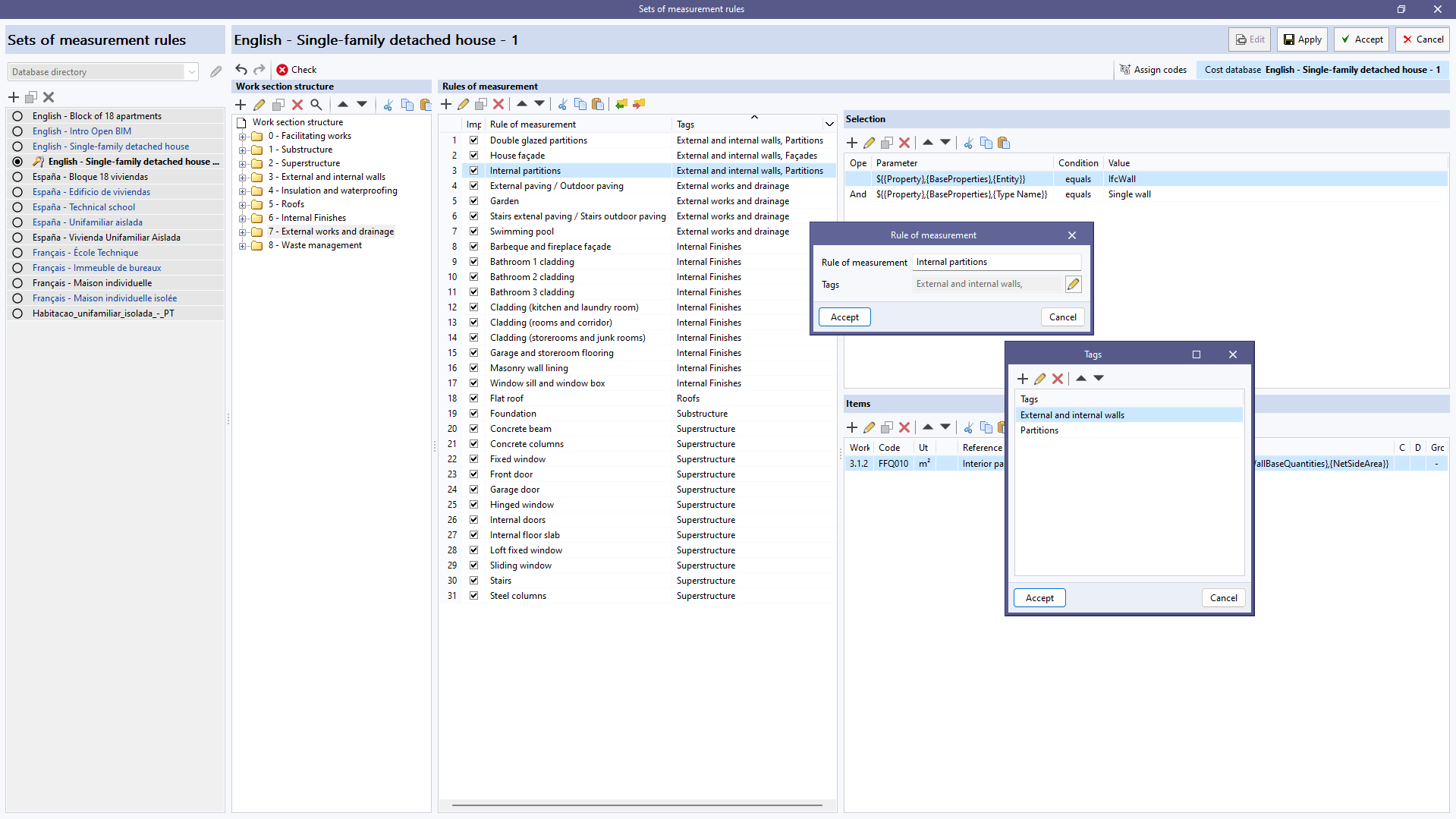
As of version 2024.c, tags can now be associated with the rules of measurement defined within a "Set of measurement rules". When editing the reference of a rule, the "Tags" field now appears, allowing several independent text strings to be inserted. In order to make it easier to enter tags, when adding or modifying a tag, a button appears, with a blue arrow icon, which launches a list of the tags defined so far.

In the list of rules of measurement, a "Tags" column has been added which not only shows the tags linked to each rule but also allows the elements that appear in the list to be filtered. To do this, a button has been added to the column header. Clicking on this button displays a window where a list of tags can be specified. When accepting the window, only the rules that contain the entered tags will be displayed. This makes it easier to manage rules when there are a large number of rules in the project.

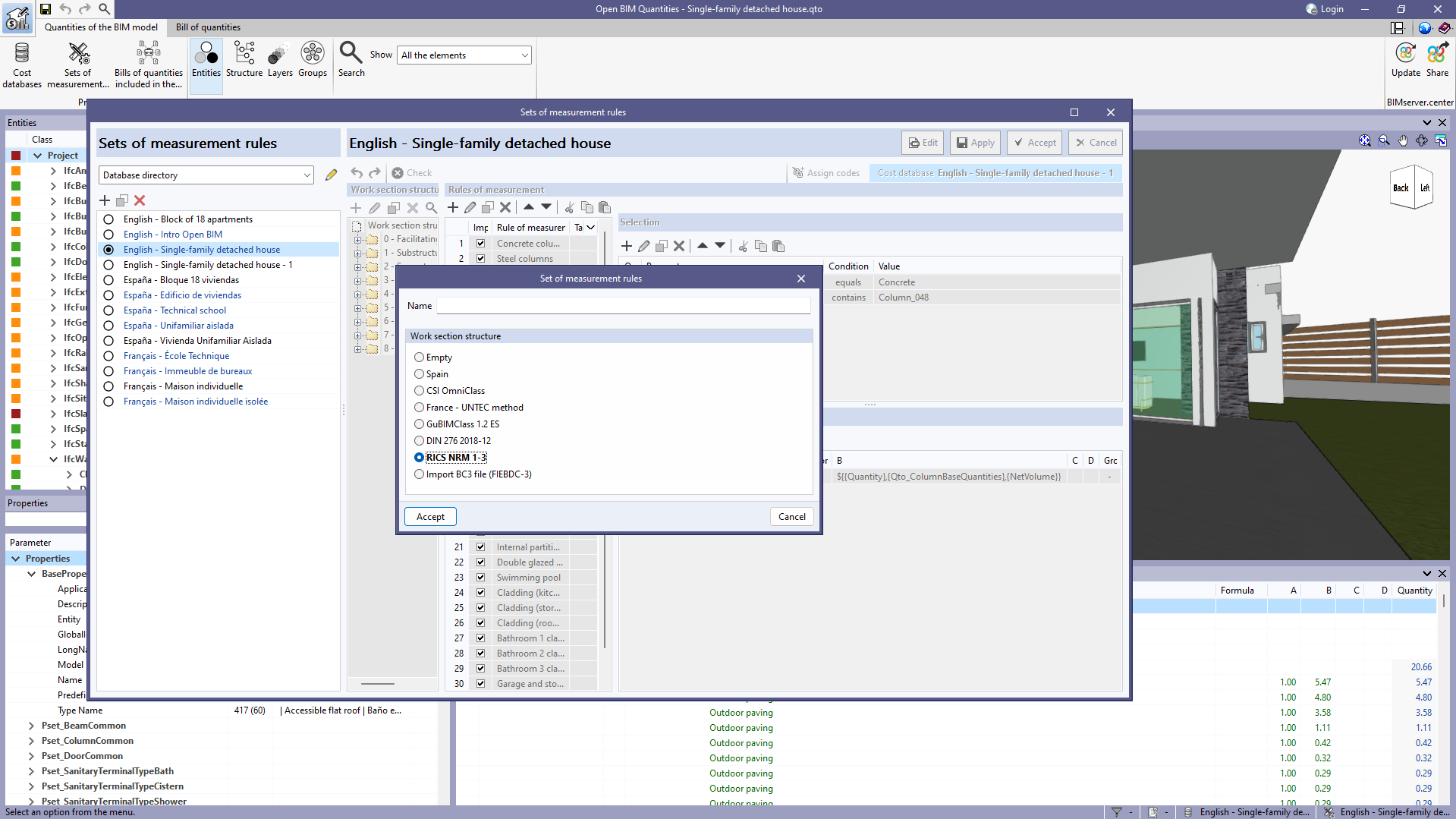
New predefined work section structures have been added for creating a new "Set of measurement rules" (in Open BIM Quantities) or a "Mapping file" (in applications with a "Bill of quantities" tab):

  • RICS NRM 1-3
    This includes the sections of the New Rules of Measurement (NRM) as defined in volumes “NRM 1: Order of cost estimating and cost planning for capital building works” and “NRM 3: Order of cost estimating and cost planning for building maintenance works”.

  • DIN 276 2018-12
    This includes the cost groups defined in DIN 276 2018-12.

  • GuBIMClass
    System for classifying building elements according to their main function in a BIM environment.

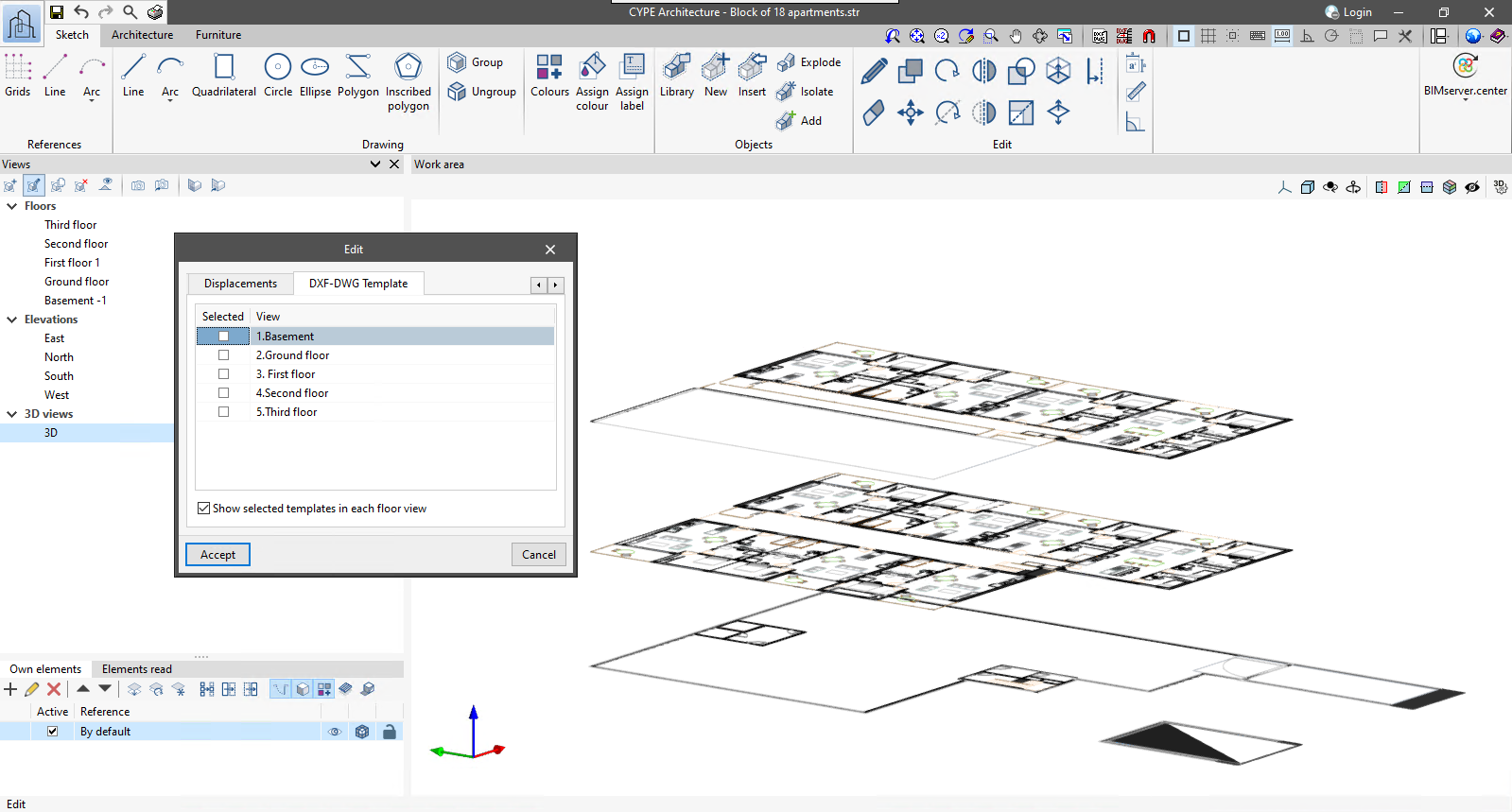
For 3D views defined within applications with a 3D working environment, the "Show selected templates in each floor view" option has been added. When activated, the templates visible in each of the floor views will be displayed in the 3D view in the dimension corresponding to these views.

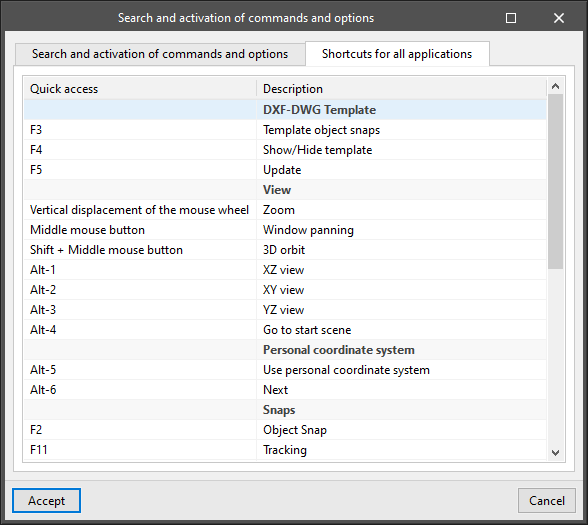
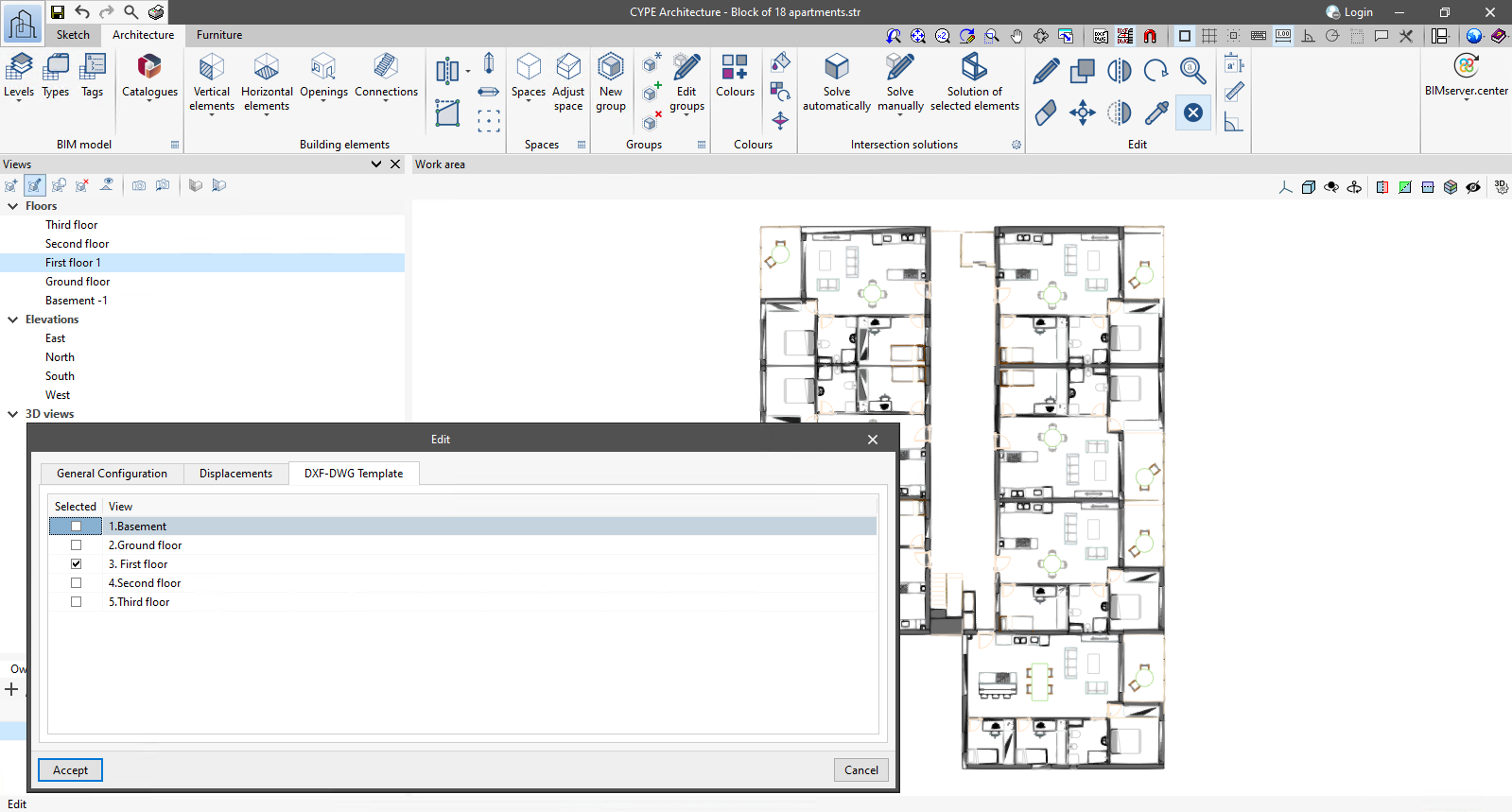
As of version 2024.c, applications with a 3D working environment can manage the visibility of templates from the view configuration panel. For this purpose, the "DXF-DWG templates" tab has been added, where a list of all the templates imported into the project is displayed together with a checkbox to indicate which ones should be shown in the view.

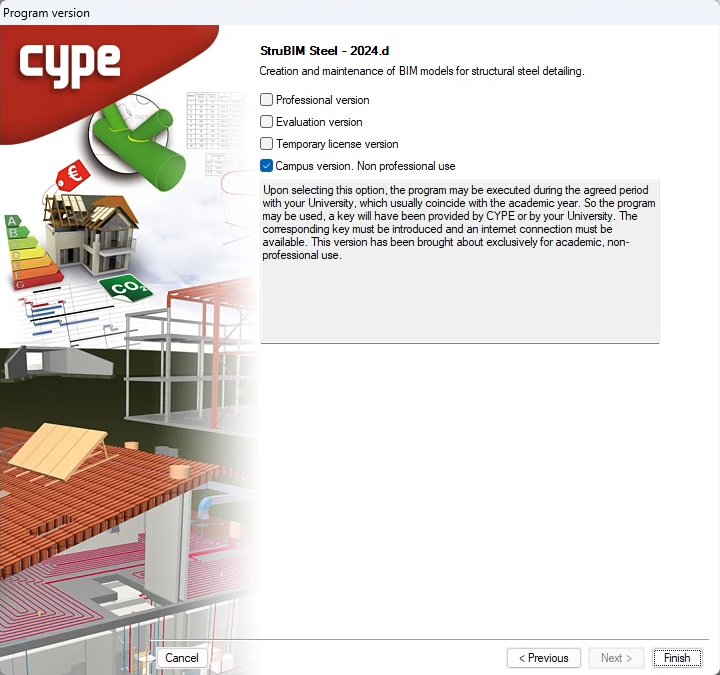
All CYPE programs can be installed in their different versions (Professional Version, Evaluation Version, Campus Version, Temporary License). In previous versions, users could only choose the type of version to be installed from the classic CYPE menu.

As of version 2024.a, the selection of version types has been implemented in all CYPE programs on the BIMserver.center platform.

As of version 2024.d, this selection can be made during the installation of all CYPE programs, regardless of where they are downloaded.

In previous versions, when selecting "Update the quantities" and applying the active "Set of measurement rules" on the model, items with a negative quantity value were not taken into account when generating the quantities. As of version 2024.b, Open BIM Quantities can generate items with a negative quantity and use them for indicating deductions or allowances in the bill of quantities, among other functions.

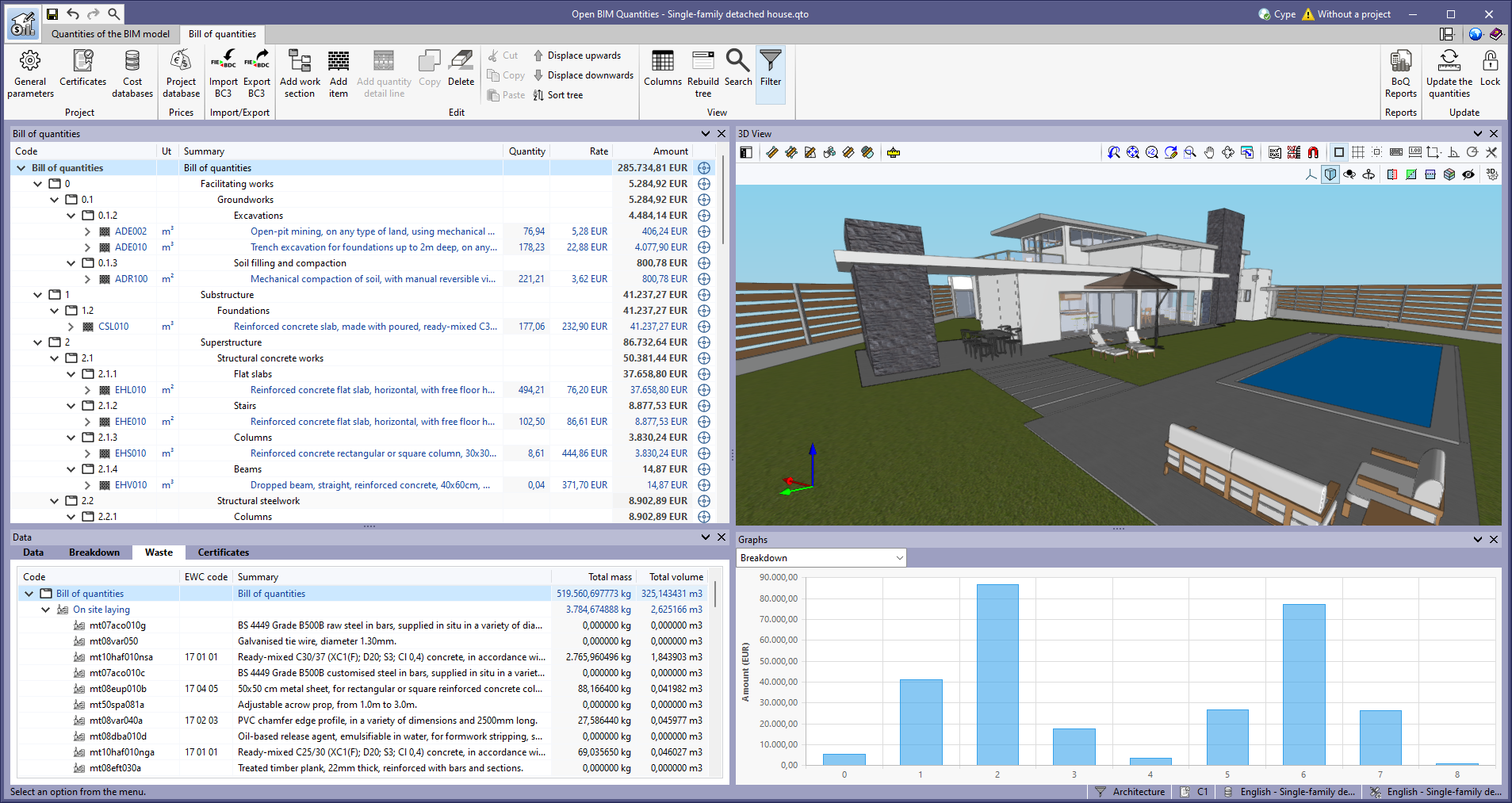
Since version 2023.g, Open BIM Quantities includes a status bar at the bottom of the main window. In addition to displaying contextual information about what is being carried out in the application, the status bar indicated the reference of the active sets of measurement rules. In version 2024.b, the status bar has been improved and now also displays the following information:

  • Active filter reference.
  • Active certificate reference.
  • Reference of the active cost database.

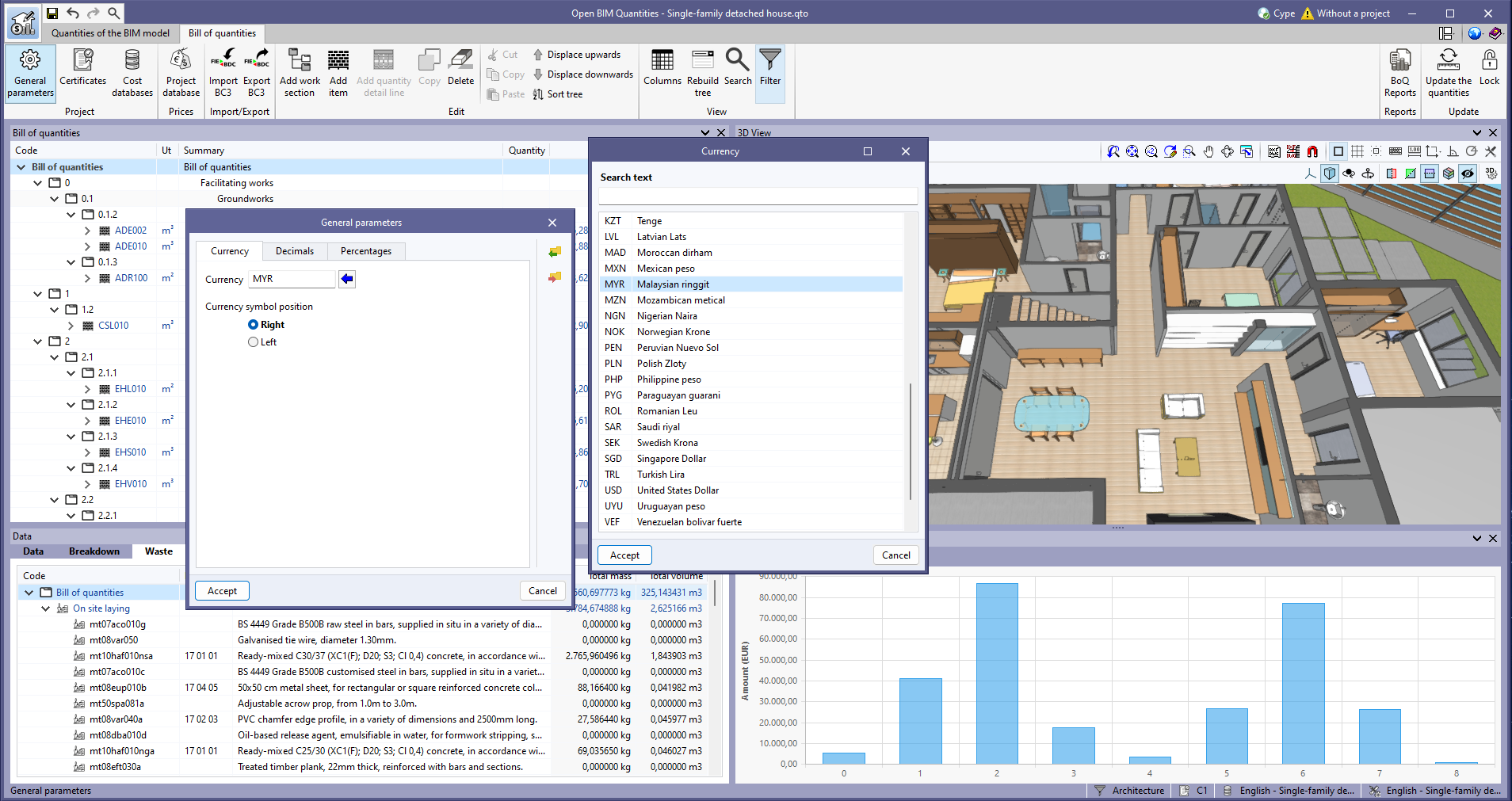
In the help tool for filling in the currency code, within the general parameters of the project, the following references from ISO 4217 have been added:

  • EGP. Egyptian pound
  • KZT. Tengue
  • MYR. Malaysian ringgit
  • PHP. Philippine peso
  • SAR. Saudi riyal